
SCAI highlights the benefits of ICE-guided structural heart interventions
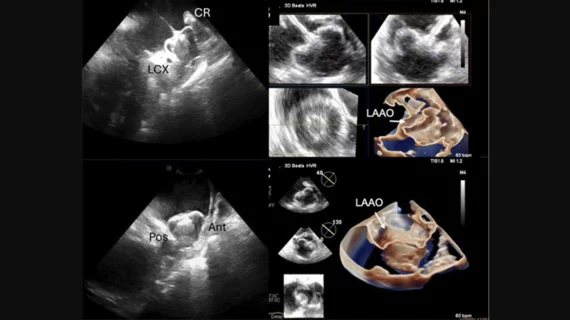
The Society for Cardiovascular Angiography and Interventions (SCAI) has shared a new position statement on the use of intracardiac echocardiography (ICE) to guide structural heart disease (SHD) interventions. The document, published in full in JSCAI, includes imaging protocol proposals and pushes for updated reimbursement models.[1] It also provides a helpful guide designed to help clinicians implement ICE at their own facility.
“ICE technology has been employed by physicians for decades to guide catheter-based procedures, but until recently, its use was limited for complex valvular interventions in large part due to hardware and software limitations,” wrote first author Mackram F. Eleid, MD, an interventional cardiologist with Mayo Clinic, and colleagues. “Although transesophageal echocardiography (TEE) remains a mainstay to guide transcatheter SHD interventions, several factors prompt a larger role for physician-led intraprocedural ICE imaging. Distorted cardiac anatomy, intracardiac shadowing and the location of the esophagus relative to cardiac structures can limit TEE imaging windows, thereby requiring the adjunctive use of ICE to optimize visualization. Additionally, in an era of minimally invasive transcatheter procedures, medical teams and patients are gravitating away from the use of general anesthesia and intubation, which are typically required to perform TEE.”
The SCAI position statement features imaging protocol proposals for several different clinical scenarios. The authors noted that ICE, unlike TEE or even transthoracic echocardiography (TTE), is not meant to be provide a “comprehensive diagnostic examination.” Instead, ICE should be used in a way that focuses on assisting with the specific intervention that is being performed at that time.
“Unlike traditional standard of care TEE protocols, ICE imaging windows are not obtained at precise imaging angles due to variation in patient anatomy and ICE catheter positioning within various intracardiac chambers,” Eleid et al. explained. “Anatomic landmark recognition is critical for obtaining and interpreting ICE images.”
The document goes on to highlight recommendations for how to get the most out of ICE during a variety of procedures. During pulmonary valve interventions, for instance, the authors noted that ICE can help detect signs of such complications as paravalvular leak, acute leaflet dysfunction or pericardial effusion.
Another key takeaway from the SCAI position statement is the urgent need for improved reimbursement policies. The add-on codes currently available are largely based on a time when 2D ICE, not 3D ICE, was used during various cardiac procedures.
“Currently, reimbursement for ICE is a fixed amount regardless of the type of procedure performed, and there is no separate reimbursement for the interventional imaging physician who operates ICE,” the authors explained. “Appropriate reimbursement paradigms must be developed to address the technical complexity and expertise necessary for structural heart interventional ICE guidance.”
Yet another feature of the new position statement is a thorough guide to ICE implementation. It covers everything from getting hospital leadership on board, to workflow and training recommendations.
Click here to read the full document in JSCAI.

Michael has more than 19 years of experience as a professional writer and editor. He has written at length about cardiology, radiology, artificial intelligence and other key healthcare topics.