
Tricuspid valve repair linked to major benefits for high-risk heart patients
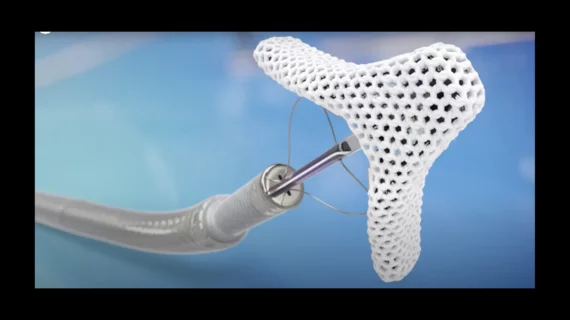
Tricuspid transcatheter edge-to-edge repair (T-TEER) is associated with a significant improvement in survival and reduced risk of heart failure in high-risk patients with severe tricuspid regurgitation (TR), according to new late-breaking data presented at ESC Congress 2026. The study was simultaneously published in The New England Journal of Medicine.[1]
The goal of this study was to learn more about how T-TEER and other tricuspid interventions can benefit patients in terms of clinical outcomes. Prior studies have linked these therapies to a better quality of life, but their impact on mortality and hospitalizations has remained unclear.
The TRIC-I-HF trial included data from more than 350 patients with symptomatic severe TR and an increased risk of developing heart failure in the future. Patients were randomized by a ratio of 2:1 to either undergo tricuspid valve repair or medical therapy alone. Among patients randomized to undergo an intervention, 98.3% underwent T-TEER, 1.3% underwent transcatheter annuloplasty and 0.4% underwent transcatheter tricuspid valve replacement in a deviation from the study’s protocol. The mean age was 80.3 years old, and 56.4% of patients were women.
Overall, the tricuspid intervention group was consistently linked to better outcomes in terms of mortality, heart failure hospitalization and quality of life than the medical therapy alone group. In fact, freedom from all-cause mortality or heart failure hospitalization after three years occurred in 52.4% of the tricuspid intervention group and 21% of the medical therapy alone group.
“Among these high-risk patients, transcatheter tricuspid valve repair on top of medical therapy resulted not only in quality-of-life improvements but also in meaningful and sustained reductions in hard clinical outcomes, which has not been demonstrated before with the intervention,” wrote first author Jörg Hausleiter, MD, a researcher with Ludwig-Maximilians-University, in a statement. “Early and pronounced separation of the event curves in these patients with advanced heart failure underscores the immediate benefit of tricuspid valve repair when added to optimized medical therapy, establishing the intervention as an effective disease-modifying therapy.”
T-TEER devices used to treat these patients included the TriClip system from Abbott and the Pascal and Cardioband systems from Edwards Lifesciences.
Click here for the full analysis.

Michael has more than 19 years of experience as a professional writer and editor. He has written at length about cardiology, radiology, artificial intelligence and other key healthcare topics.