
FDA approves treatment of rare genetic disorder in children as young as 1 year old
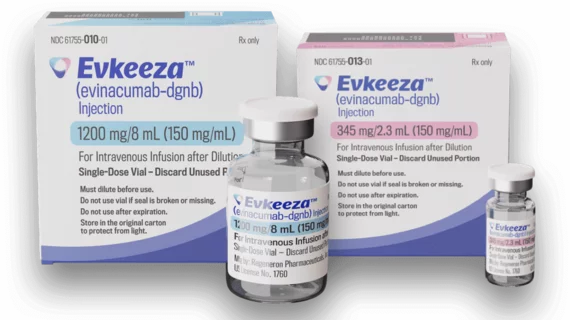
The U.S. Food and Drug Administration (FDA) has expanded its approval of evinacumab-dgnb for the treatment of homozygous familial hypercholesterolemia (HoFH) to include younger patients.
Evinacumab-dgnb is sold by Regeneron under the brand name Evkeeza. In 2023, it was approved for treating HoFH in children 5 years old and older. With this latest approval, it can be used to treat children as young as 1 year old.
HoFH is a rare, severe form of familial hypercholesterolemia (FH) associated with extremely low levels of low-density lipoprotein cholesterol (LDL-C). Pediatric patients with HoFH face an increased risk of developing cardiovascular disease or experiencing an adverse cardiac event early in life.
“Evkeeza is a testament to the power of Regeneron’s science and proprietary technologies in developing first-in-class, lifechanging medicines that become standard-of-care,” George D. Yancopoulos, MD, PhD, board co-chair, president and chief scientific officer at Regeneron, said in a prepared statement from the company. “This label extension adds to our growing commitment to the rare disease space, which includes diverse clinical development programs in neuromuscular and genetic diseases—such as myasthenia gravis, otoferlin hearing loss, and fibrodysplasia ossificans progressive—for which we’ve shared data.”
“The approval of Evkeeza for children as young as 1 year of age addresses a critical unmet need for those with homozygous familial hypercholesterolemia, a life-threatening condition that causes extraordinarily high LDL-C levels from birth,” added Katherine Wilemon, founder and CEO of the Family Heart Foundation, a . “Families and their medical teams will now have an effective treatment option for these very young children who are at risk of serious complications from diseased arteries and calcified valves without timely and sufficient LDL-C lowering. This development underscores the importance of, and urgency needed in, identifying children with FH through pediatric screenings in accordance with guidelines.”
Click here for a recent Cardiovascular Business interview with Wilemon.

Michael has more than 19 years of experience as a professional writer and editor. He has written at length about cardiology, radiology, artificial intelligence and other key healthcare topics.