
U.S. Supreme Court sides with generic drug maker for severe hypertriglyceridemia agent icosapent ethyl
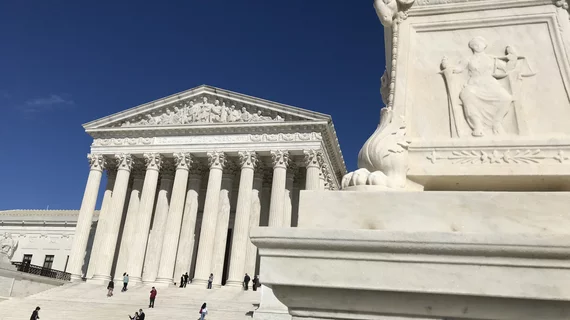
The U.S. Supreme Court unanimously sided with generic drug maker Hikma Pharmaceuticals USA in a patent case brought by Amarin Pharma over Hikma's generic icosapent ethyl "skinny label" indicated use to treat severe hypertriglyceridemia.
The June 4 decision states Amarin failed to show “more than a sheer possibility” that Hikma actively induced patent infringement and reversed a lower court ruling that sides with Amarin. This clears the way for Hikma's sale of icosapent ethyl in the U.S. market.
Amarin Pharma developed its brand-name drug Vascepa, which has the active ingredient icosapent ethyl. The U.S. Food and Drug Administration (FDA) cleared the drug in 2012 for the treatment of severe hypertriglyceridemia (SH). Once the FDA has approved a new drug, federal law allows other manufacturers to seek approval for marketing generic versions, as long as they do not infringe on any patented uses. All 50 states and the District of Columbia permit (or require) medical providers to substitute the brand-name drug with the cheaper generic version. But, generic drug makers can face litigation under federal law if they actively induce infringement of the brand manufacturer’s patent, which is what Amarin alleged in this case.
Hikma submitted an abbreviated new drug application for generic icosapent ethyl in 2016. The company asserted Amarin’s SH-indication patents were invalid and took Amarin to court, where a district court invalidated Amarin’s SH indication patents.
In 2019, the FDA approved Vascepa for a second, more common use for reducing cardiovascular risk in hypertriglyceridemia patients who already take statins, a specific cardiovascular indication. Amarin then had two methods of use patents for this indication.
Hikma supplemented its application seeking approval of a "skinny label" that included only the narrow SH indication, separating it from Vascepa’s still patented cardiovascular indication method of use. In 2020, the FDA approved Hikma’s application with the skinny label and assigned an “AB” rating, which means it has therapeutic equivalence to Vascepa when used according to its labeling.
Amarin then filed suit in the District of Delaware, alleging Hikma, in its website and larking language, actively sought to induce doctors to infringe Amarin’s cardiovascular-indication patents. The company cited Hikma’s label omitted the cardiovascular limitation of use, but retained information about a clinical study involving patients taking statins, the same as Amarin’s label. Amarin also argued similar language was used across Hikma's skinny label, the patient information leaflet, website and press releases. The company said this shows Hikma deliberately wanted physicians to see that they could prescribe the drug for statin users, which would violate its cardiovascular use patent.
But based on a review of Hikma’s language uses in its FDA label and marketing materials, the District Court granted Hikma’s motion to dismiss for failure to state a clear claim, explaining that none of these statements constituted active steps to encourage infringement. However, on appeal, the Federal Circuit Court reversed that decision, finding it at least plausible that a doctor could read the relevant statements as an instruction or encouragement to infringe.
However, the Supreme Court justices disagreed.
"Hikma was just complying with the law or with standard industry practice. It is true that Hikma’s label omitted the cardiovascular limitation of use and retained information about a clinical study involving patients taking statins. But that is because, by statute, Hikma’s label must be identical to Amarin’s except for the carved-out use, barring specified circumstances not applicable here," wrote Justice Ketanji Brown Jackson, who delivered the opinion for the court.
Jackson said Amarin failed to state a claim for active inducement to violate its patented use. She said the central question is whether Amarin plausibly alleged that Hikma actively encouraged infringing use, not merely whether doctors could plausibly read the alleged statements as instructions to infringe. But Jackson said Amarin fails to allege “more than a sheer possibility” that Hikma actively induced infringement, which is not enough.
"Amarin comes up short in resting the remainder of its inducement claim on vague statements combined with speculation about how medical providers may act in response to those statements," Jackson wrote.

Dave Fornell has covered healthcare for more than 17 years, with a focus in cardiology and radiology. Fornell is a 5-time winner of a Jesse H. Neal Award, the most prestigious editorial honors in the field of specialized journalism. The wins included best technical content, best use of social media and best COVID-19 coverage. Fornell was also a three-time Neal finalist for best range of work by a single author. He produces more than 100 editorial videos each year, most of them interviews with key opinion leaders in medicine. He also writes technical articles, covers key trends, conducts video hospital site visits, and is very involved with social media. E-mail: [email protected]