
Boston Scientific invests $1.5B in MiRus with option to buy its TAVR business

Boston Scientific has invested $1.5 billion in MiRus, the Georgia-based medtech company behind the balloon-expandable Siegel transcatheter aortic valve replacement (TAVR) valve, in exchange for an equity stake of approximately 34%.
MiRus designs and develops medical devices for the treatment of structural heart disease and a variety of other conditions. The company’s proprietary rhenium-based alloy—inspired in part by NASA—has helped the Siegel valve stand out in a competitive TAVR landscape. It includes no nickel or cobalt. Other key features include the lack of foreshortening and the device’s 8 French access sheath.
Boston Scientific will now have an exclusive option to fully acquire the Siegel TAVR technology for a total of $3 billion. The decision to follow through with that acquisition will be based on whether or not certain clinical and regulatory milestones are met. In addition, Boston Scientific will have an exclusive option to acquire other structural heart assets from MiRus for additional payments at a later date.
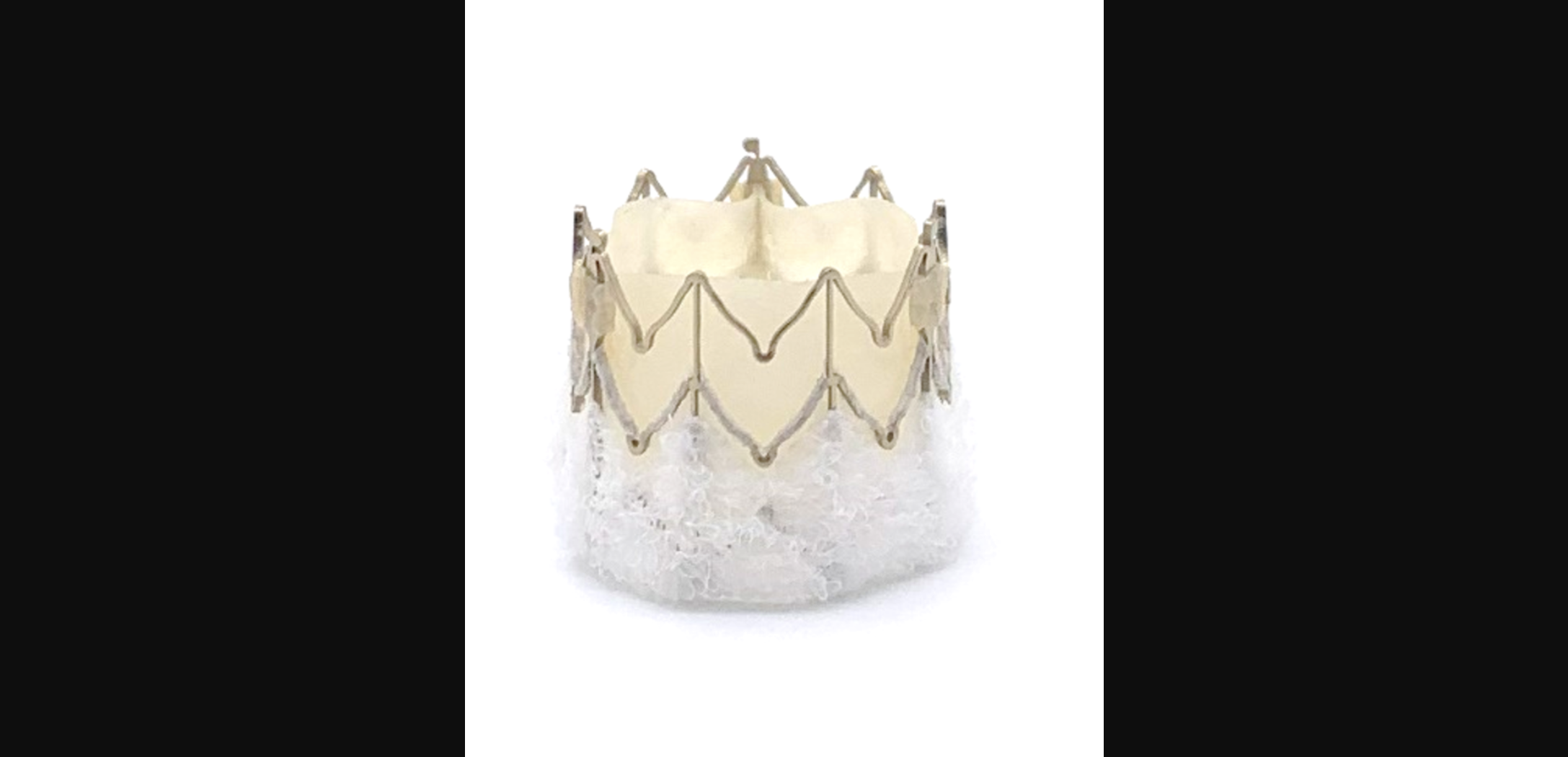
Image courtesy of MiRus.
“The occurrence and recognition of aortic stenosis is growing rapidly and our investment in MiRus continues our pursuit to bring a differentiated TAVR system into our portfolio that we anticipate may improve outcomes for patients living with this life-threatening disease,” Lance Bates, executive vice president and president of interventional cardiology and vascular therapies for Boston Scientific, said in a statement. “Built upon years of research and proprietary technology, we believe the distinctive design and impressive early clinical results of the Siegel valve may set it apart from currently available technology, potentially providing physicians an advanced option to treat a wide array of patients.”
“This collaborative relationship with Boston Scientific alongside the exceptional capabilities of our Atlanta-based team can further accelerate our progress towards broad accessibility for patients and physicians for what we believe will be a transformational treatment,” added Jay Yadav, MD, founder and CEO of MiRus.
Positive data on the Siegel TAVR valve
In July 2025, researchers shared 30-day data on 15 patients who underwent TAVR with the Siegel valve. All patients presented with symptomatic, severe aortic stenosis. After 30 days, no deaths, strokes or rehospitalizations had been reported. In addition, no patients experienced vascular complications or moderate to severe paravalvular leak, and there were no permanent pacemaker implantations. The mean gradient was 6.3 mmHg and mean valve area was 2.8 cm2.
“The gradients and valve areas with the Siegel valve are outstanding,” Raj. R. Makkar, MD, chief of interventional cardiology with the Smidt Heart Institute at Cedars-Sinai, said at the time. “Valve placement is very precise and allows us to protect the conduction system – one of our patients was quite elderly with preexisting conduction system injury, and we were able to replace his valve without having to place a permanent pacemaker.”
MiRus is now enrolling patients for STAR, a new prospective, multicenter, randomized trial exploring the safety and effectiveness of the Sigel TAVR valve. The STAR trial is expected to enroll up to 1,025 patients.
Boston Scientific pulled plug on TAVR valves in 2025
In 2025, Boston Scientific officially discontinued worldwide sales of its Acurate neo2 and Acurate Prime TAVR valves. This came after the company was unable to cross the finish line and secure U.S. Food and Drug Administration approval for the devices after years of clinical research.
“While data continue to support the performance of the Acurate valve system when the product’s optimized instructions for use are followed, this decision was made based on recent discussions with regulators, which resulted in increased clinical and regulatory requirements to maintain approvals in global markets and to obtain approval in new markets,” a representative told Cardiovascular Business at the time. “Therefore, related commercial, clinical, research and development, and manufacturing activities will cease.”

Michael has more than 19 years of experience as a professional writer and editor. He has written at length about cardiology, radiology, artificial intelligence and other key healthcare topics.