
New TAVR valve from MiRus linked to positive early outcomes
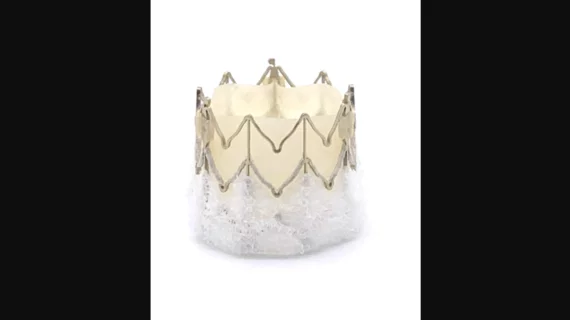
One of the more recent additions to the competitive transcatheter aortic valve replacement (TAVR) market has been associated with encouraging early outcomes, including new 30-day findings presented at the New York Valves 2025 conference.
The Siegel TAVR valve from Marietta, Georgia-based MiRus was designed with expanded patient access and improved device delivery in mind. It was built with the company’s own rhenium alloys and includes no nickel or cobalt.
According to MiRus, the lack of foreshortening and the 8 French access sheath are just some of the features that help it stand apart from other transcatheter heart valves on the market.
Back in 2024, researchers presented first-in-human data on the MiRus Siegel TAVR valve at New York Valves. At the time, Pradeep Kumar Yadav, MD, an interventional cardiologist with Piedmont Heart Institute, described the valve’s ease of use and hemodynamics as “impressive.”
Now, one year later, Yadav and Raj. R. Makkar, MD, chief of interventional cardiology with the Smidt Heart Institute at Cedars-Sinai, attended the same conference to share 30-day results from a U.S. early feasibility study (EFS).
The EFS included 15 patients who presented with symptomatic, severe aortic stenosis. After 30 days, no deaths, strokes or rehospitalizations had been reported. In addition, no patients experienced vascular complications or moderate to severe paravalvular leak, and there were no permanent pacemaker implantations. The mean gradient was 6.3 mmHg and mean valve area was 2.8 cm2.
“This is the first TAVR to have no foreshortening during implantation and along with small vascular access, makes it very user friendly and should also lead to fewer pacemakers and vascular complications,” Yadav said in a statement. “The lack of nickel is also very appealing—we were able to treat a patient with severe nickel and cobalt allergy.”
“The gradients and valve areas with the Siegel valve are outstanding,” added Makkar. “Valve placement is very precise and allows us to protect the conduction system – one of our patients was quite elderly with preexisting conduction system injury, and we were able to replace his valve without having to place a permanent pacemaker.”

Michael has more than 19 years of experience as a professional writer and editor. He has written at length about cardiology, radiology, artificial intelligence and other key healthcare topics.