
FDA clears TAVR guidewire built with BASILICA in mind

Transmural Systems, a Massachusetts-based medtech company, has received U.S. Food and Drug Administration (FDA) clearance for Telltale, a new electrosurgical guidewire designed to prevent coronary obstruction during transcatheter aortic valve replacement (TAVR).
Interventional cardiologists often perform BASILICA procedures right before TAVR when the patient’s risk of coronary artery obstruction is high. During BASILICA, catheters and guidewires are used to intentionally lacerate the aortic leaflet in a way that preserves coronary perfusion. The Telltale device was specifically built with BASILICA in mind, providing TAVR operators with improved insulation, radiopaque markers and custom accessories that help with kinking and gripping the guidewire when necessary.
Telltale represents the first guidewire specifically built to help cardiologists during TAVR.
“At Transmural Systems, our mission has always been to simplify complex structural heart procedures through innovation,” Kathleen Pizzuti, CEO of Transmural Systems, said in a statement. “The FDA’s clearance of Telltale reinforces our commitment to delivering a platform of intuitive, high-impact technologies that empower clinicians and improve patient outcomes.”
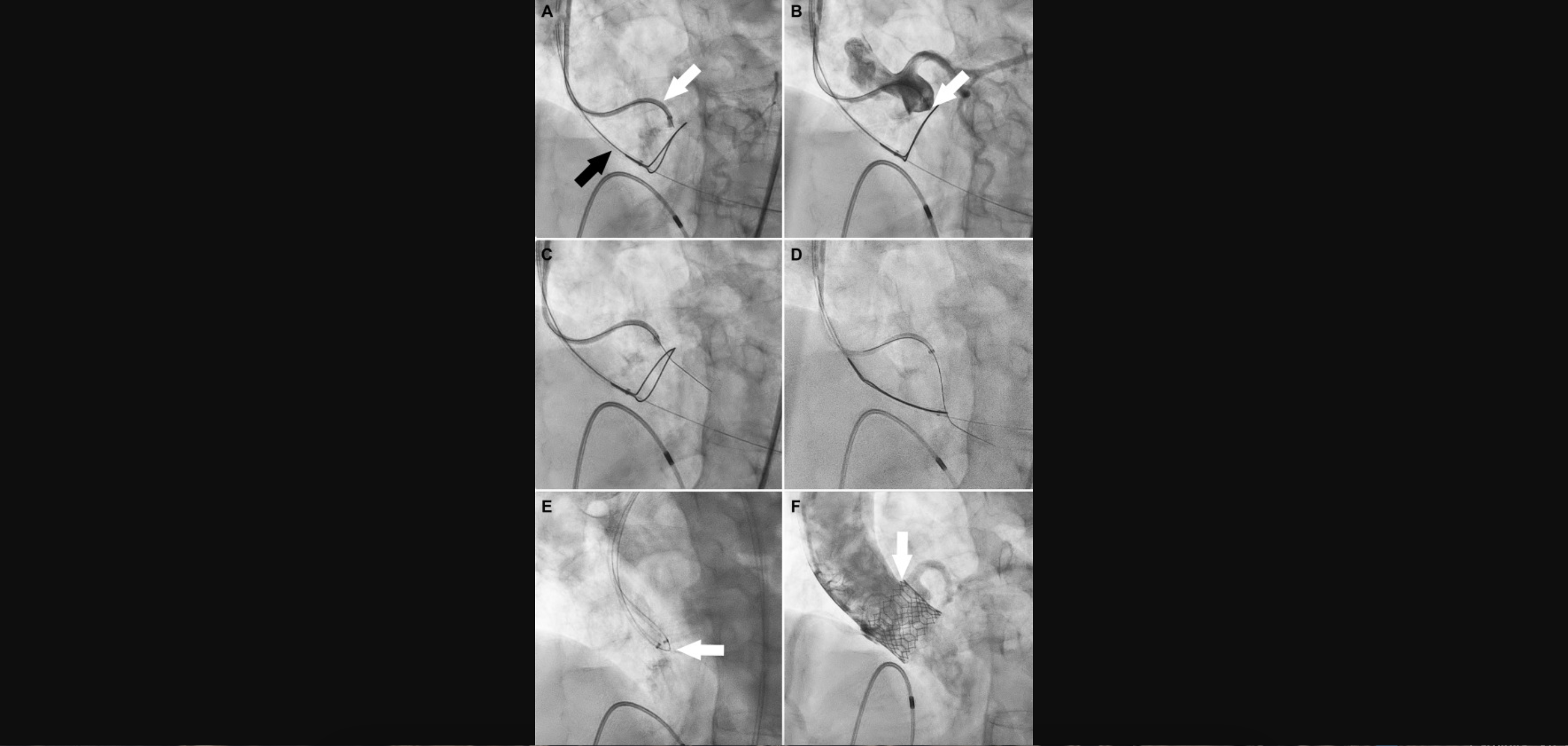
TELLTALE-BASILICA Procedure in a Patient With Native Aortic Stenosis and High Risk of Left Coronary Obstruction (A) TELLTALE Pachyderm Amplatz Left (PAL)1.0 guiding catheter with TELLTALE 0.014-inch guidewire positioned above the aortic valve (white arrow) and Multipurpose (MP)1.0 guiding catheter positioned in the left ventricular outflow tract (LVOT) with a gooseneck snare (black arrow). (B) Contrast injection through the aortic guiding catheter confirms wire position at the base of the target leaflet (white arrow). (C) Electrosurgical leaflet traversal using the TELLTALE guidewire. (D) TELLTALE guidewire is snared in the LVOT. (E) Kinked and denuded “flying-V” positioned on the target leaflet for electrosurgical laceration (white arrow). (F) After TAVR, aortography demonstrates coronary opacification despite valve frame in contact with the sinotubular junction (white arrow). Image and captions courtesy of JACC: Cardiovascular Interventions and Rogers et al.
TELLTALE trial helped pave the way for FDA clearance
The FDA’s decision to clear Telltale was based largely on data from the TELLTALE trial, an investigator-initiated study sponsored by the National Heart, Lung and Blood Institute.[1] Researchers explored data from 90 U.S. TAVR patients with a mean age of 79 years old. All patients presented with a high risk of coronary obstruction, which researchers confirmed with medical imaging. The study’s primary efficacy endpoint was met in 100% of cases, and its primary safety endpoint was met in 96% of cases. After 30 days, the mortality rate and coronary obstruction rate were both 0%. The full study was published in JACC: Cardiovascular Interventions.
“Overall, there was an extremely positive safety signal here that having a dedicated system makes the procedure safer,” first author Toby Rogers, MD, PhD, an interventional cardiologist at the MedStar Heart and Vascular Institute, told Cardiovascular Business in a recent video interview.

Michael has more than 19 years of experience as a professional writer and editor. He has written at length about cardiology, radiology, artificial intelligence and other key healthcare topics.