
Boston Scientific removes imaging catheters from market due to risk of injury
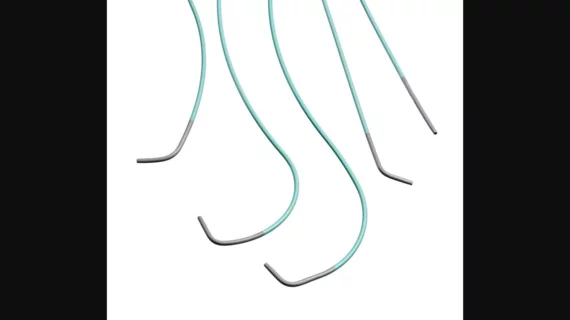
The U.S. Food and Drug Administration (FDA) is warning the public about an ongoing safety issue with certain intravascular catheters manufactured by Boston Scientific. These devices are being removed from the market, and Boston Scientific has officially decided to discontinue them going forward.
The devices in question are Boston Scientific’s single-use Imager II Angiographic Catheters, which interventional cardiologists, vascular surgeons and interventional radiologists use to capture images of a patient’s peripheral vasculature. They are available in a variety of shapes and lengths.
This warning, which covers all Imagers II Angiographic Catheters, was put in place due to a manufacturing defect that can cause the catheter tip to degrade or detach from the rest of the device.
“The most common adverse health consequence of tip detachment in the intravascular space with a likelihood of occurrence of every time used is a delay in procedure to exchange for a new device,” according to the FDA’s advisory. “Although considered remote, the most serious potential adverse health consequence within the intravascular space is life threatening embolism resulting from a device fragment obstructing blood flow resulting in end organ failure.”
At this time, FDA is still investigating the issue and has not yet determined the severity of this recall. This agency’s new warning, published Aug. 28, is part of an Early Alert pilot program designed to inform the public about potentially high-risk medical devices as soon as possible.
What should customers do?
Customers with any of these devices on hand are urged to immediately stop using them and return them to Boston Scientific. Patients already treated with these devices should be monitored like normal.
The FDA advisory emphasized that clinicians should look closely to ensure they do not still have any of these devices on hand.
“Healthcare facilities often remove products from the outer carton and store them on shelves in the inner-pouch only,” according to the advisory. “If this is a practice at your facility, it is very important to use the product table. Consider both the inner and outer packaging UPN codes when searching for affected product, since the UPN numbers on the inner and outer labeling are different.”
Click here for more information, including a list of all devices impacted by this issue.

Michael has more than 19 years of experience as a professional writer and editor. He has written at length about cardiology, radiology, artificial intelligence and other key healthcare topics.