
Heartflow reports significant revenue growth as CCTA sees wider adoption
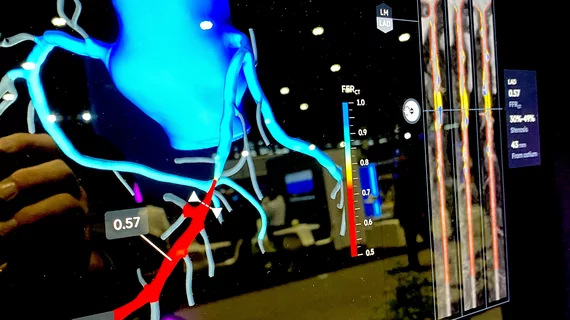
Heartflow has reported significant increases in total revenue and U.S. revenue for the first quarter of 2026 thanks to growing demand for its artificial intelligence (AI) analysis software for coronary computed tomography angiography (CCTA) images. The company has continued to experience more and more success since being included in the 2021 chest pain assessment guidelines published by the American College of Cardiology and American Heart Association.
Heartflow's data for the first quarter included a total revenue of $52.6 million, up 41% year-over-year compared to the first quarter of 2025, and a U.S. revenue of $48.3 million, a 42% increase year-over-year. The main driver for this growth is the rising use of fractional flow reserve CT (FFR-CT) technologies.
“Heartflow entered 2026 with unprecedented momentum, expanding the category leadership we established over the last several years,” John Farquhar, president and CEO of Heartflow, said in a statement. “Our AI-driven platform, deeply embedded commercial footprint, and the world’s largest database that recently expanded to over 200 million annotated CCTA images combine to create a foundational advantage that grows stronger with every quarter."
He said the company's core FFR-CT business remains durable. The technology allows noninvasive cardiac CT scans to replace the need for invasive cath lab FFR pressure wires to deliver the same information. It is seeing wider adoption in hospital emergency departments as a way to speed heart attack diagnoses without sending patients to the cath lab. It is also seeing wider adoption by interventional cardiologists as a way to plan ahead before procedures.
The company is also seeing wider adoption of its Heartflow Plaque Analysis software ahead of schedule. Heartflow Plaque Analysis delivers a detailed quantification of coronary plaque composition.
"Most importantly, by helping physicians guide the care of over 650,000 patients worldwide, Heartflow has achieved an unrivaled scale of real-world experience. As the architects of this category, we continue to extend our leadership position, becoming the AI operating system of record for the detection, diagnosis, management and treatment planning of coronary artery disease,” Farquhar said.
Heartflow made a positive change for its expected 2026 revenue projections to between $228-$232 million. This represents growth of between 29%-32% year-over-year, 5-6% higher than previously projected.
Total operating expenses for the first quarter were $71.7 million, a $25.8 million increase over the same period last year. Heartflow said this was due to adding additional sales personnel, increasing investments in technology and clinical research, optimizing its footprint in Mountain View, California, and relocating its headquarters to San Francisco.

Dave Fornell has covered healthcare for more than 17 years, with a focus in cardiology and radiology. Fornell is a 5-time winner of a Jesse H. Neal Award, the most prestigious editorial honors in the field of specialized journalism. The wins included best technical content, best use of social media and best COVID-19 coverage. Fornell was also a three-time Neal finalist for best range of work by a single author. He produces more than 100 editorial videos each year, most of them interviews with key opinion leaders in medicine. He also writes technical articles, covers key trends, conducts video hospital site visits, and is very involved with social media. E-mail: [email protected]