
How telehealth utilization among heart patients has evolved since the pandemic
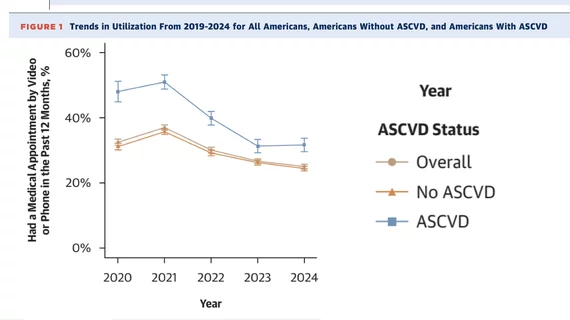
The COVID-19 pandemic created a shift in the use of telemedicine that made a major impact on cardiology. To learn more about that period of time, including the years after the pandemic's peak, researchers reviewed years of data and published their findings in JACC, the flagship journal of the American College of Cardiology.[1]
The new analysis was completed by researchers from the Yale School of Medicine and the University of California, San Francisco in addition to JACC Editor-in-Chief Harlan M. Krumholz, MD. The team found that telehealth utilization decreased across the board for all income and race/ethnicity strata between 2021 to 2024 as care shifted back to in-person appointments following the 2020 pandemic year. However, telemedicine utilization rates still ranged from 21.5% to 29.8% in 2024, the most recent year for data. The group also found that individuals with higher income tended to have higher telehealth utilization rates through the study years.
"Adults in the United States with atherosclerotic cardiovascular disease (ASCVD) had higher rates of interacting with a healthcare professional in the past 12 months and higher telemedicine utilization rates than adults without ASCVD. Telehealth can be useful for routine follow-ups or visits where in-person care is not possible, and infrastructure to support this should continue to be built," the authors wrote.
The authors used data from 172,434 adults from the 2019-2024 National Health and Interview Survey (NHIS) for adults 18 years and older. They pulled telehealth utilization from responses of either attending a medical appointment by video or phone. The study population's mean age was 48.1 years, and 51.5% of patients were women. Responses were broken down by race, ethnicity and income level.
Although telemedicine utilization increased during the COVID-19 pandemic, the team emphasized that such services were less accessible to individuals of lower-income groups or education levels. Black and Hispanic individuals also use less telemedicine.
The authors said the limitations of the findings include the self-report status of race/ethnicity and income, as well as inaccuracies in participant interpretation of the questions and recall.

Dave Fornell has covered healthcare for more than 17 years, with a focus in cardiology and radiology. Fornell is a 5-time winner of a Jesse H. Neal Award, the most prestigious editorial honors in the field of specialized journalism. The wins included best technical content, best use of social media and best COVID-19 coverage. Fornell was also a three-time Neal finalist for best range of work by a single author. He produces more than 100 editorial videos each year, most of them interviews with key opinion leaders in medicine. He also writes technical articles, covers key trends, conducts video hospital site visits, and is very involved with social media. E-mail: [email protected]