
New ASE president outlines key initiatives in cardiac ultrasound
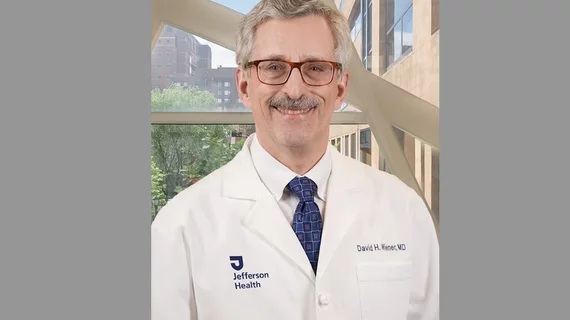
The American Society of Echocardiography (ASE) has announced that David H. Wiener, MD, took the reins as the society’s 2025-2026 president on July 1. He outlined is initiatives for the next year in a statement, calling for more collaborations, a sustained workforce and better engagement with members.
“I am honored to lead ASE at a time when cardiovascular ultrasound is expanding and evolving,” Wiener said. “Cardiac imaging is a multi-modality team effort, and we work best—and our patients benefit most—when we collaborate effectively. I look forward to working with and learning from members of our vibrant community in the coming year to help future generations find purpose and possibility in the field.”
Wiener, an ASE member since 1991, has long regarded the 50-year-old, 20,000-member, global cardiovascular ultrasound imaging society as his professional home. He is currently director of clinical operations at the Jefferson Heart Institute and a clinical professor of medicine at Thomas Jefferson University in Philadelphia. He earned his medical degree from Albert Einstein College of Medicine in New York, completed an internal medicine residency at Montefiore Medical Center in New York, and pursued a cardiology fellowship at the Hospital of the University of Pennsylvania.
He became an ASE fellow in 2003, and has served on and chaired numerous committees, task forces and workgroups.
Key ASE initiatives in 2025-2026
Wiener outlined some of the top initiatives for his term in the July 2025 issue of the Journal of the American Society of Echocardiography. The three main areas of focus include:
• Align with collaborators: he wants to building on efforts initiated by previous ASE leaders and lead a working group to strengthen collaboration with other professional societies.
• Sustaining the workforce: To confront the current and projected workforce challenges in echocardiography, including a growing workforce shortage, Wiener is launching a working group focused on developing and maintaining a sustainable workforce to ensure the well-being of ASE members and the patients it serves.
"Workforce challenges are obvious to anyone in healthcare. We face inadequate pipelines, work-related musculoskeletal injuries, burnout, and myriad other reasons for which professionals drop out of the patient care workforce, while faced with the needs of a growing, aging population," Wiener explained. He added that the U.S. Bureau of Health Workforce estimates that by 2037, the supply of cardiologists and sonographers will meet only 81% and 85% of demand, respectively.
In addition, he said the new ASE working group will also work to attract sonographers to the field and provide them with satisfying work environments and a career ladder for advancement.
"Attracting, engaging, and retaining members is critical to ASE’s growth," Wiener explained.
• Engage current and future members: Wiener said he plans to prioritize customized engagement strategies to demonstrate the unique value of ASE membership to all users of cardiovascular
ultrasound.
Focus on the heart team decision making and multi-modality imaging
Wiener said contemporary cardiac imaging is a multi-modality "team sport," and this needs to be reflected in collaboration across cardiology and in policies.
"Cardiologists whose careers center on imaging train in multiple modalities and share concerns such as training guidelines, demonstrating and maintaining competence, and payment issues. I believe in the heart team concept as applying to patient care and on an institutional level. We work best, and our patients benefit, if we function as a team. Cardiac imaging, and all our professional societies, are strongest when we align, maintain our unique characters, and act in concert," Wiener wrote.
ASE is composed of sonographers and physicians, including cardiologists, anesthesiologists and veterinarians who use ultrasound. But as point-of-care ultrasound (POCUS) continues to rapidly expand, Wiener said ASE wants to identify and serve these users as well as an umbrella society. These new and prospective members include hospital medicine specialists and neonatologists. Further illustrating the diversity of its members, while "American" is in the society's name, Wiener said 20% of ASE members are actually from outside the U.S.
"The value proposition of ASE membership differs among elements of our constituency, and there are untapped wells of potential members who have yet to experience the benefits and the joy of being part of 'the society with a soul.' We will examine how to engage and demonstrate value in a granular manner to existing and potential members," he explained.
Wiener joins nine newly elected members of ASE’s 2025-2026 Board of Directors, and 13 continuing board members.
The following new board members were elected to serve two-year terms:
- Karima Addetia, MD, FASE, University of Chicago Medical Center, Chicago, Ill.—Member at Large
- Pei-Ni Jone, MD, FASE, Lurie Children’s Hospital, Chicago, Ill.—Pediatric and Congenital Heart Disease Council Steering Committee Chair
- Shiraz Maskatia, MD, FASE, Stanford University Medical Center, Palo Alto, Calif.—Leadership Academy Representative
- Monica Mukherjee, MD, FASE, Johns Hopkins University, Baltimore, Md.—Member at Large
- Dermot Phelan, MD, PhD, FASE, Sanger Heart and Vascular Institute-Atrium Health, Charlotte, N.C.—Member at Large
- Vera Rigolin, MD, FASE, Northwestern Medicine, Chicago, Ill.—Past President Representative
- Douglas Shook, MD, FASE, Brigham and Women’s Hospital, Boston, Mass.—Perioperative Echocardiography Council Steering Committee Chair
- Lissa Sugeng, MD, MPH, FASE, Yale University School of Medicine, New Haven, Conn.—Member at Large
Wiener will officially address ASE’s membership during the upcoming 2025 Scientific Sessions at the Music City Center in Nashville, Tenn. The conference is scheduled for Sept. 5-7, 2025.

Dave Fornell has covered healthcare for more than 17 years, with a focus in cardiology and radiology. Fornell is a 5-time winner of a Jesse H. Neal Award, the most prestigious editorial honors in the field of specialized journalism. The wins included best technical content, best use of social media and best COVID-19 coverage. Fornell was also a three-time Neal finalist for best range of work by a single author. He produces more than 100 editorial videos each year, most of them interviews with key opinion leaders in medicine. He also writes technical articles, covers key trends, conducts video hospital site visits, and is very involved with social media. E-mail: [email protected]