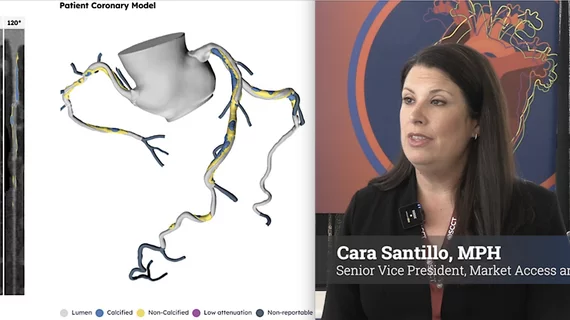
New codes for these technologies have made a world of difference for clinicians. Reimbursement for the use of AI is an area where cardiology is far ahead of most other healthcare specialties.
The law reflects growing interest in using existing imaging studies to identify cardiovascular disease risk without requiring additional scans, radiation exposure or costs.
"We really should have a system that is patient-centric, physician-led, and professionally managed, but in a cost-effective way," Rick Snyder, MD, said.
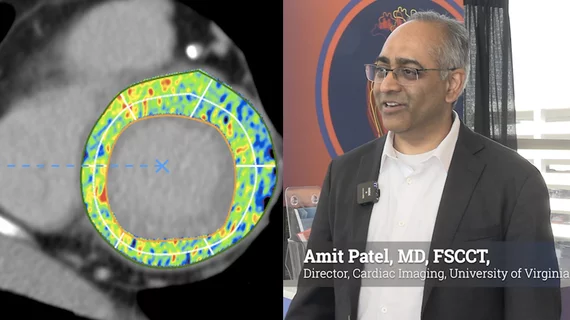
MRI scans have traditionally been used for extracellular volume assessments. That is starting to change, however, as cardiac CT moves beyond its typical focus on the coronary arteries.
Kimberly Campbell, RN, nurse practitioner, Saint Luke's Cardiovascular Consultants, explains how her health system took a heart team approach toward peripheral artery disease.
The initiation of the ACC Ambulatory Surgical Center Registry comes at a time when hospitals are expanding their structural heart programs. The registry is providing valuable details about which patients should stay at the hospital and which can be treated in an outpatient setting.
Congress needs to act soon to extend telemedicine services that were greatly expanded under COVID provisions, or they will expire by October. Anders Gilberg, senior vice president of government affairs at the Medical Group Management Association, explains concerns raised by doctors and lawmakers.
Anders Gilberg, senior vice president of government affairs at the Medical Group Management Association, explains the political and patient care issues involved with ending Affordable Care Act subsidies.
Heart teams continue to play a major role at hospitals and health systems all over the world. Cardiac imagers who have trained in multiple modalities can provide those teams with a significant amount of value.
Wael Jaber, MD, chair of the 2025 American Society of Nuclear Cardiology annual meeting, shared some key takeaways from the conference. “This is no longer just about imaging for coronary disease," he explained. "Nuclear cardiology now helps guide therapy across a wide range of conditions."
Jamieson M. Bourque, MD, MHS, president-elect of the American Society of Nuclear Cardiology, shared the group's concerns with Cardiovascular Business. “This is going to have a highly negative impact," he said.