News

AI healthcare doctor surgery procedure artificial intelligence

Clinlab.AI will oversee every aspect of this new-look laboratory, working to integrate it with the practice's workflows in a way that boosts patient care and speeds up treatment decisions.

robot reviewing heart data

AI can help care teams identify heart patients who would benefit from TAVR or another life-changing valve intervention.

Thumbnail

More than 33,000 devices are affected by this recall. Customers may need to return and replace the purge cassettes included with their devices due to a risk of serious injury or death. 

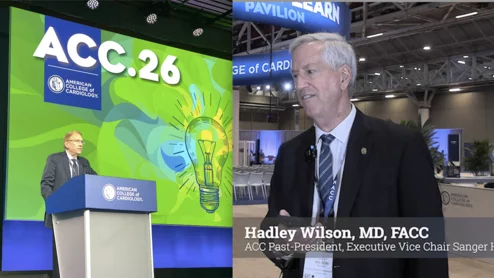
 Former American College of Cardiology president Hadley Wilson, MD, FACC, executive vice chair of Atrium Health's Sanger Heart and Vascular Institute, shared his thoughts on what he saw as the key studies in the above video interview with Cardiovascular Business. He covered numerous trials in more detail in the video. #ACC26 #ACC

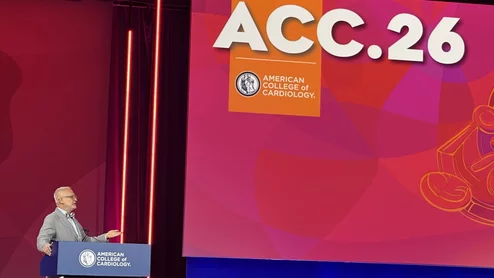
Hadley Wilson, MD, a former American College of Cardiology president, spoke to Cardiovascular Business about several studies presented at ACC.26.

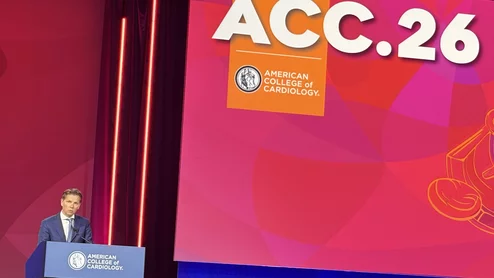
Michiel Voskuil, MD, PhD, an interventional cardiologist and professor at University Medical Center Utrecht in the Netherlands, presented his team’s data on the ACC.26 stage.

Patients with coronary artery disease and severe aortic stenosis often undergo PCI before TAVR. According to new data presented at ACC.26, however, deferring PCI is associated with comparable outcomes as well as a reduced bleeding risk.

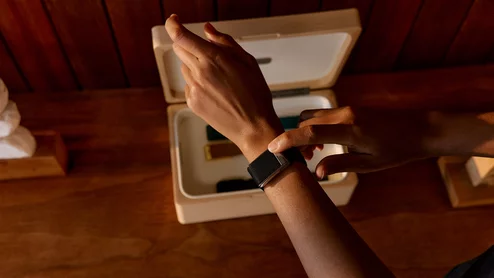
Whoop, a Boston-based wearable technologies company, has raised $575 million in new financing at a $10.1 billion valuation. Investors include Abbott, Mayo Clinic, LeBron James and Cristiano Ronaldo.

Whoop, a Boston-based wearable technologies company, raised the new funding on a $10.1 billion evaluation.

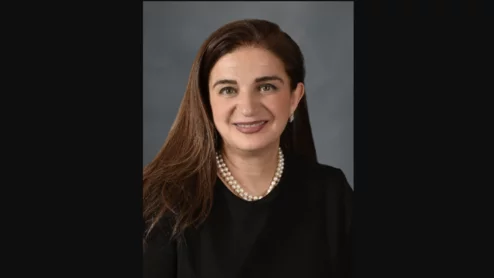
Interventional cardiologist Roxana Mehran, MD, officially started her one-year term as the president of the American College of Cardiology (ACC) on the closing day of ACC.26, the group’s annual conference in New Orleans.

A prominent figure in the fields of interventional cardiology and women’s health is now leading the American College of Cardiology.

Adam Greenbaum, MD, presents late-breaking data at ACC.26.

A new embolic protection device from Emboline was noninferior to the FDA-approved Sentinel device in terms of safety and efficacy. In addition, it captured much more TAVR-generated debris and was linked to an improved technical success rate. 

cardiologists going through the certification process

Hemodynamic valve deterioration after one year was more common in patients with a small aortic annulus. In fact, receiving a larger valve was linked to a “protective” quality that appeared to help keep the risk of such complications to a minimum.

cardiologist doctor physician patient black diverse hypertension

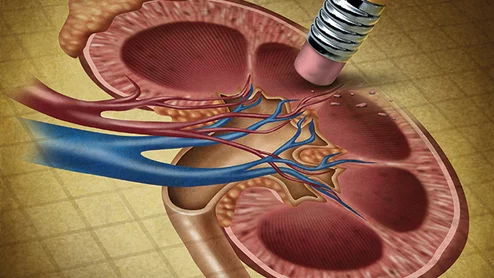
New ACC/AHA recommendations encourage clinicians to take a proactive approach when managing patients with elevated or high blood pressure. The inclusion of renal denervation in this document represents clear progress for a relatively new technology.

warning safety alert recall healthcare issue

The FDA has received multiple reports of the devices, which are designed to be malleable, failing to retain their shape. The issue has been linked to three patient injuries so far, and customers are asked to return unused devices to the manufacturer. 

Thumbnail

“Our findings reveal how changes in cell metabolism and increased oxidative stress can activate damaging pathways in blood vessels," explained Xiaofeng Yang, MD, a researcher at Temple University.


Around the web

The ramifications of the conflict in the Middle East may soon extend beyond the gas pump and into the healthcare sector, experts are cautioning.