The American Heart Association, American College of Cardiology and other U.S. medical societies have collaborated on new recommendations that cover everything from preoperative patient evaluations to postoperative care.
This update comes just months after 11,000 bottles of the same drug were recalled due to a failed test. The FDA has classified this as a Class II recall.
Meredith Hay, PhD (center), has been hard at work on this research for more than a decade now. Image courtesy of The University of Arizona.
“Patients are in desperate need of an effective treatment, and we are doing everything we can to help find that treatment,” one scientist explained. “The greatest reward would be to see a safe and effective treatment for people who currently have very few options.”
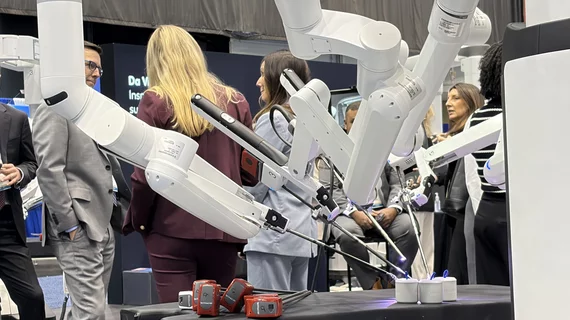
The Da Vinci robotic surgical system has been very successful in expanding the adoption of less invasive robotic surgical techniques. The FDA is now developing new standards for how it will review these types of systems as more come up for regulatory review.
The 50-page document outlines what the FDA would like to see as vendors submit their technologies for regulatory review. It covers robotic systems of all types, including those used for various cardiac procedures.
According to new data from SullivanCotter, compensation in the United States is up more than 20% in the last five years for interventional cardiology, electrophysiology, general cardiology and vascular surgery. This points to a workforce that is getting more competitive over time, one expert told Cardiovascular Business.
The new software from Chicago-based Tempus AI was designed to identify signs of moderate or severe MR. This is the company's second FDA clearance in the last two months.