• Clinical
      |Clinical
    • Acute Coronary Syndromes
    • Cardiac Surgery
    • Covid-19
    • Heart Failure
    • Heart Health
    • Heart Rhythm
    • Hypertension
    • Interventional Cardiology
    • Mitral Valve
    • Pharmaceutics
    • Structural Heart Disease
    • TAVR
    • Tricuspid Valve
    • Vascular & Endovascular
  • Management
      |Management
    • Chest Pain Guidelines
    • Compensation
    • Economics
    • Education & Training
    • Legal News
    • Patient Care
    • Policy & Regulations
    • Professional Associations
    • Quality
    • Revenue
    • Staffing
  • Technology
      |Technology
    • AI
    • Cardiac Imaging
    • Cath Lab
    • CT
    • CVIS
    • ECG
    • Echo
    • EP Lab
    • Informatics
    • MRI
    • Nuclear Cardiology
    • Remote Monitoring
  • Videos
  • Conferences
      |Conferences
    • ACC
    • AHA
    • ASE
    • ASNC
    • ESC
    • EuroPCR
    • HFSA
    • HRS
    • HRS
    • SCAI
    • SCCT
    • SIIM
    • SNMMI
    • STS
    • TCT
    • VIVA
  • Custom Content
      |Custom Content
    • Experience Stories
    • Webinars & Videos
  • Subscribe
  • Forty Under 40 Award
      |Forty Under 40 Award
    • Class of 2026
    • Class of 2025

Search form

Home

Acoramidis bests tafamidis in head-to-head comparison of ATTR-CM drugs

Cardiac amyloidosis ATTR-CM drug promotion at the 2024 American Heart Association meeting.

Acoramidis was associated with a 43% lower risk of diuretic intensification and a 34% lower risk of clinical worsening overall.

  • Read more about Acoramidis bests tafamidis in head-to-head comparison of ATTR-CM drugs

American Heart Association helping countries all over the world improve care

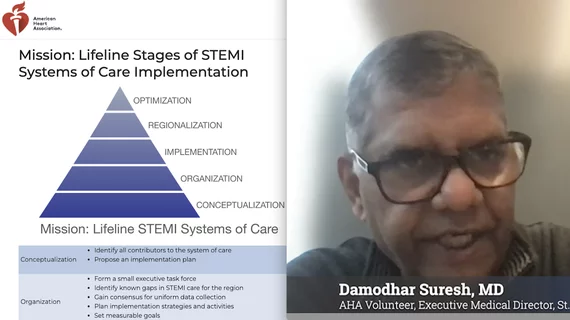
Damodhar Suresh, MD, executive medical director of St. Elizabeth Healthcare Heart and Vascular Institute in Edgewood, Kentucky. He is also a volunteer current science chair for the International committee for the American Heart Association (AHA), explains how the AHA is helping cardiologists from numerous countries put in place systems of care to standardize how heart attack patients are treated.

The AHA has developed systems of care that can help developing countries improve their treatment strategies for both heart attack and stroke.

  • Read more about American Heart Association helping countries all over the world improve care

Cardiologist impaled by tree branch makes a full recovery

Skiing

The doctor, visiting Montana from Pennsylvania for a ski trip, says he did not even realize at first what had happened.

  • Read more about Cardiologist impaled by tree branch makes a full recovery

FDA clears new heart preservation system for transplants

The U.S. Food and Drug Administration (FDA) has granted 510(k) clearance for Traferox Technologies' X°Port Heart Preservation System. The new device offers static 10°C (50°F) heart preservation during transport prior to transplantation, which has been shown in studies to improve outcomes.

The news comes as clinical evidence supporting heart preservation at 50 degrees F (10 degrees C) continues to grow.

  • Read more about FDA clears new heart preservation system for transplants

TAVR timing: Waiting more than 6 months may hurt survival odds

wait times waiting hour glass calendar delay

When heart patients are diagnosed with severe AS, how quickly do they need to undergo TAVR? That was the focus of a new analysis published in Open Heart.

  • Read more about TAVR timing: Waiting more than 6 months may hurt survival odds

First heart procedure of its kind performed in US after careful planning

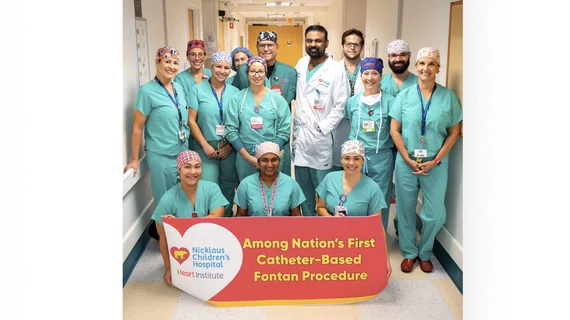
The Nicklaus Children’s Hospital Heart Institute was the first to perform a completely catheter-based Fontan procedure. Rather than using open-heart surgery to complete the child’s Fontan circulation, the 2-year-old born with a double-outlet right ventricle underwent a catheter-based approach to avoid open-heart surgery.

Specialists from the fields of interventional cardiology and cardiac surgery collaborated to perform what is believed to be the first completely catheter-based Fontan procedure in U.S. history. The young patient's recovery was much easier than it would have been otherwise. 

  • Read more about First heart procedure of its kind performed in US after careful planning

Veteran surgeon to be honored by American Heart Association for groundbreaking research

Jennifer S. Lawton, MD

Jennifer S. Lawton, MD. Image courtesy of the American Heart Association.

Jennifer S. Lawton, MD, is known for her research on how to protect the heart and brain during cardiac surgeries. She has also spent her career mentoring trainees and serving in a variety of leadership positions. 

  • Read more about Veteran surgeon to be honored by American Heart Association for groundbreaking research

FDA approves first sirolimus drug-eluting balloon for in-stent restenosis

 The U.S. Food and Drug Administration (FDA) has cleared the Cordis Selution SLR (Sustained Limus Release) Drug-Eluting Balloon (DEB) for the treatment of coronary in-stent restenosis (ISR). With this market approval, Cordis is entering the coronary drug-coated balloon market. The device is also the first sirolimus DEB cleared in the U.S.

The newly approved device from Cordis provides therapy over an extended period of time without leaving a permanent implant behind.

  • Read more about FDA approves first sirolimus drug-eluting balloon for in-stent restenosis

Photon-counting CT accurately screens TAVR patients for signs of valve dysfunction

cardiologist viewing heart data

Researchers found that photon-counting CT delivered post-TAVR imaging findings comparable to transthoracic echocardiography—no sedation required. 

  • Read more about Photon-counting CT accurately screens TAVR patients for signs of valve dysfunction

AI gaining ground in electrophysiology, but clinicians still run the show

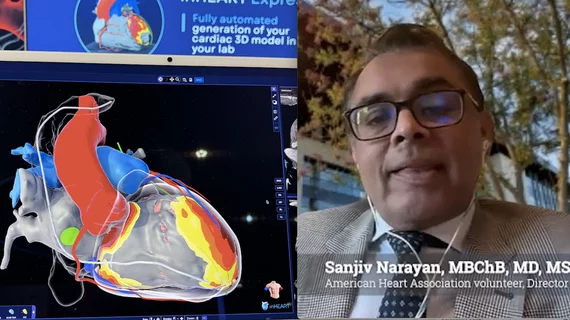
Sanjiv Narayan, MBChB, MD, MSc, FRCP, an American Heart Association volunteer, Director of the Electrophysiology Research and Atrial Fibrillation Program, and Co-Founder of the Stanford Arrhythmia Center, at Stanford Medicine, spoke in sessions at the European Society of Cardiology (ESC) 2026 Congress about the use of artificial intelligence in AFib care, using smarter detection to enable better outcomes.

Even as AI is used more and more in the field, cardiologists and other clinicians are at the heart of patient care. 

  • Read more about AI gaining ground in electrophysiology, but clinicians still run the show

Pagination

    • First page « First
    • Previous page ‹ Previous
    • Page …2
    • Page 3
    • Page 4
    • Page 5
    • Current page 6
    • Page 7
    • Page 8
    • Page 9
    • Page 10 …
    • Next page Next ›
    • Last page Last »
Subscribe
  • Home
  • News
  • Article Archive
  • Custom Content
  • Webinars
  • Press Releases
  • Content Studio
  • Advertising
  • Submit Press Release
  • Contact Us
  • Terms of Use
  • Privacy Policy
  • Cardiovascular Business
  • HealthExec
  • Radiology Business
 
© 2026 Innovate Healthcare | All Rights Reserved. | Terms of Use | Privacy Policy
 
Design by Adaptive Theme