• Clinical
      |Clinical
    • Acute Coronary Syndromes
    • Cardiac Surgery
    • Covid-19
    • Heart Failure
    • Heart Health
    • Heart Rhythm
    • Hypertension
    • Interventional Cardiology
    • Mitral Valve
    • Pharmaceutics
    • Structural Heart Disease
    • TAVR
    • Tricuspid Valve
    • Vascular & Endovascular
  • Management
      |Management
    • Chest Pain Guidelines
    • Compensation
    • Economics
    • Education & Training
    • Legal News
    • Patient Care
    • Policy & Regulations
    • Professional Associations
    • Quality
    • Revenue
    • Staffing
  • Technology
      |Technology
    • AI
    • Cardiac Imaging
    • Cath Lab
    • CT
    • CVIS
    • ECG
    • Echo
    • EP Lab
    • Informatics
    • MRI
    • Nuclear Cardiology
    • Remote Monitoring
  • Videos
  • Conferences
      |Conferences
    • ACC
    • AHA
    • ASE
    • ASNC
    • ESC
    • EuroPCR
    • HFSA
    • HRS
    • HRS
    • SCAI
    • SCCT
    • SIIM
    • SNMMI
    • STS
    • TCT
    • VIVA
  • Custom Content
      |Custom Content
    • Experience Stories
    • Webinars & Videos
  • Subscribe
  • Forty Under 40 Award
      |Forty Under 40 Award
    • Class of 2026
    • Class of 2025

Search form

Home

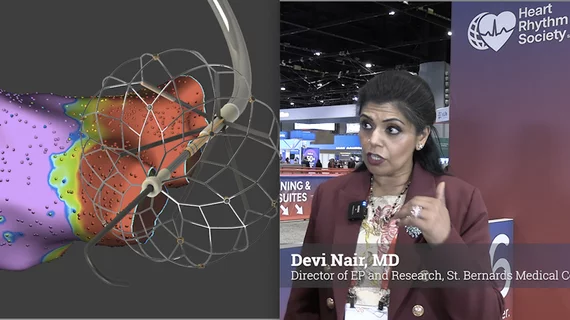
PFA has been a game-changer for heart patients—but there are still risks

Devi Nair, MD, director of electrophysiology and research, St. Bernards Medical Center and Arrhythmia Research Group, spoke with Cardiovascular Business at the Heart Rhythm 2026 meeting in the above video interview. She explained both the explosion of PFA use since the first FDA approvals in 2024, and the recently discovered complications of coronary vessel spasm and hemolysis and how newer PFA technology might address this.

Devi Nair, MD, reviewed some of the rare complications clinicians are seeing with PFA.

  • Read more about PFA has been a game-changer for heart patients—but there are still risks

Compensation in cardiology now outpacing all other healthcare specialties

Physician compensation is rising faster in cardiology than any other specialty. Still, considering how demanding the job is, many cardiologists feel underpaid.

  • Read more about Compensation in cardiology now outpacing all other healthcare specialties

Blood pressure drug recalled after failed test

heart drugs with stethoscope

Nearly 700 bottles of a popular ACE inhibitor are being recalled after it failed an Organic Impurities Test. The drug was manufactured in India and then distributed by New Jersey-based Rising Pharma Holdings.

  • Read more about Blood pressure drug recalled after failed test

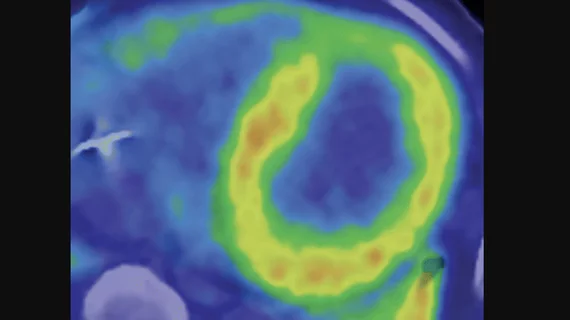
Cardiac amyloidosis in the spotlight at Heart Failure 2026

Cardiac amyloidosis on nuclear imaging of the heart using 11C-PiB PET/CT. Image courtesy of RSNA

Cardiac amyloidosis on nuclear imaging of the heart using 11C-PiB PET/CT. Image courtesy of RSNA

Cardiac amyloidosis continues to get more and more attention at cardiology meetings. At Heart Failure 2026 in Spain, it was the topic of multiple studies, including one on the benefits of acoramidis.

  • Read more about Cardiac amyloidosis in the spotlight at Heart Failure 2026

Cardiologists are first in world to use new leaflet-splitting technique during TAVR

A majority of medical devices involved in Class I recalls were never required by the U.S. Food and Drug Administration (FDA) to undergo premarket or postmarket clinical testing, according to new research published in Annals of Internal Medicine.[1]

Performing TAVR on a patient with bicuspid AS can be challenging. Transcatheter aortic root tricuspidization may represent a new treatment strategy for these patients, according to a new first-in-human trial.

  • Read more about Cardiologists are first in world to use new leaflet-splitting technique during TAVR

AI uses 12-lead ECGs to predict long-term stroke risk

AI healthcare doctor surgery procedure artificial intelligence

Stroke is still a leading cause of death all over the world. A new AI model showed early potential to anticipate such adverse outcomes up to a decade in advance, ensuring high-risk patients receive the care they need.

  • Read more about AI uses 12-lead ECGs to predict long-term stroke risk

J&J launches Shockwave Medical’s next-generation coronary IVL catheter

Shockwave C2 Aero Coronary IVL Catheter from Shockwave Medical

Image courtesy of Shockwave Medical, part of Johnson & Johnson MedTech. 

The Shockwave C2 Aero Coronary IVL Catheter is based on years of user feedback. For example, it was built with improved deliverability and repositioning capabilities in mind.

  • Read more about J&J launches Shockwave Medical’s next-generation coronary IVL catheter

Routine testing is needed to locate patients who may not benefit from clopidogrel

Up to 30% of U.S. patients carry genetic variations that reduce the effectiveness of clopidogrel (Plavix) in preventing heart attacks. These patients can easily be identified through genetic testing, but current guidelines do not have any recommendations to do so. A commentary published in the Journal of the American Heart Association from a group of U.S. and European researchers is now calling for future guidelines to incorporate recommendations for CYP2C19 genotyping. prescription drugs

Up to 30% of U.S. patients carry genetic variations that reduce the effectiveness of clopidogrel, an antiplatelet medication sold under the brand name Plavix.

  • Read more about Routine testing is needed to locate patients who may not benefit from clopidogrel

Key points to remember when performing cardiac ablations in ASCs

Video: Samuel Jones, MD, MPH, FACC, director of Inpatient Electrophysiology at the Memorial Hospital for Chattanooga Heart Institute, and co-chair of the American College of Cardiology (ACC) and Heart Rhythm Society (HRS) guidance For electrophysiology ablation in ambulatory surgical centers (ASCs), explains the details of this shift in cardiology care delivery.

When CMS finalized coverage for cardiac ablations performed in ASCs, experts from HRS and ACC published recommendations for performing those procedures safely and effectively. One of the cardiologists behind that guidance shared some important takeaways with Cardiovascular Business. 

  • Read more about Key points to remember when performing cardiac ablations in ASCs

Cardiologist finds possible link between sexual dreams and heart disease

Functional magnetic resonance imaging can offer providers insight into brain connectivity abnormalities and how they correlate with cognitive impairments observed in patients with insomnia. #insomnia #troublesleeping

More research is still necessary, but a new study has uncovered some noteworthy connections between dream frequency and the risk of heart disease. 

  • Read more about Cardiologist finds possible link between sexual dreams and heart disease

Pagination

    • First page « First
    • Previous page ‹ Previous
    • Page …37
    • Page 38
    • Page 39
    • Page 40
    • Current page 41
    • Page 42
    • Page 43
    • Page 44
    • Page 45 …
    • Next page Next ›
    • Last page Last »
Subscribe
  • Home
  • News
  • Article Archive
  • Custom Content
  • Webinars
  • Press Releases
  • Content Studio
  • Advertising
  • Submit Press Release
  • Contact Us
  • Terms of Use
  • Privacy Policy
  • Cardiovascular Business
  • HealthExec
  • Radiology Business
 
© 2026 Innovate Healthcare | All Rights Reserved. | Terms of Use | Privacy Policy
 
Design by Adaptive Theme