Researchers used AI-enabled software developed by Cleerly to evaluate the CCTA results of more than 6,000 patients. The software was consistently effective, identifying patients who may face an increased risk of poor outcomes.
Illustration showing how procizumab captures circulating dipeptidyl peptidase 3 (cDPP3) to block this key molecular driver of cardiogenic shock. Illustration courtesy of 4TEEN4
Procizumab was developed to change the trajectory of shock by addressing an underlying molecular driver rather than just managing symptoms.
BeamO combines electrocardiogram sensors, a stethoscope and a thermometer into a single device that patients can use at home to learn more about their health. Findings can then be submitted for a cardiologist to review.
Pulmonary embolism (PE) treatment has evolved over time, yet it remains the third leading cause of cardiovascular death across the United States. TriStar Health, a comprehensive health system serving Tennessee and Kentucky and part of HCA Healthcare, is now using an AI platform to support clinicians in providing more effective care for PE patients.
Specialists with the WVU Heart and Vascular Institute perform a robotic aortic valve replacement procedure. Image courtesy of the WVU Heart and Vascular Institute.
The WVU Heart and Vascular Institute is hosting a two-day symposium focused on exploring the benefits and long-term potential of robotic aortic valve replacement. Fans of the procedure say it represents a safe, effective alternative to TAVR and SAVR in patients with severe aortic stenosis.
The Association of Black Cardiologists hopes to improve widespread disparities in care through the use of patient education, free diagnostic heart screenings and other proven methods.
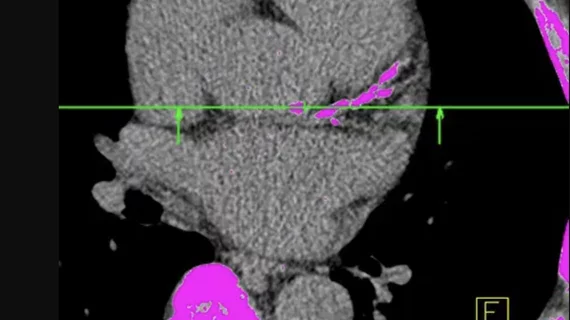
A low-dose CT coronary calcium scoring exam showing areas of calcified plaque and bone in pink. Automated systems can measure the amount of calcium and create a cardiac risk assessment score for patients.
Calcium in the coronary arteries is a known cardiac risk factor. However, new data suggest it may actually tell us more about a person's overall health than researchers previously believed.
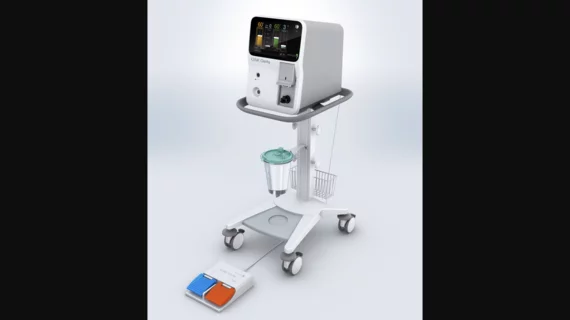
The CUSA Clarity Ultrasonic Surgical Aspirator System. Image courtesy of Integra LifeSciences.
The technology, developed by New Jersey-based Integra LifeSciences, is already approved for several other specialties, including neurosurgery and orthopedic surgery.
Researchers warned that “aggressive procedural modifications” should not be necessary during TAVR to mitigate the risk of prosthesis-patient mismatch. This appears to be true for patients receiving both self-expanding and balloon-expandable TAVR valves.
SCAI President Srihari Naidu, MD, detailed some of the challenges interventional cardiologists face as reimbursements keep declining. The group has been building new partnerships with other medical societies to strengthen its influence in Washington.