
AI dramatically improves the detection of severe heart attacks
Using advanced artificial intelligence (AI) to evaluate electrocardiograms (ECGs) can improve the detection of severe heart attacks and reduce false-positive alerts, according to new data published in JACC: Cardiovascular Interventions.[1]
The focus of this analysis was Queen of Hearts, an AI model designed to detect signs of ST-segment elevation myocardial infarctions (STEMIs) in 12-lead ECGs. Queen of Hearts is part of PMcardio, an AI tool developed by Powerful Medical. The algorithm was first launched in November 2023.
Researchers evaluated data from more than 1,000 patients with a suspected STEMI who triggered emergency reperfusion protocols. All patients underwent treatment from January 2020 to May 2024 at one of three different percutaneous coronary intervention (PCI) centers. The index ECGs underwent both standard triage and a blinded retrospective analysis using Queen of Hearts.
A STEMI was confirmed in 58.2% of patients. The remaining 41.8% were false-positive alerts. Overall, the AI-ECG model outperformed standard care. This included improvements in sensitivity (92% vs. 71%) and specificity (81% vs. 29%) in addition to a dramatically reduced rate of false-positive alerts (7.9% vs. 41.8%). In addition, the AI-ECG model achieved an area under the ROC curve of 0.94 and accurately reclassified 91% of false-positive alerts.
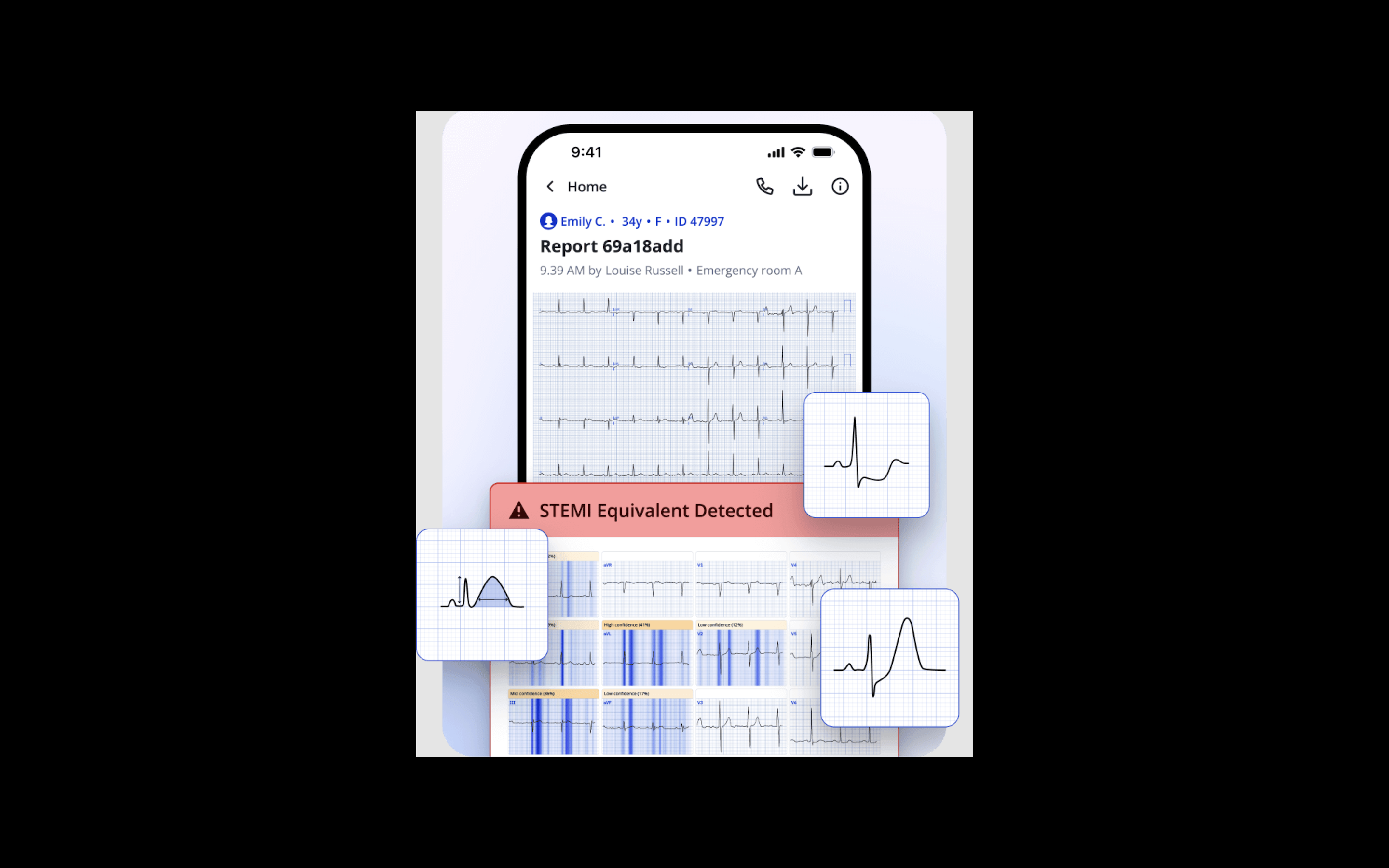
PMcardio image courtesy of Power Medical.
“These results indicate that AI-enhanced STEMI diagnosis at the first medical contact has the potential to shorten time to treatment and reduce false activations,” senior author Timothy D. Henry, MD, a recent president of the Society for Cardiovascular Angiography and Interventions and medical director of The Carl and Edyth Lindner Center for Research and Education at The Christ Hospital in Cincinnati, said in a statement. “This technology may be especially valuable in optimizing the transfer of STEMI patients from non-PCI centers to ensure timely and appropriate care.”
“AI-driven ECG interpretation can bring the best of both worlds—identify true heart attacks early while reducing unnecessary activations,” added lead author Robert Herman, MD, PhD, a researcher at AZORG Hospital in Aalst, Belgium. “Improving the accuracy of triage at the first medical contact can streamline emergency care, reduce fatigue and strain on clinical teams, and ensure that patients who truly need urgent intervention receive it without delay.”
Click here for the full analysis in JACC: Cardiovascular Interventions, an American College of Cardiology journal.
These findings were also presented during TCT 2025 in San Francisco.

Michael has more than 19 years of experience as a professional writer and editor. He has written at length about cardiology, radiology, artificial intelligence and other key healthcare topics.