
Opportunistic screening: AI highlights key heart findings in mammography images
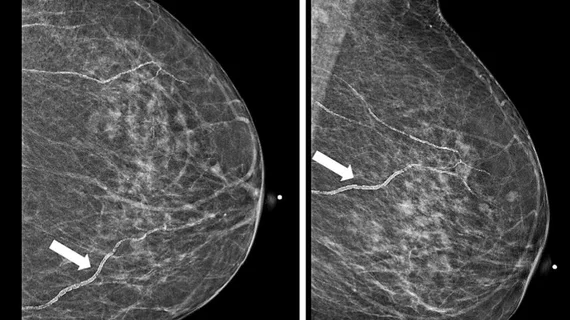
Artificial intelligence (AI)-assisted mammography may be able to predict a woman’s risk of developing cardiovascular disease, according to new data being presented at ACC.25, the American College of Cardiology’s annual conference.
Breast artery calcifications are already visible when radiologists review mammograms, but nothing typically happens with those findings. Researchers aimed to see if AI could do some of the heavy lifting and help translate those findings into an easy-to-understand cardiovascular risk score.
The group trained an advanced AI model to segment calcified vessels in mammography images and produce a risk score that calculates the patient’s risk of developing heart disease. To help make the new-look algorithm as accurate as possible, they developed it using mammography images and electronic health record data from more than 56,000 patients. The patients were all treated from 2013 to 2020 within the Emory Healthcare health system, and at least five years of follow-up data were available for each of them.
“Advances in deep learning and AI have made it much more feasible to extract and use more information from images to inform opportunistic screening,” lead author Theo Dapamede, MD, PhD, a postdoctoral fellow at Emory University in Atlanta, said in a statement.
Overall, the AI model was able to classify a patient’s cardiovascular risk as low, moderate or severe based on nothing more than routine mammography images. It was especially helpful when examining imaging results of younger women, a group that is sure to benefit from early interventions.
“We see an opportunity for women to get screened for cancer and also additionally get a cardiovascular screen from their mammograms,” Dapamede said. “Our study showed that breast arterial calcification is a good predictor for cardiovascular disease, especially in patients younger than age 60. If we are able to screen and identify these patients early, we can refer them to a cardiologist for further risk assessment.”
One of the team’s biggest takeaways was the wide gap in risk between patients with the highest and lowest levels of breast arterial calcification. Patients with severe breast arterial calcification, for instance, face approximately 2.8 times the risk of five-year mortality compared to patients with no troubling signs of breast arterial calcification.
Dapamede is scheduled to present these data at ACC.25 on Monday, March 31, at 9 a.m.

Michael has more than 19 years of experience as a professional writer and editor. He has written at length about cardiology, radiology, artificial intelligence and other key healthcare topics.