
Exploring the link between left ventricular diastolic function and AFib
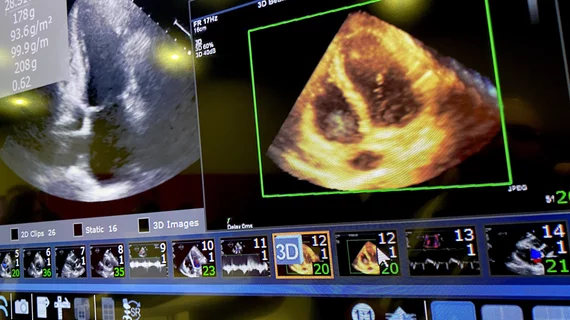
Evaluating left ventricular diastolic function (LVDF) with echocardiography can help identify individuals at an increased risk of developing atrial fibrillation (AFib), according to new findings presented at the American Society of Echocardiography (ASE) 36th Annual Scientific Sessions.
The study aimed to determine whether relaxation of the heart’s LVDF is associated with long-term AFib risk. Researchers with Mayo Clinic used cardiac ultrasound alone or artificial intelligence electrocardiography (AI-ECG), independent of other clinical risk factors.
The study's authors retrospectively analyzed the echocardiograms of more than 82,000 patients. All participants had both an echocardiogram and an ECG within a two-week period between 2001 and 2022. Individuals with a prior documented history of AFib were excluded, and each patient's LVDF was classified into four categories: normal, grade 1, grade 2 and grade 3.
During an average follow-up of five years, AFib occurred in roughly 8% of patients. The results confirmed that those showing early signs of diastolic dysfunction by echocardiography or AI-ECG had a significantly increased risk of developing AFib over time.
“Our findings suggest that a routine assessment of diastolic function can provide a powerful glimpse into a person’s future heart health,” Gal Tsaban, MD, MPH, PhD, a cardiologist at Mayo Clinic and the study’s lead author, said in a statement from ASE. “Each worsening grade of diastolic dysfunction was associated with a progressively higher risk when compared with normal function. These findings highlight the critical role of diastolic function beyond heart failure diagnosis, supporting earlier testing and timely interventions aimed at reducing risk.”
The study concluded that LVDF, whether assessed by echocardiography or AI-ECG, was a strong, independent predictor of AFib risk. The authors said LVDF assessment could become a valuable tool in screening at-risk populations, potentially helping clinicians detect and manage AFib much earlier. The study also points to the promise of automated LVDF AI assessments.
“AI-ECG diastolic function assessment has the similar prognostic power as an echocardiogram. Future study is needed to demonstrate how AI-ECG and echocardiograms can be integrated clinically to identify patients at a high risk of developing AFib," Jae K. Oh, MD, a cardiologist and echocardiographer at Mayo Clinic and the study’s senior author, said in a statement.

Dave Fornell has covered healthcare for more than 17 years, with a focus in cardiology and radiology. Fornell is a 5-time winner of a Jesse H. Neal Award, the most prestigious editorial honors in the field of specialized journalism. The wins included best technical content, best use of social media and best COVID-19 coverage. Fornell was also a three-time Neal finalist for best range of work by a single author. He produces more than 100 editorial videos each year, most of them interviews with key opinion leaders in medicine. He also writes technical articles, covers key trends, conducts video hospital site visits, and is very involved with social media. E-mail: [email protected]