
AI model turns POCUS images into accurate structural heart evaluations
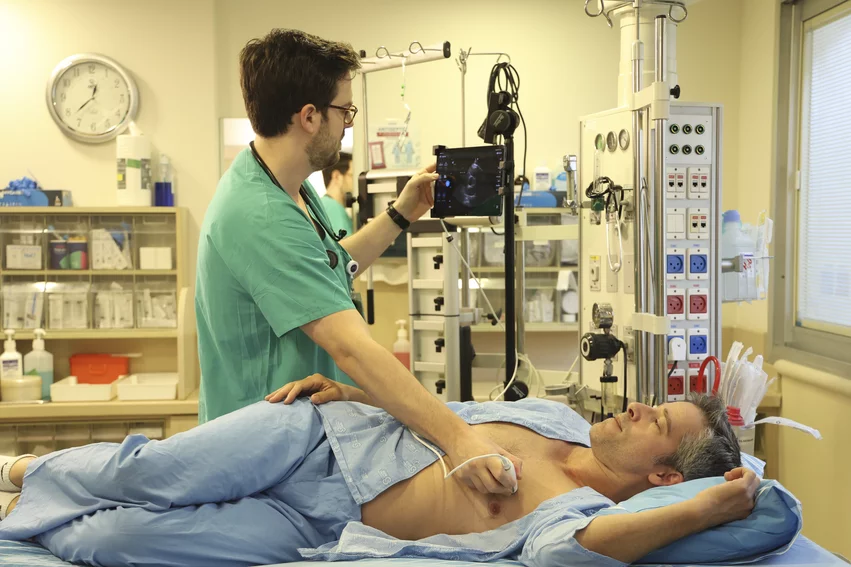
Advanced artificial intelligence (AI) models can detect signs of significant valvular disease and ventricular dysfunction using a single point-of-care ultrasound (POCUS) image, according to new data published in Frontiers in Digital Health.[1] Researchers see potential for this technology to make screening much easier for physicians who are not trained cardiologists.
The AI model at the heart of this study was developed as part of a collaboration between AISAP, an Israeli medtech company, and Sheba Medical Center. AISAP is the company behind AISAP Cardio, a POCUS platform cleared by the U.S. Food and Drug Administration to diagnose structural heart diseases through the use of automated cardiac measurements.
For this particular study, researchers retrospectively evaluated more than 120,000 transthoracic echocardiograms annotated by board-certified cardiologists to train and validate their AI model. A prospective group of more than 200 additional real-world patients then underwent POCUS by non-cardiologist physicians to test the AI’s effectiveness.
In retrospective testing, the AI’s area under the ROC curves (AUCs) were 0.883 for mitral regurgitation, 0.913 for tricuspid regurgitation, 0.940 for ventricular dysfunction and 0.982 for reduced ejection fraction. With the real-world patient cohort, meanwhile, AUCs were 0.72, 0.87, 0.95 and 0.97, respectively.
“The findings of this study represent a significant shift in how we approach cardiac screening,” lead author Lior Fisher, MD, a physician at the Leviev Cardiovascular Institute at Sheba Medical Center, said in a statement. “By proving that a single-view acquisition can yield such high diagnostic accuracy for major pathologies like heart failure and valvular regurgitation, we are effectively removing the technical barriers to cardiac imaging. This allows a much broader range of clinicians to identify potentially life-threatening conditions at the point of care, long before a patient reaches the echo lab.”
“This validation reflects our commitment to continue advancing what's possible with AI in healthcare,” added Adiel Am-Shalom, CEO and co-founder of AISAP.
Fisher et al. did not receive financial support from AISAP or any other outside parties to conduct or publish this analysis.
Click here to read the full study.

Michael has more than 19 years of experience as a professional writer and editor. He has written at length about cardiology, radiology, artificial intelligence and other key healthcare topics.