
FDA authorizes ‘Queen of Hearts’ AI model for detecting heart attacks in ECG results
Powerful Medical, a New York-based medtech company, has been granted De Novo authorization from the U.S. Food and Drug Administration (FDA) for an artificial intelligence (AI) model designed to detect signs of an ST-elevation myocardial infarction (STEMI) in electrocardiography results.
The newly authorized AI model, Queen of Hearts, can flag STEMI as well as STEMI equivalents. It was trained by Stephen W. Smith, MD, an emergency physician at Hennepin County Medical Center. The technology already gained European CE mark approval and it received the FDA’s breakthrough device designation in March 2025. Approximately seven months later, new data on Queen of Hearts was presented at TCT 2025 in San Francisco and simultaneously published in JACC: Cardiovascular Interventions.[1] That study linked the advanced AI model to a significant improvement in heart attack detection and a reduced risk of false-positive alerts.
With this FDA authorization in place, Powerful Medical is now ramping up the deployment of its PMcardio platform, which can embed Queen of Hearts—and other algorithms when desired—into existing clinical workflows.
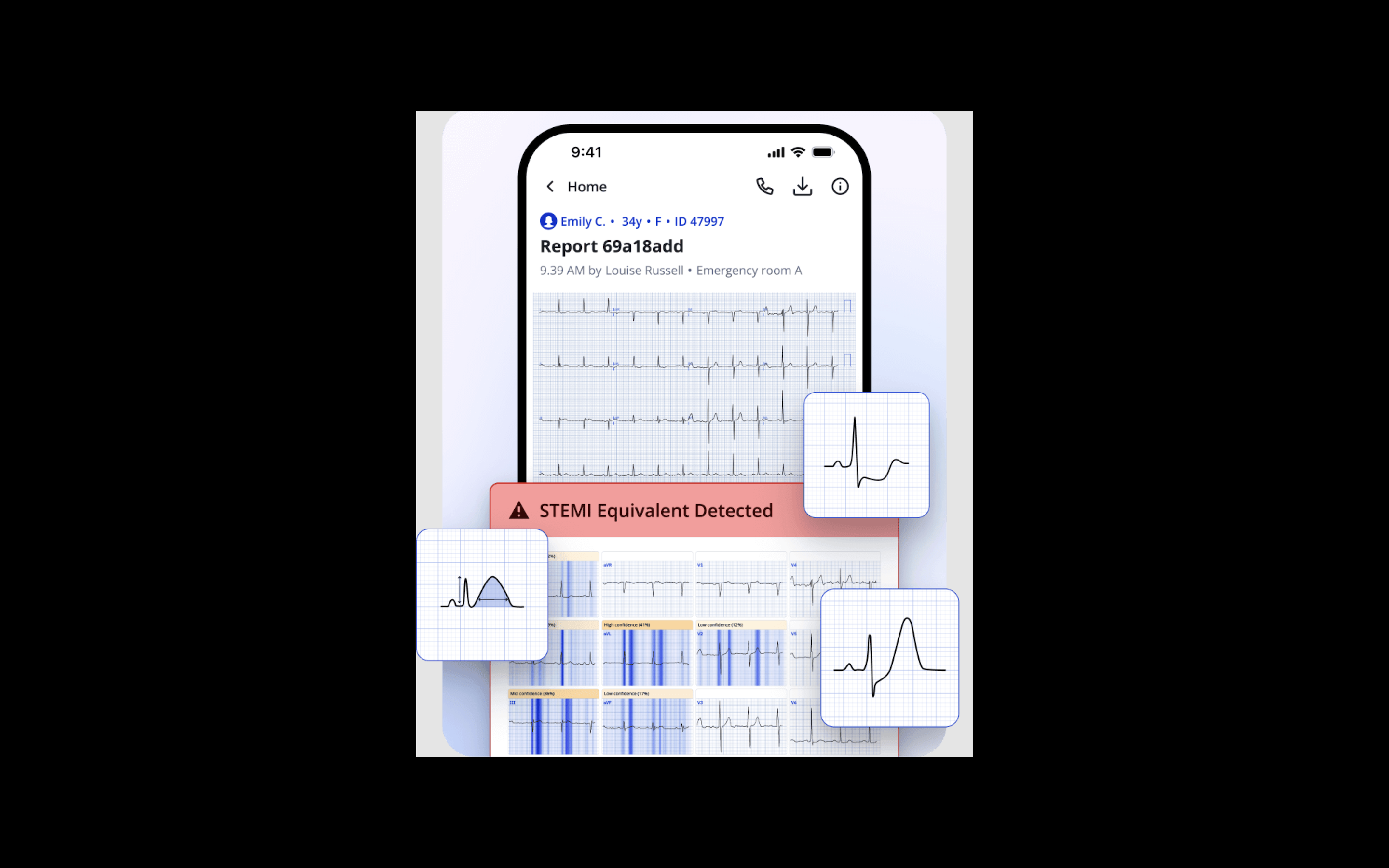
PMcardio image courtesy of Power Medical.
“Many heart attack patients in the United States still miss the window for life-saving treatment due to delays in diagnosis and inefficient triage,” Robert Herman, MD, PhD, chief medical officer and co-founder of Powerful Medical, said in a statement celebrating the FDA authorization
“With FDA-approved technology now available, we can bridge this gap by bringing accurate, real-time ECG interpretation to the first medical contact,” added Felix Bauer, Powerful Medical chief operating officer and co-founder.
Click here for additional information from Powerful Medical.

Michael has more than 19 years of experience as a professional writer and editor. He has written at length about cardiology, radiology, artificial intelligence and other key healthcare topics.