
FDA clears new ‘smart shirt’ for real-time cardiopulmonary monitoring
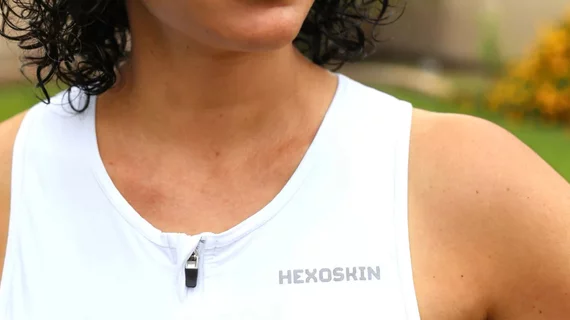
Hexoskin, a Canadian medtech company, has received 510(k) clearance from the U.S. Food and Drug Administration (FDA) for a new “smart shirt” capable of long-term heart and respiratory monitoring.
The Hexoskin Medical System was designed to deliver continuous evaluations of a person’s real-time electrocardiogram (ECG) and respiratory health. Signals are then evaluated through the company’s data management platform.
According to Hexoskin, the newly cleared technology offers significant value for hospitals and health systems as well as medical researchers. The device is now approved for use during clinical trials performed in the United States, for example, delivering ECG, heart rate, respiratory rate and other activity data that can research teams can track for extended periods of time.
Hexoskin has also made it a priority to use advanced artificial intelligence algorithms to seek out new digital biomarkers that work “beyond traditional cardiopulmonary monitoring.”
“The ability to measure both cardiac and respiratory signals continuously provides a comprehensive picture of patient health in their daily lives,” Hexoskin CEO and co-founder Pierre-Alexandre Fournier said in a statement announcing the FDA clearance. “This is a game-changer for remote care, decentralized clinical trials, and the development of digital biomarkers for chronic diseases.”
Cough detection another top priority for Hexoskin
Hexoskin is focused on using cardiopulmonary monitoring for a variety of purposes. Back in April, researchers published new real-world data in Computers in Biology and Medicine focused on Hexoskin’s new AI model focused on cough detection.[1] The company emphasized that its algorithm—which works with a wearable cardiac, respiratory and activity sensor—was built to still work in especially noisy environments and does not record the user’s conversations.
“Detecting coughs accurately without capturing speech content is essential for both patient privacy and clinical utility,” lead author Dr. Philippe Dixon, assistant professor at McGill University, said at the time.

Michael has more than 19 years of experience as a professional writer and editor. He has written at length about cardiology, radiology, artificial intelligence and other key healthcare topics.