
New Philips platform offers AI-powered ECG tools from outside vendors
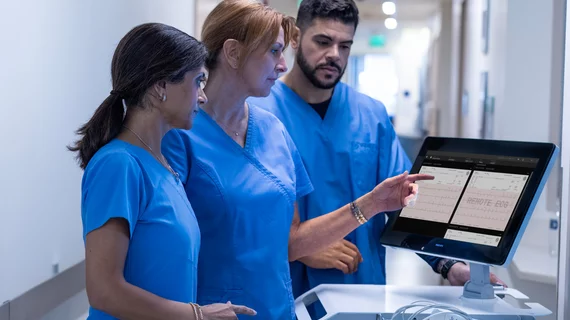
Royal Philips has launched the Philips ECG AI Marketplace, which gives cardiac care teams access to multiple vendor offerings in one central location. The company hopes this can help clinicians efficiently manage and implement artificial intelligence (AI) technologies into their daily workflows.
There are at least 25 FDA-cleared algorithms on the U.S. market to help interpret and monitor electrocardiographs. These include one- or two-lead consumer-grade wearable monitors and standard 12-lead clinical grade systems. While several of these are propriety to specific cardiac monitoring devices, many cardiology departments would like to incorporate multiple types of vendor devices into their ECG management systems. This is Philips' goal for the new ECG AI marketplace.
Anumana, an AI-focused medtech company out of Cambridge, Massachusetts, is the first organization to leverage Philips’ platform. Its FDA-cleared algorithm, ECG-AI Low Ejection Fraction (LEF), is the first to be made available in the ECG AI Marketplace. The LEF algorithm analyzes a standard 12-lead resting ECG to identify reduced ejection fraction, an early indicator of heart failure. Anumana’s AI algorithms, including this one focused on LEF detection, have been extensively evaluated in studies involving more than 150,000 patients and are supported by nearly 100 peer-reviewed publications.
The collaboration with Anumana is part of the continued efforts by Philips to open its ECG ecosystem to third-party solutions, ease integration and support clinical decision-making. By making AI diagnostics more available to cardiac care teams, Philips aims to improve access to early cardiovascular disease detection and care.
According to Philips, this new platform’s ability to manage vendor connections for each AI solution improves operational costs and efficiency by removing the need to devote hospital IT resources to overseeing the different interfaces for every tool.
“Through the Philips ECG AI Marketplace, we’re building a more flexible and connected approach to innovation in cardiac care,” Stefano Folli, business leader for Philips ambulatory monitoring and diagnostics, said in a statement. “The Philips ECG AI Marketplace meets a growing need for easier access and management of AI-enabled tools to improve the healthcare experience for clinicians and patients. Our collaboration with Anumana is a strong example of how these tools can support both earlier detection of heart diseases and accelerate patient care.”
Anumana President and Chief Operating Officer Simos Kedikoglou, MD, echoed praise for the collaboration in a statement.
“We’re proud to be the flagship offering on the Philips ECG AI Marketplace. Working with Philips expands access to our ECG-AI technology through a trusted platform," he said. "By making early detection tools available across multiple platforms, this collaboration helps clinicians intervene sooner, reflecting a shared commitment to improving outcomes for patients at risk of heart failure.”
Philips already integrated ECG AI into its ambulatory monitoring system. The company acquired the Cardiologs AI engine a few years ago, which uses deep neural network (DNN) technology to help healthcare and service providers diagnose patients more efficiently, alleviating the burden of redundant ECG analysis tasks. The technology is also being developed further to identify ECG biomarkers and analyze cardiac data from smartwatches.

Dave Fornell has covered healthcare for more than 17 years, with a focus in cardiology and radiology. Fornell is a 5-time winner of a Jesse H. Neal Award, the most prestigious editorial honors in the field of specialized journalism. The wins included best technical content, best use of social media and best COVID-19 coverage. Fornell was also a three-time Neal finalist for best range of work by a single author. He produces more than 100 editorial videos each year, most of them interviews with key opinion leaders in medicine. He also writes technical articles, covers key trends, conducts video hospital site visits, and is very involved with social media. E-mail: [email protected]