
Advocates celebrate as California's first cardiac ablation is performed in ASC
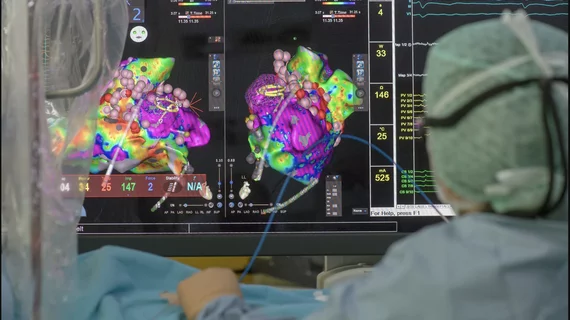
A cardiac arrhythmia ablation was performed in an outpatient ambulatory surgery center (ASC) for the very first time in California. Heart Rhythm Advocates (HRA), the advocacy arm of the Heart Rhythm Society, celebrated the occasion as a "historic milestone."
According to the group, California now allowing electrophysiology (EP) ablations in ASCs is a big deal. Not only due to its size and influence, but because it represents a sign of a larger change in EP business models.
"HRA, alongside physician leaders, specialty societies, patient advocates, and other stakeholders, worked diligently to support this policy change," the organization said in a statement. "Through regulatory advocacy, public comments and ongoing engagement with policymakers, the EP community helped demonstrate that expanding access to these procedures would benefit patients while maintaining the highest standards of care."
Each state regulates which procedures ASCs can perform. This change in California's policy to allow ablations in ASCs is illustrates how more and more complex EP procedures are starting to move to outpatient centers. The change also follows last year's decision by the Centers for Medicare and Medicaid Services (CMS) to add several complex ablation procedures to the ASC Covered Procedures List. That policy was heavily supported by HRA and its EP community partners.
"For patients across California, this milestone means more than increased convenience. It represents expanded access to specialized heart rhythm care in additional settings, helping ensure that eligible patients can receive timely treatment closer to home," HRA said.
Changing payment policies are increasing ASC usage
Medicare is looking for ways to reduce healthcare costs, and procedures performed at an outpatient center cost less that those performed in a hospital settings due to lower overhead expenses. Interventional cardiology has seen a growing migration of procedural volume for lower acuity cases to ASCs since CMS first approved ASC percutaneous coronary interventions (PCI) in 2020. That move prompted the Society for Cardiovascular Angiography and Interventions (SCAI) to publish a guidance on quality, safety and operational considerations in ASCs to set ground rules for maintaining quality.
As advocacy efforts expanded to change payment polices to allow coverage of ASC ablation procedures, the HRS and the American College of Cardiology (ACC) preemptively published a scientific statement in November 2025 on performance guidelines for ASC EP ablation procedures. CMS has since given its approval for performing those procedures in the ASC environment.
"There is a lot going on in the regulatory front and HRS has responded, together with the ACC, in coming up with a document to give some guidance to cardiologists and EPs on how to make this transition safely with quality at the forefront," explained Joseph E. Marine, MD, MBA, vice-director of operations for the division of cardiology, section chief of cardiology for Johns Hopkins Community Physicians and professor of medicine at Johns Hopkins University, in an interview with Cardiovascular Business. "The purpose of these statements was not to suggest procedures should be done in one environment or another. It was to provide guidance on establishing the highest quality, safety and putting the patient at the forefront."
Beyond expense, ASC policy changes are also partly designed to help address wider access and delivery of care issues, said Samuel Jones, MD, MPH, director of inpatient electrophysiology for the Chattanooga Heart Institute and co-chair of the HRS guidance document, in a separate interview with Cardiovascular Business.
“We just don't have enough electrophysiologists right now to take care of all of those patients that are needing our services. So this provides another area in these very focused centers that can have patients come in streamlined and they can do it more efficiently than anyone else," Jones explained. "In 2016, less than 1% of patients would go home the same day after an ablation for atrial fibrillation. Fast forward to 2023, and it was 63%."
That number is expected to increase with CMS funding and expansion of EP procedures in ASCs, Jones said.

Dave Fornell has covered healthcare for more than 17 years, with a focus in cardiology and radiology. Fornell is a 5-time winner of a Jesse H. Neal Award, the most prestigious editorial honors in the field of specialized journalism. The wins included best technical content, best use of social media and best COVID-19 coverage. Fornell was also a three-time Neal finalist for best range of work by a single author. He produces more than 100 editorial videos each year, most of them interviews with key opinion leaders in medicine. He also writes technical articles, covers key trends, conducts video hospital site visits, and is very involved with social media. E-mail: [email protected]