
First patients treated in new PFA trial
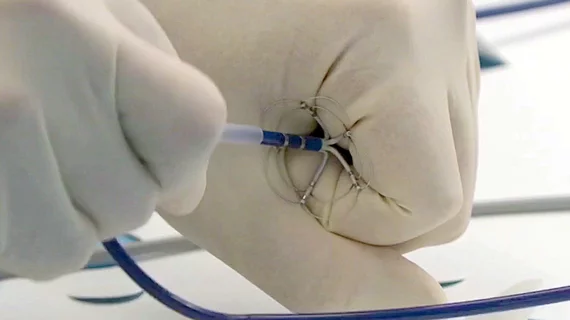
The first patients have officially been treated with the Pulse Biosciences nPulse nanosecond pulsed field ablation (nsPFA) system in the U.S. NANOPULSE‑AF investigational device exemption (IDE) pivotal trial. The device is used to treat recurrent, drug-resistant, symptomatic paroxysmal atrial fibrillation (AFib).
The new PFA technology was developed to improve efficiency and cut EP lab ablation procedure times. It uses five‑second applications to create lesions and does not require catheter repositioning. The company said its European feasibility study found the device has 21‑minute median left atrial dwell time and total procedure times of about 65 minutes. That study had a 96% procedural success at 12 months and 100% acute success, which the company said exceeds the usual 20-25% recurrence rates.
If positive, this new prospective, multicenter study will be used to seek U.S. Food and Drug Administration clearance.
“From the initial clinical experience, the nPulse system demonstrated meaningful potential in the treatment of AFib,” Vivek Reddy, MD, director of cardiac arrhythmia services at the Mount Sinai Fuster Heart Hospital, and principal Investigator of the NANOPULSE-AF Study, said in a statement. “The NANOPULSE‑AF pivotal trial represents an important step forward in evaluating this technology and its potential role in improving procedural outcomes for patients with AFib.”
The first seven patients in the study were treated at St. Bernards Medical Center in Jonesboro, Arkansas, by Devi Nair, MD, principal investigator of the Arrhythmia Research Group.
"This is a promising technology, and our team is pleased to have enrolled and treated the first patients in this pivotal trial," Nair said in the statement. “The performance of the nPulse System, combined with integrated catheter mapping using the investigational EnSite X software from Abbott, provides a very user-friendly experience and supports an efficient, reproducible and streamlined workflow. This approach may potentially offer important advantages compared with existing technologies."
Primary endpoints will be assessed at six and 12 months post-ablation to measure procedural success and safety outcomes.
The nPulse cardiac catheter system delivers energy in billionths of a second; current systems deliver energy in microseconds. The company said its ultra-fast, non-thermal energy is designed to create precise, durable pulmonary vein isolation (PVI), while minimizing collateral damage to surrounding healthy tissue and anatomical structures.
Rare, but serious complications such as esophageal fistulas and nerve damage have been an issue with conventional heat- and cold-generating ablation systems. PFA uses electrical fields to open cell membranes to cause cell death, and its energy can be focused easier into targets tissues. The added safety to surrounding tissue and helping avoid potentially catastrophic complications has rapidly made PFA a new technology direction in electrophysiology. PFA also does not use saline to cool the catheter, which can help avoid fluid overload complications as well and simplify patient management.

Dave Fornell has covered healthcare for more than 17 years, with a focus in cardiology and radiology. Fornell is a 5-time winner of a Jesse H. Neal Award, the most prestigious editorial honors in the field of specialized journalism. The wins included best technical content, best use of social media and best COVID-19 coverage. Fornell was also a three-time Neal finalist for best range of work by a single author. He produces more than 100 editorial videos each year, most of them interviews with key opinion leaders in medicine. He also writes technical articles, covers key trends, conducts video hospital site visits, and is very involved with social media. E-mail: [email protected]