
Surgeons perform world’s first on-table heart reanimation to save infant’s life

Surgeons with Duke Health have performed the first heart operation of its kind to save the life of a three-month-old patient. The group shared its experience in The New England Journal of Medicine, highlighting the long-term impact their breakthrough could have on patient care.[1]
Donation after circulatory death (DCD) heart transplants are rarely performed on pediatric patients, both due to the small size of their hearts and ongoing ethical concerns related to the concept of normothermic region perfusion (NRP). The team at Duke Health developed a new technique, however, that reanimates the donor heart outside of the body using extracorporeal membrane oxygenation (ECMO). This helps clinicians review the heart on a surgical table prior to the transplant.
“This innovation was born out of necessity,” senior author Joseph Turek, MD, PhD, chief of pediatric cardiac surgery at Duke Health, said in a statement. “We were determined to find a way to help the smallest and sickest children who previously had no access to DCD heart donation.”
The on-table heart reanimation appears to have been a success. After three months, Turek et al. wrote, the patient has “not shown evidence of primary graft dysfunction or acute cellular or antibody-mediated rejection.”
“This is a major step forward in pediatric transplant medicine,” Turek said. “On-table heart reanimation could dramatically expand the availability of precious donations—transforming loss into life with greater stewardship and hope.”
The group noted that this process, if widely implemented, could significantly increase the number of young patients who are able to receive life-saving heart transplants. It has not yet been determined if this process is a safe and effective treatment option for adult heart transplant patients.
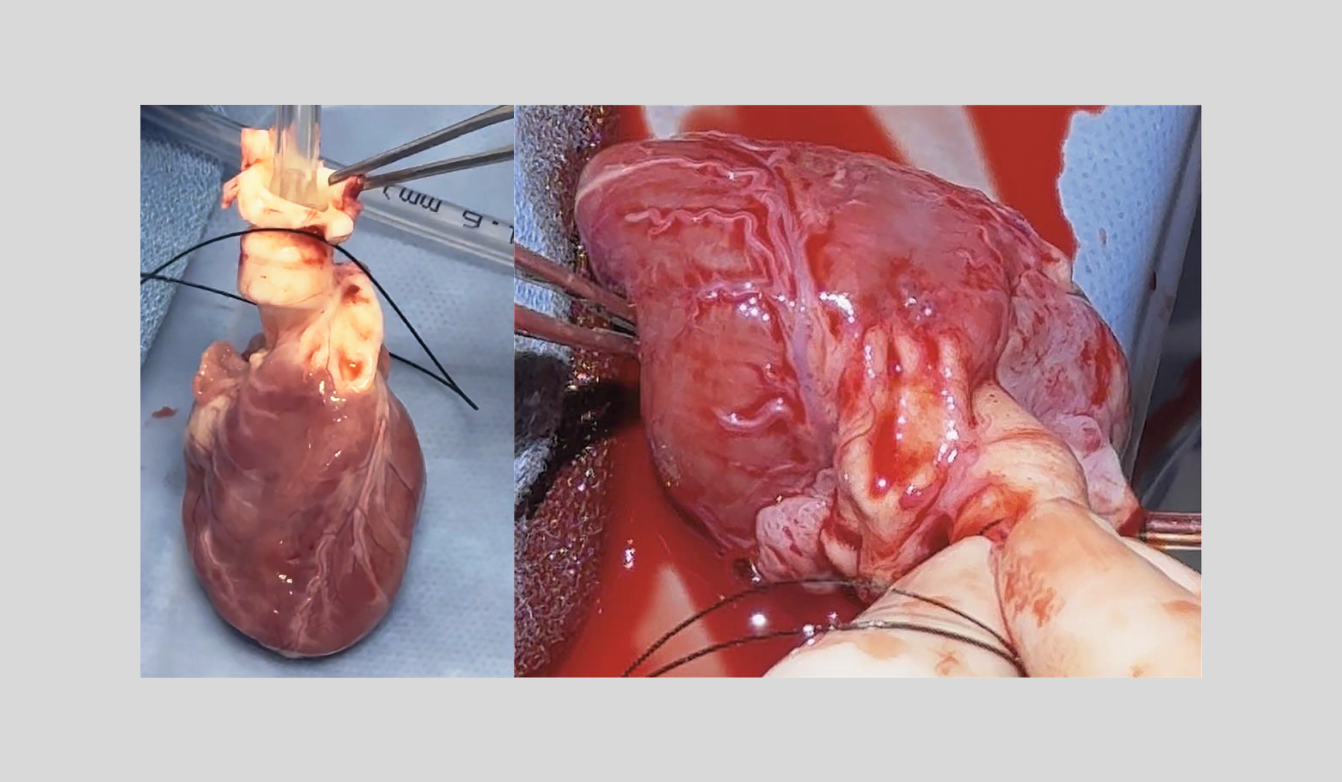
Donor heart before reanimation (left) and donor heart after reanimation (right). Images courtesy of NEJM & Kucera et al.
Turek’s team also emphasized that they are not looking to replace NRP altogether.
“It is essential to note that this technique is not meant to be a substitute if NRP were allowed, but is instead meant to provide an alternative at centers where ethical constraints limit the performance of NRP in children,” they wrote.
Click here to read the full study in The New England Journal of Medicine.
Vanderbilt surgeons develop a new transplant technique of their own
Another leading U.S. facility, Vanderbilt University Medical Center (VUMC), has been hard at work evaluating the safety of their own new surgical approach that could increase patient access to heart transplants. The team’s goal was to improve the recovery of DCD hearts in a way that avoids some of the limitations of current NRP techniques.
Their new approach involves using a flush circuit to oxygenate two liters of cold preservation solution. This can then preserve a donor heart for up to eight hours.
“It’s something that has never been done in the field of heart transplantation with success,” lead author Aaron Williams, MD, an assistant professor of cardiac surgery at VUMC, said in a statement. “I think this is really going to be a game changer. This is going to be a technique that’s going to essentially have worldwide applicability.”
Again, the group’s experience has been published in The New England Journal of Medicine.[2]
Click here to read their full analysis.

Michael has more than 19 years of experience as a professional writer and editor. He has written at length about cardiology, radiology, artificial intelligence and other key healthcare topics.