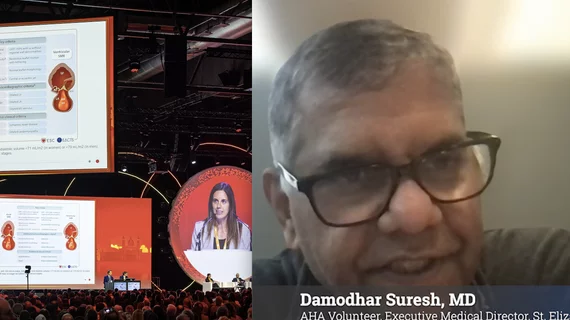
When heart patients are diagnosed with severe AS, how quickly do they need to undergo TAVR? That was the focus of a new analysis published in Open Heart.
Accessing cardiology data for research or population health initiatives is still quite difficult in Europe. Could this new project help reverse that trend?
Vivek Reddy, MD, was involved in most of the late-breaking pulsed field ablation trials at Heart Rhythm 2024. He spoke to Cardiovascular Business at the conference about those trials and what they mean going forward.
It's clear that advanced AI algorithms will radically transform care for TAVR patients in the years ahead. For now, however, certain AI models may require too much data to be helpful on a consistent basis.
Matthew Reynolds, MD, Lahey Hospital and Medical Center, explains data from the EXCALIBER and CAMELOT studies that show ambulatory cardiac monitoring usage among more than 300,000 patients.
Gene manipulation can revert the cardiomyocytes back to a fetal state, allowing them to regenerate. Researchers are now looking for drugs to mimic the effect.
Early detection of cardiac amyloidosis is leads to the best outcomes, but it is often missed until later stages. AI is being developed to help detect these patients earlier using ECG and echo.
Researchers explored data from 23 different studies, identifying a “positive and almost linear association” between alcohol consumption and hypertension.