
3-in-1 polypill linked to better heart failure outcomes
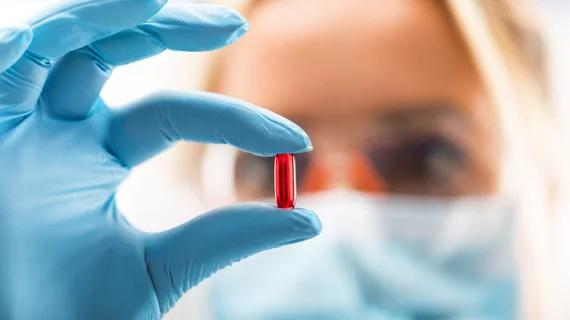
A polypill containing three different medications is associated with significant benefits for select heart failure patients, according to new findings published in Nature Medicine.[1]
For the POLY-HF randomized trial, researchers explored data from 212 heart failure patients treated at two U.S. healthcare facilities. The median age was 54 years old, and 78% of patients were men. Nearly seven in 10 patients were either uninsured, or faced other barriers that can make it harder to receive optimal medical therapy.
One group of patients received a single polypill containing three heart failure medications—beta blockers, sodium-glucose cotransporter 2 inhibitors and mineralocorticoid receptor antagonists—they were told to take once per day. The other group was told to take those three medications separately once per day.
The study’s primary outcome, change in left ventricular ejection fraction after six months, was 3.3% higher for patients taking the polypill than it was for patients taking each medication separately. In addition, patients taking the polypill had a 60% lower rate of heart failure hospitalizations or ED visits.
Adherence, evaluated by studying each participant’s blood for metoprolol and spironolactone, was also higher for patients taking the polypill than it was for patients taking each medication separately.
“Despite the existence of medical therapies for heart failure that significantly reduce hospitalization and mortality, use of these treatments remains low,” said lead author Ambarish Pandey, MD, associate professor of internal medicine in the division of cardiology at UT Southwestern, said in a statement. “Our findings in the POLY-HF trial established that a polypill strategy offers a realistic path to helping patients achieve and maintain optimal therapy for heart failure, a setting where single-pill approaches had not previously been tested.”
“For decades we’ve had medications that meaningfully extend and improve the lives of heart failure patients, yet most people never receive them at the right doses,” added Thomas J. Wang, MD, dean of the University of Michigan Medical School and former chair of internal medicine at UT Southwestern. “POLY-HF shows that simplifying how these drugs are delivered can close that gap, and the principle could extend to many other conditions that depend on complex daily regimens.”
Click here for the full analysis.

Michael has more than 19 years of experience as a professional writer and editor. He has written at length about cardiology, radiology, artificial intelligence and other key healthcare topics.