
HeartMate 3 LVAD linked to 16% risk of stroke, other neurological issues—what heart failure specialists should know
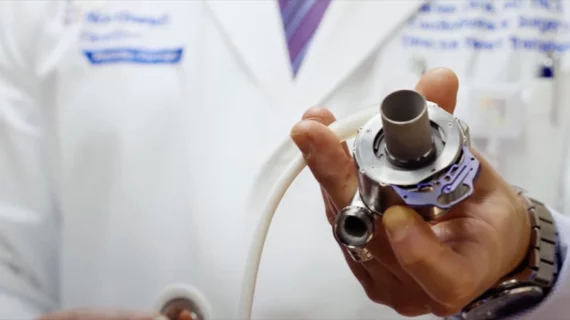
Patients treated with Abbott’s HeartMate 3 left ventricular assist device (LVAD) are associated with comparable rates of strokes and nonstroke neurological adverse events (NAEs), according to a new analysis published in JACC: Heart Failure.[1] These two types of outcomes both reduce a patient’s survival odds, the authors added, so they should be given “comparable weight with universal nomenclature when evaluating the safety of durable LVADs.”
The HeartMate 3 LVAD, a magnetically levitated heart pump approved by the U.S. Food and Drug Administration for the long- and short-term treatment of patients with advanced heart failure, has been surgically implanted in thousands of U.S. patients over the years. It is the only commercially available LVAD on the market ever since Medtronic stopped the sale and distribution of its own HeartWare Ventricular Assist Device in 2021.
For this latest study, researchers explored the Society of Thoracic Surgeons INTERMACS database to track nearly 12,000 patients who underwent treatment with the HeartMate 3 LVAD from 2017 to 2023. In total, after a median follow-up period of 1.4 years, 8% of patients experienced a stroke and another 8% experienced a nonstroke NAE. Examples of NAEs included subarachnoid hemorrhages (SAH) and overt central nervous system (CNS) injuries as well as covert CNS injuries such as seizures and transient ischemic attacks.
Two-year survival rates were 45% and 56% for HeartMate 3 patients who experienced a stroke or nonstroke NAE, respectively, and both outcome types were linked to a reduced risk of survival. Among patients who experienced a stroke, intracerebral hemorrhage had the lowest survival odds after both one year (43%) and two years (35%). The lowest survival odds among nonstroke NAE patients were those who experienced a SAH, subdural hemorrhage, hypoxic-ischemic injury or traumatic brain injury.
“These data indicate that both stroke and nonstroke NAEs contribute similarly toward significant morbidity and mortality after magnetically levitated LVAD placement, even if these events occur six months after implantation, and prevention of these events remains a key target for improving outcomes,” wrote first author Omar Saeed, MD, a cardiologist and heart failure specialist with Montefiore Medical Center in New York City, and colleagues.
Saeed et al. noted that older age, the use of an implantable cardioverter-defibrillator, elevated blood urea nitrogen and a history of undergoing dialysis prior to treatment were linked to worse outcomes for patients after a stroke. Meanwhile, obesity, end-organ dysfunction and lower albumin appeared to increase a patients risk of death after a nonstroke NAE.
The group also found that patients who underwent extracorporeal membrane oxygenation before treatment or a concomitant surgery were linked to a significantly higher risk of experiencing a stroke or a nonstroke NAE. Concomitant surgery may be impossible to avoid in many cases, but clinicians can perform such procedures with those increased neurological risks in mind to help minimize any issues.
“Further studies are needed to determine mechanisms by which temporary circulatory support devices and concomitant surgery contribute to NAEs in patients undergoing magnetically levitated LVAD placement to develop risk mitigation strategies and reduce disease burden,” the authors wrote.
Click here to read the full analysis in JACC: Heart Failure, an American College of Cardiology journal.

Michael has more than 19 years of experience as a professional writer and editor. He has written at length about cardiology, radiology, artificial intelligence and other key healthcare topics.