
FDA clears updates to new platform for cardiac imaging, visualization and navigation

LUMA Vision, an Irish medtech company focused on electrophysiology and interventional cardiology technologies, has secured U.S. Food and Drug Administration (FDA) clearance for its updated Verafeye imaging and visualization platform. The company previously received FDA clearance for the artificial intelligence-powered offering in 2025; this update covers the platform’s expanded capabilities ahead of a planned commercial launch in 2027.
The Verafeye platform provides ultrasound imaging courtesy of a 360° catheter that creates real-time 2D and 3D maps of the patient’s heart. It also offers advanced visualization and navigation capabilities, helping users track imaging and ablation catheters during treatment. In addition, users are able mark locations as they go to confirm they achieve the necessary alignment.
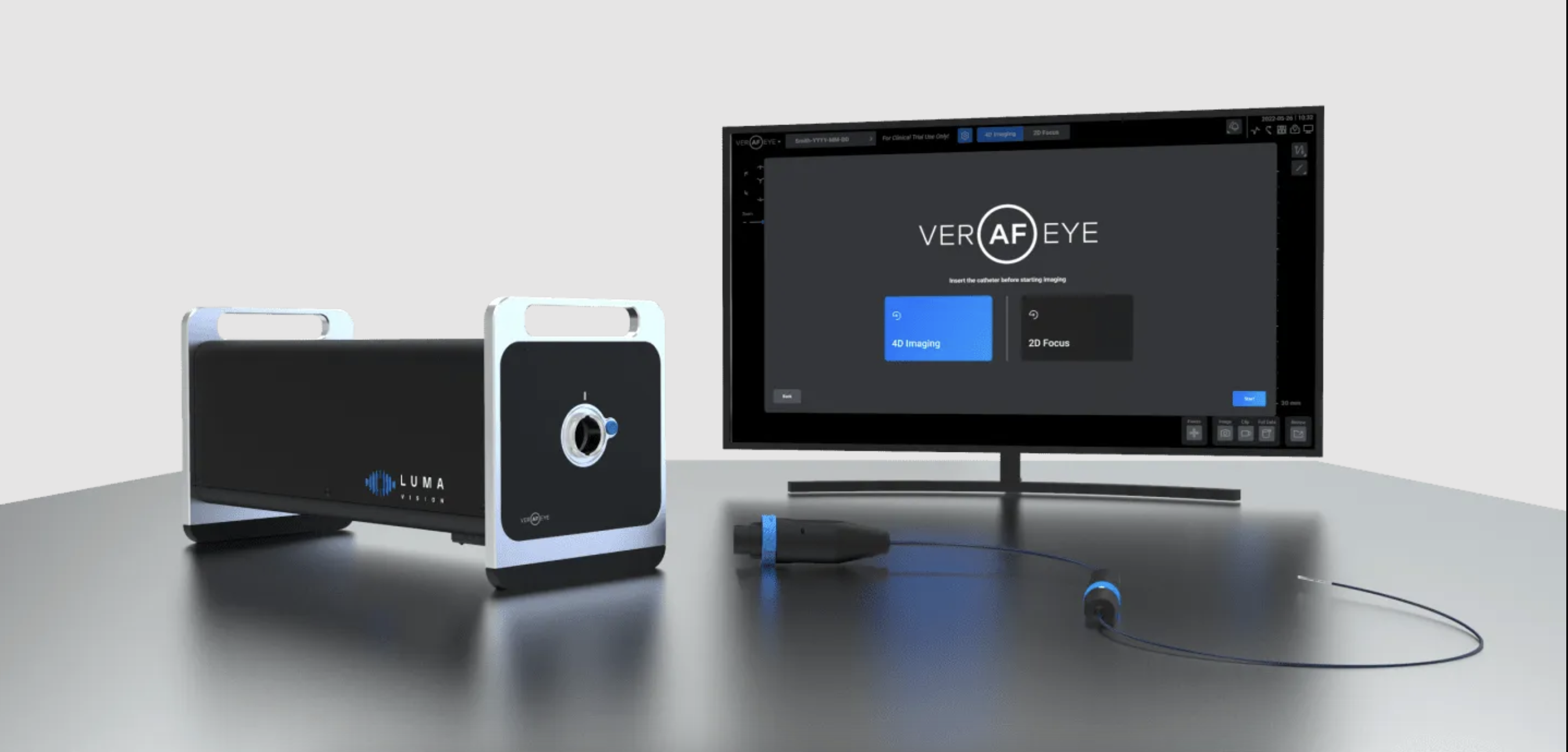
Image courtesy of LUMA Vision.
“This clearance is another step toward the cardiac lab of the future and our commercial launch of Verafeye in early 2027,” Fionn Lahart, CEO and co-founder of LUMA Vision. “By bringing imaging, visualization, navigation and guidance together into a single platform, Verafeye delivers significant clinical impact with virtually no workflow disruption. It's a new paradigm for guiding arrhythmia procedures, and just the beginning of our procedural intelligence platform, which will be expanded into left atrial appendage and structural heart.”
“What stands out about Verafeye is its ability to combine real-time imaging, visualization, and catheter tracking into a single integrated AI-driven platform,” added Devi Nair, MD, chief of cardiac electrophysiology and research at St. Bernards Healthcare and Arrhythmia Research. “Rather than requiring physicians to piece together information from multiple sources, the system continuously provides anatomical and procedural context in real time without the need for repositioning of the imaging catheter. That represents an important step toward a more intelligent and connected approach to guiding cardiac procedures.”

Michael has more than 19 years of experience as a professional writer and editor. He has written at length about cardiology, radiology, artificial intelligence and other key healthcare topics.