
Boston Scientific updates instructions for IVUS catheters to minimize risk
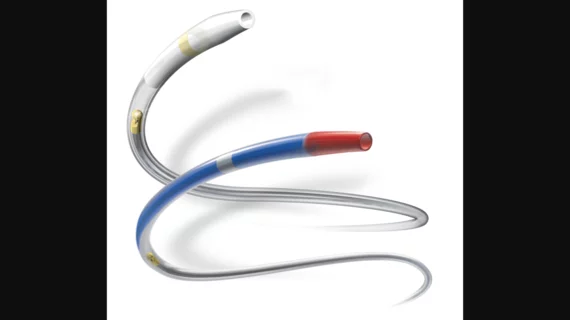
Boston Scientific is recalling its OptiCross intravascular ultrasound (IVUS) imaging catheters after receiving multiple reports of “air embolism events” and learning that clinicians are repeatedly flushing the devices to improve image quality while the catheter is positioned inside the patient. This voluntary advisory includes more than 1.2 million catheters used to image a patient’s coronary or peripheral vasculature.
Devices can still be used for patient care
The U.S. Food and Drug Administration (FDA) has categorized this as a Class II recall. Unlike many recalls, these devices do not need to be returned to the manufacturer. They can still be used for patient care.
However, Boston Scientific has updated the instructions for use (IFU) to clarify how the devices should be prepared and how they should be flushed if such an action is required.
These updated IFU should be read by all clinicians going forward to minimize any potential risks. One key takeaway from Boston Scientific’s recommendations is that the OptiCross IVUS catheters should not be flushed when still positioned inside a patient. If additional flushing is ever required, the catheter should be removed first.
“An investigation of reported events concluded that the air embolisms are not associated with the OptiCross IVUS catheter design or manufacture,” a company spokesperson told Cardiovascular Business. “The catheters remain available for use with no additional action required for patients who have previously been treated with the device.”
Which IVUS devices are included in this Class II recall?
In total, this alert includes 1.29 million devices distributed all over the world. Specific models include:
- The OptiCross Coronary Imaging Catheter
- The OptiCross 6 Coronary Imaging Catheter
- The OptiCross 35 Peripheral Imaging Catheter
- The OptiCross 6 HD Coronary Imaging Catheter
- The OptiCross 18 Peripheral Imaging Catheter
- The OptiCross HD Coronary Imaging Catheter
Again, these devices do not need to be returned and they can still be used to treat patients. Clinicians should review the updated IFU and understand they fully understand how to flush these devices before using them.

Michael has more than 19 years of experience as a professional writer and editor. He has written at length about cardiology, radiology, artificial intelligence and other key healthcare topics.