
Coronary sinus reducer linked to improvements in patients with refractory angina—but questions remain
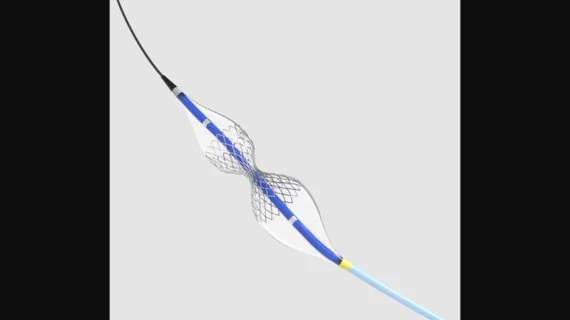
Implanting a coronary sinus reducer (CSR) from Shockwave Medical is safe and associated with key benefits for patients with refractory angina (RA), according to a new meta-analysis published in JACC: Cardiovascular Interventions.[1] However, the device’s ability to improve outcomes fell short of what has been observed in previous studies; the authors believe additional research is still needed.
The Shockwave Reducer is a balloon-expandable, hourglass-shaped stent designed to increase coronary sinus pressure. An earlier version of this technology was known as the Neovasc Reducer System before Shockwave Medical acquired Neovasc for approximately $100 million in 2023. Johnson & Johnson MedTech then acquired Shockwave Medical for approximately $13.1 billion the following year.
This meta-analysis focused on 16 different studies and a total of 848 patients. This included three parallel-arm, double-blind, placebo-controlled randomized controlled trials (RCTs) and 13 unblinded single-arm studies. Overall, the CSR was linked to an implantation success rate of of 98.3%. This broke down to an average of 98.8% for the single-arm studies and an average of 93.5% for the RCTs. No periprocedural deaths or strokes were reported. There were four acute coronary syndrome events, but none of those were directly linked to the CSR. The most common complication, device migration, occurred in 1.5% of patients.
The team behind this meta-analysis also found that treatment with the CSR was linked to improvements in Canadian Cardiovascular Society (CCS) angina classification, Seattle Angina Questionnaire (SAQ) scores and treadmill exercise times. However, these improvements were greater in the single-arm studies than in the placebo-controlled RCTs, leaving the authors uncertain if the long-term benefits of treatment outweigh any risks.
“CSR demonstrates favorable safety across designs but carries non-negligible risks, including cardiac tamponade and device embolization, underscoring the need for robust efficacy evidence,” wrote first author Utkarsh Ojha, MBBS, BSc, a researcher with East Kent Hospitals University NHS Foundation Trust, and colleagues. “Single-arm studies investigating the CSR in RA and their meta-analyses often incorrectly claim to assess efficacy, though their findings reflect total observed effectiveness and are prone to nonphysical influences. Conflating efficacy with effectiveness leads to misinterpretations.”
Ojha et al. emphasized that larger placebo-controlled trials are necessary to gain a better understanding of this device’s long-term efficacy.
“Moving forward, the COSIRA-II trial, with a larger enrollment target than existing RCTs, may provide more precise placebo-controlled estimates for key outcomes,” the group wrote. “Longer term comparative assessments, essential for understanding the consequences of prolonged coronary sinus narrowing, remain an unmet need.”
The Shockwave Reducer has received CE mark approval. However, it has not yet been approved by the U.S. Food and Drug Administration to treat U.S. patients.
Click here to read the full analysis.

Michael has more than 19 years of experience as a professional writer and editor. He has written at length about cardiology, radiology, artificial intelligence and other key healthcare topics.