
FDA shares draft guidance for cardiovascular surgical robots
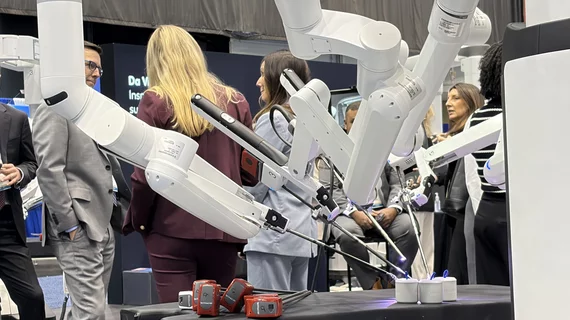
As robotic-assisted cardiac surgery technologies continue to evolve and expand, the U.S. Food and Drug Administration (FDA) has shared a new guidance outlining the review process for these systems and other helpful regulatory details.
The FDA's Draft Guidance on Robotically-Assisted Surgical Devices (RASDs) is available now. The 50-page document outlines what the FDA would like to see as new vendors submit their technologies for review and companies seek new indications for existing FDA-cleared systems.
The draft policy covers all types of medical robotic systems, including those that perform a wide variety of cardiac surgical procedures. According to the FDA, multiple procedures will fall under different "umbrellas" of coverage.
For example, the umbrella of mitral valve repair and mitral valve replacement will cover such procedures as patent foramen ovale closure, atrial septal defect repair, left atrial appendage alosure/occlusion, atrial myxoma excision, tricuspid valve repair and epicardial pacing lead placement.
The full draft document can be accessed here. Comments are being accepted until Nov. 24.
Telerobotic procedures and autonomous robots on the horizon
The FDA said this guidance does not address remotely teleoperated RASDs or autonomous robots that perform significant aspects of operative procedures independent of qualified practitioners. However, it will likely be the first step in setting guidelines that do cover such treatments.
The FDA also announced it will be hosting a public workshop on evaluating the benefits and risks of robotic medical devices with autonomous or remote capabilities Dec. 2–3. This workshop is open to the public and will discuss a broad range of robotic medical devices both inside and outside the operating room.
The FDA is also actively engaging with stakeholders to discuss the unique considerations posed by robotic medical devices with autonomous and/or remote teleoperation capabilities. As it considers these details, the agency is encouraging early engagement from device developers working on novel robotic medical devices.
The U.S. government recently funded nearly $65 million in research and development grants through its Advanced Research Projects Agency for Health (ARPA-H) for vendors to develop a completely autonomous remote endovascular robotic system that perform mechanical thrombectomy on stroke patients.
Siemens Healthineers and Stryker were granted $31.1 million. The Siemens Corindus robotic cath lab system has been around for years and enables intervention neurologists, cardiologists and radiologists to more precisely guide catheters inside vessels to perform percutaneous procedures. The new money will be used to enable remote use and and make it autonomous.
Philips, meanwhile, received $33.7 million to create a system in collaboration with Johns Hopkins University and Boston University to develop technologies for remote and increasingly automated endovascular procedures. The new research and development money will go toward making interventions remote and more autonomous.
Other robotic systems developers in cardiology
Electrophysiology (EP) robotic ablation system vendor Stereotaxis is currently adapting its technology to enable remote procedures where patients can undergo catheter ablations performed by experts located hundreds of miles away. In July, Stereotaxis completed its acquisition of the French interventional cardiology robotic systems company Robocath to expand into interventional cardiology as well.
The FDA recently granted breakthrough device designation to XCath Robotics for its Iris surgical robotic system that performs remote robotic-assisted mechanical thrombectomy in acute ischemic stroke patients.
In addition, India-based SS Innovations International submitted its SSi Mantra robotic system for FDA 510(k) review in December 2025. The company said the FDA review should be completed by the end of the first quarter of 2027. The SSi Mantra surgical robotic system is already being used in several countries, including for remote tele-robotic procedures. The company made headlines in June when it performed the longest distance robotic telesurgery procedure in the world, with a 12,500 mile separation between the surgeon operator in Guyana performing a left internal mammary artery (LIMA) takedown on a patient in India.

Dave Fornell has covered healthcare for more than 17 years, with a focus in cardiology and radiology. Fornell is a 5-time winner of a Jesse H. Neal Award, the most prestigious editorial honors in the field of specialized journalism. The wins included best technical content, best use of social media and best COVID-19 coverage. Fornell was also a three-time Neal finalist for best range of work by a single author. He produces more than 100 editorial videos each year, most of them interviews with key opinion leaders in medicine. He also writes technical articles, covers key trends, conducts video hospital site visits, and is very involved with social media. E-mail: [email protected]