
Siemens Healthineers receives up to $31M to develop autonomous robot for remote stroke treatments
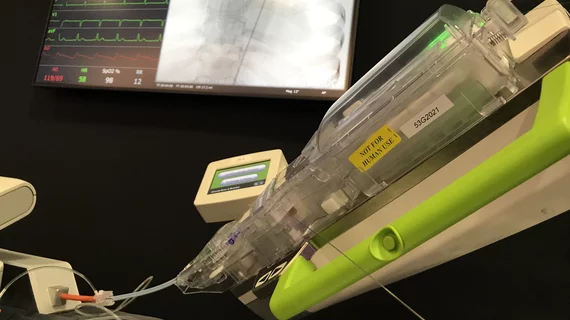
Siemens Healthineers has been awarded up to $31.1 million by the Advanced Research Projects Agency for Health (ARPA-H) to accelerate the development of an autonomous, remote endovascular robotic system that perform mechanical thrombectomy on stroke patients.
This funding will be provided over five years. The goal is to create a robot capable of performing these endovascular procedures without direct human input. Siemens Healthineers will also contribute $5.4 million as part of a cost-sharing arrangement.
Siemens Healthineers is working to fill critical gap in U.S. stroke care, where many patients do not have immediate access to neurointerventionalists who can perform thrombectomy in the brain. Without immediate interventions, stroke patients are left with one option: using pharmacological thrombolytics that may not offer the optimal outcomes for stroke patients. Cather-based thrombectomy to remove clots through an interventional procedure has become a standard of care in some regions of the U.S., but access is concentrated mainly in large cities comprehensive stroke centers. When performed promptly, it can significantly improve patient outcomes and reduce the risk of long-term disability.
This trend in stroke care is similar to the major change in the cardiac and care for heart attacks 35 years ago. In the early 1990s, hospitals began to move from the use of thrombolytics to percutaneous coronary intervention (PCI). PCI outcomes were so good that use of thrombolytics in myocardial infarction became obsolete. Many experts believe the same transition is now occurring in stroke care, but there are just not enough high-quality neurointervcentional operators available at this time.
This robotic technology, on the other hand, could expand access across the country to rural and possibly remote regions.
“Early access to the right treatment makes all the difference for stroke patients," explained Philipp Fischer, head of advanced therapies at Siemens Healthineers, in a statement. "By integrating robotics, imaging, devices and artificial intelligence, we want to transform the way endovascular therapy is delivered, towards greater accessibility and precision across a broader range of care settings.”
He said the ARPA-H investment is a big step in advancing autonomous remote endovascular robotics for the benefit of patients and communities around the world.
In the U.S., more than half of the population lives more than an hour from a thrombectomy capable hospital. ARPA-H said only about 12% of 335,000 eligible stroke patients receive mechanical thrombectomy each year. Since treatment is time-sensitive, every delay increases the risk of long-term disability or death, driving up healthcare costs.
Stryker has a close collaboration with Siemens and is also receiving part of the funding. The two companies have already established a strategic partnership in 2025 to accelerate innovation in robotic neurovascular interventions.
“This funding represents an important milestone in our collaboration with Siemens Healthineers and reinforces our shared commitment to advancing neurovascular care through innovation," said Jim Marucci, president of Stryker’s neurovascular division in the same statement. "Together, we're developing technologies designed to help overcome barriers to treatment and bring advanced stroke care closer to more patients and communities.”
Siemens Healthineers acquired the interventional robotics company Corindus for $1.1 billion in 2019. The company offers a FDA-cleared cardiovascular and neurointerventional therapy robotic system that can be operated by an interventionalist for more precise catheter movements.
The new funding is part of the ARPA-H Autonomous Interventions and Robotics program headed by Ileana Hancu, PhD. She was previously at the National Cancer Institute, part of the U.S. National Institutes of Health, where she was a program director in the Image Guided Interventions Branch of the Cancer Imaging Program.

Dave Fornell has covered healthcare for more than 17 years, with a focus in cardiology and radiology. Fornell is a 5-time winner of a Jesse H. Neal Award, the most prestigious editorial honors in the field of specialized journalism. The wins included best technical content, best use of social media and best COVID-19 coverage. Fornell was also a three-time Neal finalist for best range of work by a single author. He produces more than 100 editorial videos each year, most of them interviews with key opinion leaders in medicine. He also writes technical articles, covers key trends, conducts video hospital site visits, and is very involved with social media. E-mail: [email protected]