
GE HealthCare investment in AI-powered TEE robotics part of growing automation trend
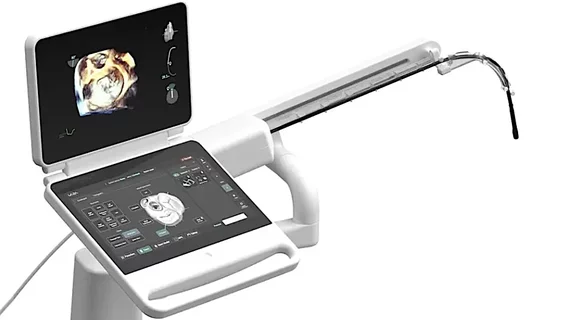
GE HealthCare led $160 million in financing this week for the start-up company Laza Medical, which is developing a high-quality, artificial intelligence (AI)-powered robotic transesophageal echo (TEE) procedural imaging system for interventional cardiology. This move is part of a larger movement to create autonomous AI systems in the cath lab.
By combining AI and robotics, Laza said it wants to extend the reach of specialized imaging expertise. The robotic system in development is aimed at structural heart, electrophysiology (EP) and diagnostic procedures. It combines real-time 3D heart modeling, procedural guidance, robotic probe control and an intuitive interface. The technology in development should be able to streamline processes, reduce variability and improve the quality and reach of cardiac procedures.
"High-quality imaging is foundational to all successful cases," Firas Zahr, MD, director of interventional cardiology at Oregon Health Sciences University Hospital, explained. He had experience with the software during the first-in-human clinical study last year. "Consistent anatomic and spatial context simplifies procedures and helps clinicians navigate the anatomy with confidence and precision."
GE HealthCare was involved an earlier funding round for $36 million in financing in December 2023.
Autonomous and telemedicine cath lab robots on the technology horizon
There has been a flurry of activity in efforts to develop advanced robotic systems to enable greater access to interventional procedures performed by expert operators using telemedicine robotic platforms. However, the next step will be for autonomous AI to perform some of these procedures, especially in remote regions where there are no other options for immediate emergency procedures.
The U.S. government has recently shown interest in developing access to robotic stroke thrombectomy. This includes funding through the Advanced Research Projects Agency for Health (ARPA-H) to accelerate the development of an autonomous, remote endovascular robotic system that performs mechanical thrombectomy on stroke patients; Siemens Healthineers was awarded $31.1 million to accelerate the development of an autonomous, remote endovascular robotic system that can achieve the same thing. Philips Healthcare was also awarded $33.7 million to develop an autonomous robotic system with partners Johns Hopkins University, Boston University and Weill Cornell Medicine.
As robotic-assisted cardiac surgery technologies continue to evolve and expand, the U.S. Food and Drug Administration (FDA) shared new guidance in September outlining the review process for these systems. The FDA's Draft Guidance on Robotically-Assisted Surgical Devices (RASDs) is a 50-page document outlining what the FDA would like to see as new vendors submit their technologies for review and companies seek new indications for existing FDA-cleared systems.
XCath Robotics recently received the FDA's breakthrough device designation for its Iris surgical robotic system that performs remote robotic-assisted mechanical thrombectomy in acute ischemic stroke patients; long-time EP lab robotics vendor Stereotaxis is also working on technology to perform remote procedures and recently purchased technology to expand into the interventional cardiology. What's more, India-based SS Innovations International Inc. made history this year, performing a remote procedure on a patient 12,500 miles away, and performing the first live, remote cardiac surgery on stage at the 2026 European Association for Cardio-Thoracic Surgery.

Dave Fornell has covered healthcare for more than 17 years, with a focus in cardiology and radiology. Fornell is a 5-time winner of a Jesse H. Neal Award, the most prestigious editorial honors in the field of specialized journalism. The wins included best technical content, best use of social media and best COVID-19 coverage. Fornell was also a three-time Neal finalist for best range of work by a single author. He produces more than 100 editorial videos each year, most of them interviews with key opinion leaders in medicine. He also writes technical articles, covers key trends, conducts video hospital site visits, and is very involved with social media. E-mail: [email protected]