
Device to treat coronary microvascular disease rakes in $23 million in financing
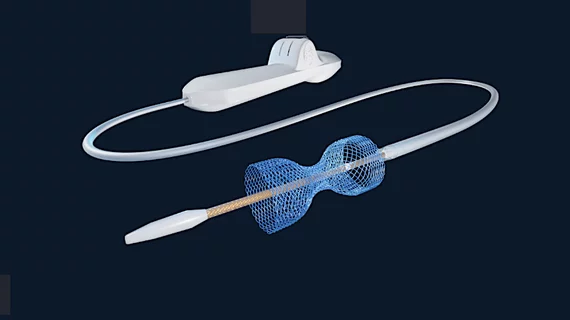
With no teatments available that directly improve coronary flow reserve in patients with coronary microvascular disease, there is interest among investors in technologies that might help. VahatiCor this week closed an oversubscribed $23 million in series B financing to advance its early feasibility study, engineering, development and preparation for pivotal trials on its A-Flux Reducer System.
Coronary microvascular dysfunction (CMD) causes chest pain and angina despite patients not having any obvious blockages in major arteries. The condition impacts up to 4 million Americans, and disproportionately impacts women. In studies, women with ischemia and non-obstructive coronary artery disease (INOCA) have major adverse cardiac events rates up to four times higher than men. Current medications to treat the condition fail in more than half of patients.
The investigational system includes an hour-glass shaped nitinol frame that self-expands into the coronary sinus. It is designed to enhance myocardial perfusion by creating a controlled narrowing of the coronary sinus to optimize and redistribute blood flow to reduce chest pain symptoms.
“VahatiCor can continue executing the critical next phase of our strategy to advance A-Flux through clinical studies and fulfill our mission of making this breakthrough therapy available to the millions suffering from coronary microvascular dysfunction,” said VahatiCor co-founder Marwan Berrada-Sounni in a statement.
The SERRA-I early feasibility study will include 30 patients across six sites. Its investment was led by S3 Ventures, with support from Intuitive Ventures, and a strategic investor.
“We believe VahatiCor's A-Flux Reducer System represents a significant breakthrough for an enormous and underserved patient population in need of a true solution,” said S3 Ventures Managing Director Brian R. Smith in a statement. “The company’s unique approach leveraging a repositionable, self-expanding device provides a meaningful advantage in procedural safety and efficacy, positioning them to become the clear leader in coronary sinus therapy.”

Dave Fornell has covered healthcare for more than 17 years, with a focus in cardiology and radiology. Fornell is a 5-time winner of a Jesse H. Neal Award, the most prestigious editorial honors in the field of specialized journalism. The wins included best technical content, best use of social media and best COVID-19 coverage. Fornell was also a three-time Neal finalist for best range of work by a single author. He produces more than 100 editorial videos each year, most of them interviews with key opinion leaders in medicine. He also writes technical articles, covers key trends, conducts video hospital site visits, and is very involved with social media. E-mail: [email protected]