
Q&A: What Medicare covering TriClip means for heart patients with leaky tricuspid valves

The U.S. Centers for Medicare and Medicaid Services (CMS) recently announced that Medicare will now cover transcatheter edge-to-edge repair (T-TEER) procedures performed with Abbott’s TriClip device on a national level for eligible patients with tricuspid regurgitation. As the U.S. Food and Drug Administration (FDA) approves other T-TEER devices, they will also be covered under this update.
The news came just a few months after CMS finalized Medicare coverage for transcatheter tricuspid valve replacement (TTVR) with the FDA-approved Evoque system from Edwards Lifesciences. That’s two massive policy shifts in favor of transcatheter tricuspid treatments.
To learn more about how this latest Medicare update may impact patient care, Cardiovascular Business spoke with interventional cardiologist Jason H. Rogers, MD, a professor at UC Davis Medical Center in Sacramento, California, and director of the facility’s structural and interventional fellowship programs. Rogers is a veteran of the structural heart space and a recognized leader in the development of new interventional procedures.
Read the full interview below:
Cardiovascular Business: We’ve seen a lot of movement in tricuspid valve treatments in the last few years. Can you tell me a bit about that shift? It wasn’t too long ago that people were calling it the “forgotten” valve.
Jason H. Rogers, MD: It was given that nickname because, when you think of all of the valves in the heart, the tricuspid valve is often the last one that comes to attention. Most action is on the left side of the heart, so the aortic valve and mitral valve are very important due to the fact that they are associated with the left ventricle. The pulmonary valve is also important, especially in kids, because it is involved in a lot of congenital abnormalities. That leaves the tricuspid valve, which has been receiving much more attention in the last five to 10 years now that we have therapies in place for those other valves.
The biggest thing we’ve learned during this time is that there are a lot more patients out there with tricuspid valve disease than we ever imagined. Some estimates have suggested it is even more common than mitral valve disease. We’re still very early in this journey of understanding the tricuspid valve.
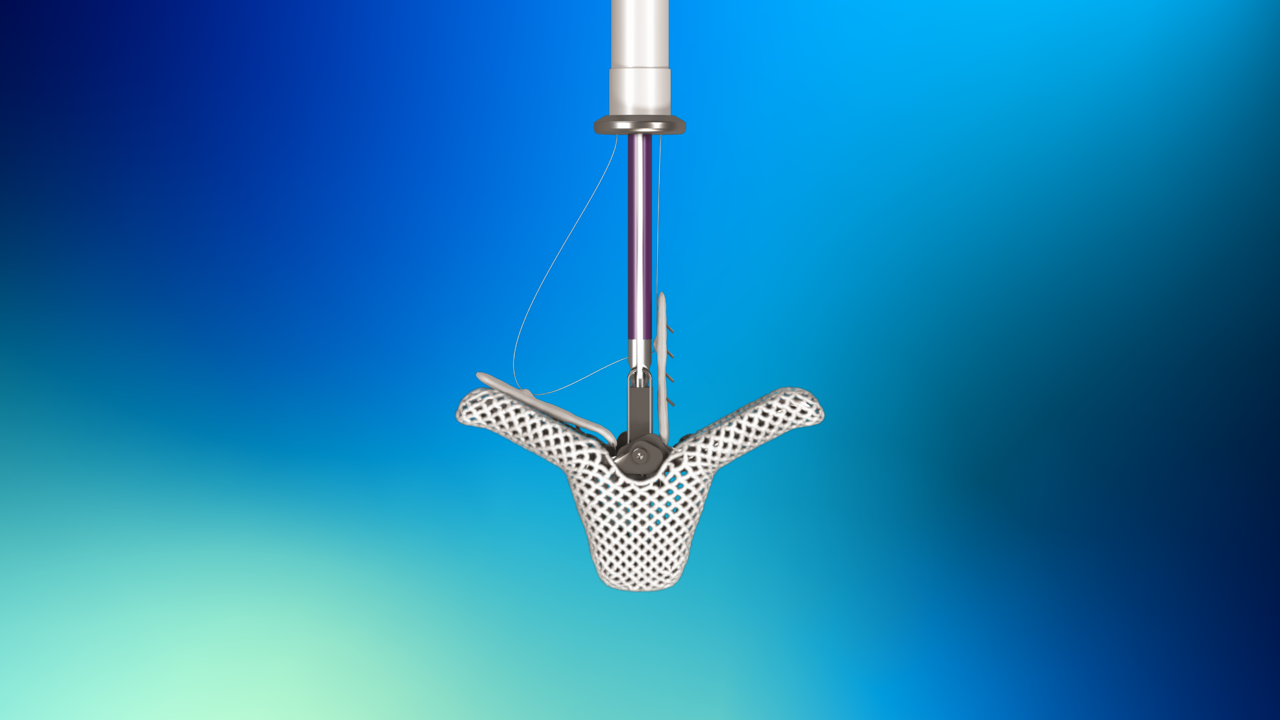
The TriClip T-TEER device. Image courtesy of Abbott.
Medicare just approved Medicare coverage on a national level for T-TEER procedures. How could that impact patient care in the years ahead?
This will certainly help with adoption. Patients are very concerned about their insurance and Medicare costs, so this makes that whole conversation much easier. It will also help private insurance for T-TEER now that Medicare has set the precedent.
Reimbursement also helps us physicians when we go to administrators and try to grow our programs. It makes it so much easier to have those discussions when the procedure is already being reimbursed.
As a veteran of this space, what is your overall perspective on T-TEER and the TriClip device?
These devices are effective and extremely safe. As a physician, I feel very good talking to our patients about TriClip. The chances of death, stroke or a myocardial infarction after treatment are very, very low. This is a big step forward for patients with tricuspid regurgitation.
I do think there are still certain barriers to adoption, including the fact that TriClip procedures can be quite challenging. The imaging requirements when implanting a MitraClip are maybe a four out of 10 in terms of difficulty. With a TriClip, though, the difficultly can be a nine or 10. Some operators may even call it an 11 out of 10. That is the biggest barrier. Trying to roll out these procedures to more facilities is going to take a lot of effort—and the same thing is true for the Evoque TTVR system as well. These are learning curves for both procedures.
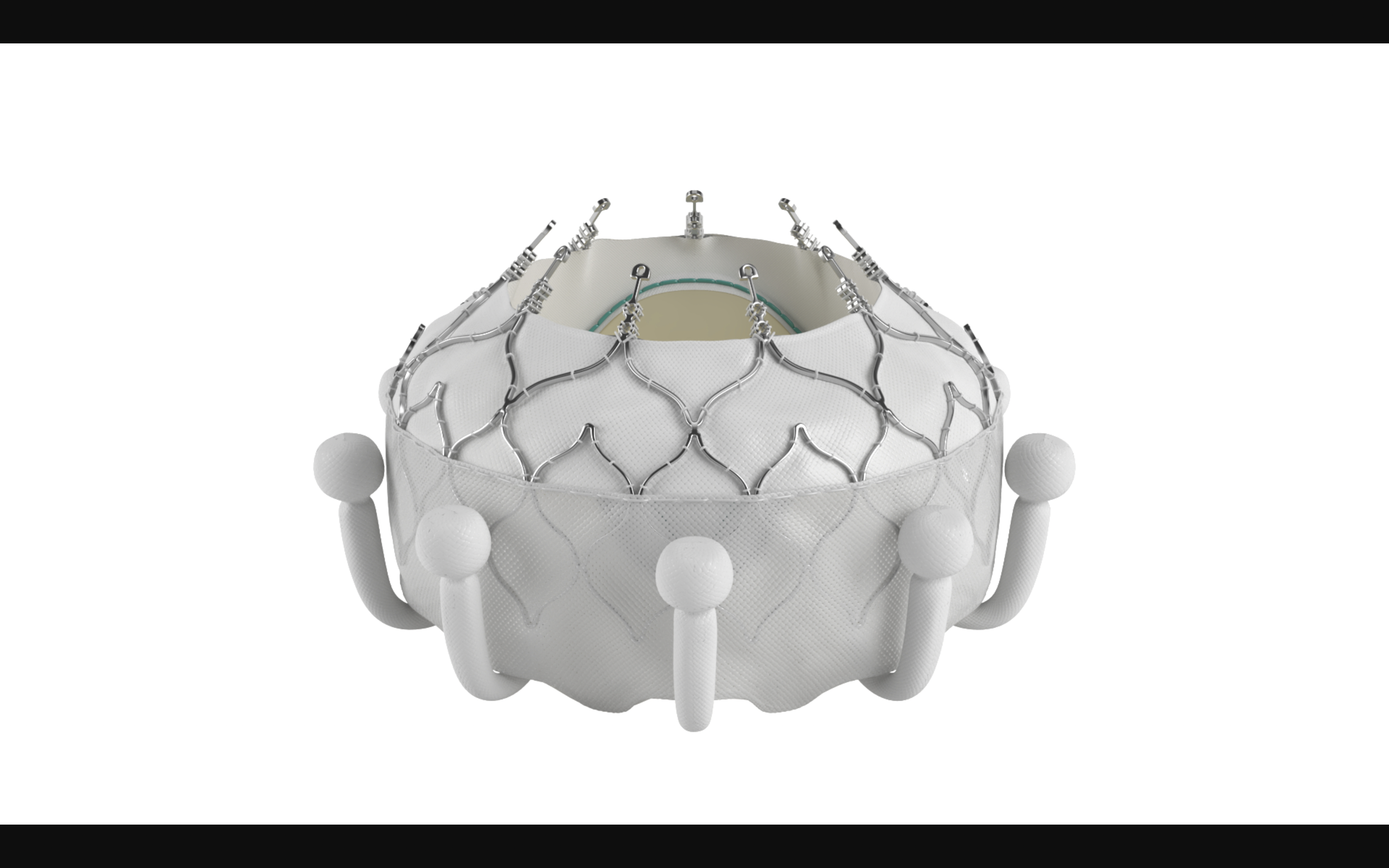
The Evoque TTVR device. Image courtesy of Edwards Lifesciences.
Are there any other T-TEER or TTVR devices in development that you have your eye on?
There are almost too many technologies being developed to count.
TriClip and Evoque are the first two devices ever in this space, and they are both seen as effective, but they were also adapted from mitral valve technologies. I think we’re going to see some devices emerge that were specifically engineered for the tricuspid anatomy that may address some of the limitations of those devices.
Is there anything else about this tricuspid valve treatments you wanted to mention?
A lot of patients with tricuspid regurgitation are older and a have a lot of other medical conditions. When they are referred to us, however, they are often not yet on optimal medical therapy. And what we need to avoid is having physicians see a patient with tricuspid regurgitation and then immediately refer them for a TriClip. Physicians need to look at these patients thoughtfully and really make sure they are on adequate medical therapy.
Many patients, for instance, may feel better if they are on diuretics. Maybe that is all they need. Not every patient with tricuspid regurgitation needs a procedure. The importance of medical therapy should not be forgotten.

Michael has more than 19 years of experience as a professional writer and editor. He has written at length about cardiology, radiology, artificial intelligence and other key healthcare topics.