
A promising SELUTION: Sirolimus-eluting balloon from Cordis makes impression at TCT 2025

Two late-breaking clinical trials at TCT 2025 in San Francisco focused on the same device: the SELUTION SLR Drug-Eluting Balloon (DEB) from Cordis.
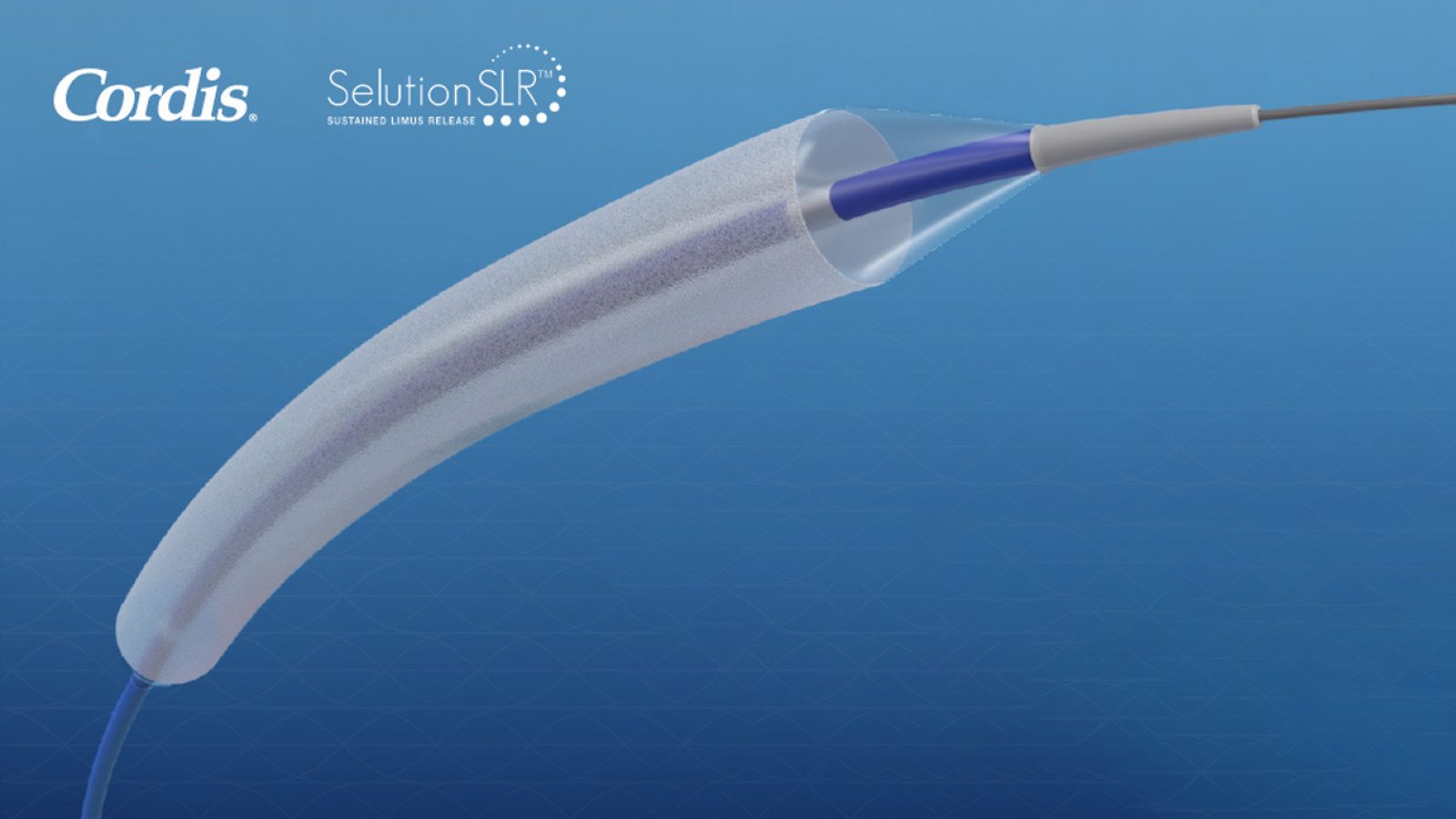
The SELUTION SLR DEB was designed to provide patients with a sustained release of sirolimus over time thanks to tiny “MicroReservoirs.” Cordis first acquired the technology when it agreed to purchase MedAlliance in October. That deal could be worth up to $1.1 billion if all regulatory and commercial milestones are met.
'This has been quite a journey'
The first late-breaking clinical trial to focus on the SELUTION SLR DEB was presented by Christian M. Spaulding, MD, PhD, an interventional cardiologist with European Hospital Georges Pompidou in Paris. He kicked things off by presenting one-year data from SELUTION DeNovo, a randomized trial including data from more than 3,300 patients with de novo coronary artery disease treated from August 2021 to July 2024. It is believed to be the largest drug-coated balloon trial of its kind and will follow patients for five years.
Overall, Spaulding et al. found that the SELUTION SLR DEB was noninferior to a drug-eluting stent (DES) after one year. The study’s primary endpoint—target vessel failure (TVR)—was seen in 5.3% of DEB patients and 4.4% of DES patients. In addition, 80% of patients treated with the Cordis device did not require a stent.
“These findings signal a paradigm shift in how we approach Percutaneous Coronary Intervention,” he said. “SELUTION SLR DEB achieved results comparable to drug-eluting stents while reducing the need for stents. With this minimal stenting approach, patients can benefit from an effective and safe sirolimus drug-eluting balloon treatment today, while keeping more options available for tomorrow.”
When Spaulding shared his team’s data with the packed crowd at TCT, he was met with an immediate round of applause. As he thanked everyone involved in the trial, he reflected on the massive amount of work it took to enroll and follow so many patients.
“This has been quite a journey,” he said, smiling.
One potential limitation of this study was the large list of patients who were excluded. STEMI patients, for example, did not participate in this analysis. Even with that limitation in mind, however, the cardiologists discussing SELUTION DeNovo at TCT agreed this trial could be making an impact on industry guidelines and patient care for years to come.
Is the standard of care for in-stent restenosis about to change?
The other late-breaking clinical trial focused on the SELUTION SLR DEB was SELUTION4ISR, which included data from more than 400 patients who presented with in-stent restenosis (ISR). While ISR is typically treated with a DES, there are some concerns about deploying multiple levels of stent in the same patient. The team behind SELUTION4ISR aimed to evaluate the potential of treating these patients with the SELUTION SLR DEB instead.
Lead author Donald Cutlip, MD, an interventional cardiologist with Beth Israel Deaconess Medical Center, and colleagues randomized patients to either undergo treatment with the SELUTION SLR DEB or receive the standard of care, which was defined as a mix of DES for 80% of patients and balloon angioplasty (BA) for the other 20%. The mean patient age was 68.9 years old, 22.5% were women and 42.8% presented with diabetes.
Overall, the study’s primary endpoint—target lesion failure (TLF)—occurred in 15.2% of patients in the DEB group and 13.5% in the standard of care group. The similar TLF rate confirmed that treatment with the Cordis device was noninferior to DES or BA. Researchers also noted that the rates of cardiac death, target vessel myocardial infarction and clinically driven target lesion revascularization were not statistically significant between the two groups.
“SELUTION DEB is the first and only DEB to demonstrate non-inferiority against the standard of care, including 80% DES, for the treatment of ISR,” Cutlip said. “It is a safe and effective ISR treatment which avoids additional layers of stent, and we look forward to the long-term follow-up data.”
During a TCT press conference, participants discussed the potential significance of these findings. In fact, Sanjum S. Sethi, MD, an interventional cardiologist with Columbia University, said he could see treatment with a DCB becoming the standard for ISR patients in the future.
TCT 2025 takes place Oct. 25-28 in San Francisco. Click here for additional details.

Michael has more than 19 years of experience as a professional writer and editor. He has written at length about cardiology, radiology, artificial intelligence and other key healthcare topics.