
Evolocumab prevents more heart attacks than ezetimibe in head-to-head comparison
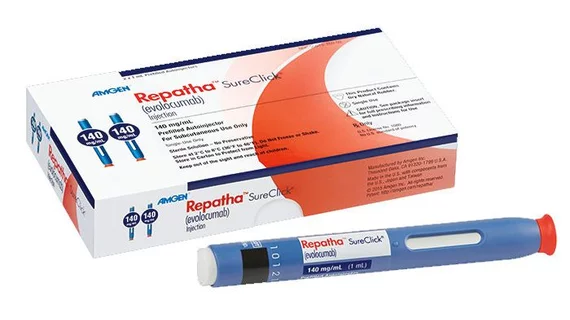
A new head-to-head, real-world, comparative effectiveness study of evolocumab (Repatha) and ezetimibe (Zetia), found ezetimibe significantly lowered the rate of heart attacks in patients. The data were published this week in the American Journal of Preventive Cardiology.[1]
The study found evolocumab was associated with a 20% lower rate of fatal and nonfatal myocardial infarction over four years. The authors said findings might help better inform the clinical selection of non-statin therapies when low-density lipoprotein cholesterol (LDL-C) goals are not achieved with statin therapy alone.
Both drugs are guideline-recommended options for atherosclerotic cardiovascular disease (ASCVD) patients unable to reach LDL-C goals on statins alone. Both have been shown to lower cardiovascular risk, but there have not been any large head-to-head outcomes trials to show if one is better than the other.
Evolocumab is an injectable monoclonal antibody PCSK9 inhibitor used to lower low-density lipoprotein (LDL) cholesterol. Ezetimibe is an oral drug that prevents the small intestine from absorbing cholesterol by blocking the NPC1L1 transporter. As an oral drug, ezetimibe has potential advantages for better patient compliance.
"While the recent ACC/AHA Multisociety Guideline update recognizes both ezetimibe and PCSK9 inhibitors like evolocumab as non-statin options for patients with ASCVD, clinicians have lacked direct cardiovascular outcomes evidence to help inform treatment choices for their patients that may allow them to fully achieve the recommended LDL-C goals of below 70 mg/dL and below 55 mg/dL," Nihar Desai, MD, MPH, associate professor of medicine and vice chief of the Section of Cardiovascular Medicine, Yale University School of Medicine, said in a statement. "These findings provide important comparative data that can help clinicians distinguish between these treatment options and make more informed choices to reduce their patients' cardiovascular risk."
This trial included 544,000 patients, 64,421 taking evolocumab, and 479,682 taking ezetimibe. The data were pulled from the U.S. Komodo Health Healthcare Map database between 2017–2024. Patients all had ASCVD and prior statin use.

Dave Fornell has covered healthcare for more than 17 years, with a focus in cardiology and radiology. Fornell is a 5-time winner of a Jesse H. Neal Award, the most prestigious editorial honors in the field of specialized journalism. The wins included best technical content, best use of social media and best COVID-19 coverage. Fornell was also a three-time Neal finalist for best range of work by a single author. He produces more than 100 editorial videos each year, most of them interviews with key opinion leaders in medicine. He also writes technical articles, covers key trends, conducts video hospital site visits, and is very involved with social media. E-mail: [email protected]