
CCTA shows evidence of soft coronary plaque regression after lipid-lowering therapy
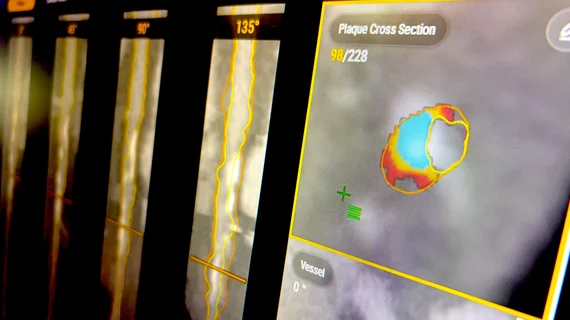
There is growing interest in cardiology in using coronary CT angiography (CCTA) to assess plaque regression over time. The new automated AI plaque analysis technology now available from several vendors might be used to better select patients who need additional lipid-lowering drugs or more expensive therapies, for example.
Prior imaging studies, mostly those using intravascular ultrasound (IVUS), have demonstrated modest plaque regression with lipid-lowering drugs in stable coronary artery disease (CAD) patients. However, the effect of using intensive lipid-lowering therapy on coronary plaque regression across the entire coronary tree in untreated patients had not been tested until a new analysis published in JAMA Cardiology.[1]
The 104-patient FLOWPROMOTE trial conducted in Denmark used CCTA plaque analysis to compared the effects of intensive vs. more intensive lipid-lowering therapy on plaque regression in statin-naive patients with stable CAD. The study assessed the link between achieved low-density lipoprotein cholesterol (LDL-C) levels and plaque regression using the Autoplaque software from APQ Health.
"Our new randomized FLOWPROMOTE trial analysis shows remarkable coronary plaque regression with intensive LDL-C lowering. Atherosclerosis is not necessarily a one-way process," lead author Martin Bødtker Mortensen, MD, PhD, clinical associate professor with the department of cardiology at Aarhus University Hospital in Denmark, said on social media about the results.
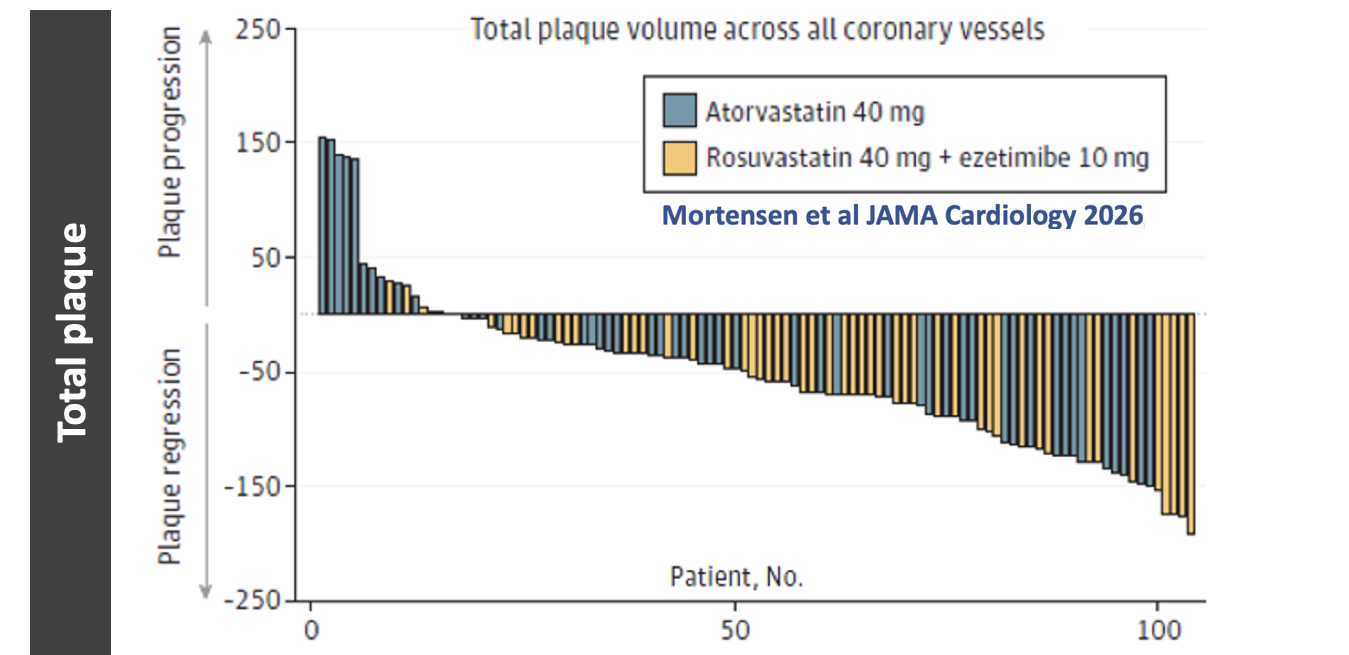
FLOWPROMOTE trial results showing significant coronary plaque regression due to aggressive lipid lowering therapy. The assessment was made possible by advances in CCTA plaque analysis software that can auto quantify soft plaque volumes very accurately so they can be compared in serial CT scans.
Researchers found more intensive lipid-lowering therapy caused significantly greater soft plaque regression compared with intensive therapy. They found the level of plaque regression was related to achieved LDL-C levels, supporting the potential for partial reversal of coronary atherosclerosis with intensive lipid reduction.
More intensive lipid-lowering therapy using rosuvastatin 40 mg plus ezetimibe 10 mg achieved lower LDL-C levels and led to significantly more regression of total and noncalcified coronary plaque volume compared with intensive therapy of atorvastatin 40 mg, over 18 months.
The mean age was 64 years old and 79% of patients were men. Participants were evenly divided into the two treatment groups. LDL-C levels decreased 38%, from 119.7 to 69.5 mg/dL with intensive therapy, and 65% from 127.4 to 42.5 mg/dL with more intensive therapy. Total plaque volume was reduced 21.1% with more intensive therapy compared to 13.6% with intensive therapy.
Regression of total plaque volume was observed in 90% of patients receiving more intensive therapy compared with 76% receiving intensive therapy. Calcified plaque volume increased similarly in both groups as the drug therapy helped stabilize the soft plaques.
"We can visualize plaque regression in a randomized controlled study, with greater regression in more intensive lipid-lowering therapy," Damini Dey, PhD, director of the Quantitative Image Analysis Program within the Biomedical Imaging Research Institute at Cedars Sinai Medical Center, said in a statement to Cardiovascular Business. She was a study investigator and helped develop the technology used in the trial.

Dave Fornell has covered healthcare for more than 17 years, with a focus in cardiology and radiology. Fornell is a 5-time winner of a Jesse H. Neal Award, the most prestigious editorial honors in the field of specialized journalism. The wins included best technical content, best use of social media and best COVID-19 coverage. Fornell was also a three-time Neal finalist for best range of work by a single author. He produces more than 100 editorial videos each year, most of them interviews with key opinion leaders in medicine. He also writes technical articles, covers key trends, conducts video hospital site visits, and is very involved with social media. E-mail: [email protected]