
FDA approves stroke prevention devices used during transcarotid artery revascularization
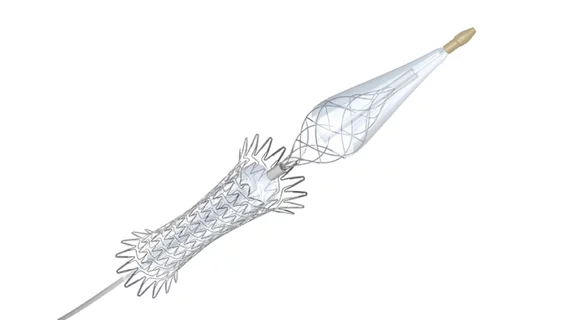
The U.S. Food and Drug Administration (FDA) granted premarket approval (PMA) for the Contego Medical's Neuroguard IEP Direct System and 510(k) clearance for its Neuroguard IEP Embolic Protection System (EPS). The combination of these new devices provides two layers of neuroprotection from emboli during transcarotid artery revascularization (TCAR) through both flow reversal and an integrated embolic protection (IEP) filter using direct transcarotid artery access.
Stroke risk is the biggest concern when treating carotid artery lesions, which can knock off emboli during the procedure and send them directly to the brain. But the PERFORMANCE III pivotal study for the new Contego Medical system using double embolic protection had a 0% stroke rate at 30 days in addition to no myocardial infarctions, cranial nerve injuries neurological deaths or stent thromboses. The primary endpoint, 30-day major adverse events, was 0.69% in the intention-to-treat population and 0% in the per-protocol population.
“Although TCAR with flow reversal alone has demonstrated low stroke rates, transcranial Doppler studies have shown that flow to the brain is not always reversed, thereby allowing microemboli to still reach the brain in some patients,” Sean Lyden, MD, chairman of the department of vascular surgery at Cleveland Clinic and co-national principal investigator of the PERFORMANCE III IDE study, said in a statement. “Given the uncertainty in complete flow reversal, this system combines flow reversal with an integrated filter to provide additional protection during the highest-risk phases of stenting and post-dilation."
Medtronic is the sole distributor of the Neuroguard IEP System for transfemoral and transradial carotid stenting, and these new approvals will expand its endovascular portfolio.
The Neuroguard IEP 3-in-1 stent delivery system integrates the stent, balloon and 40-micron distal filter in one device. This helps reduce catheter exchanges and make procedures more efficient. The company said the Neuroguard IEP EPS combines a direct access sheath with a flexible, preformed curve and a gravity-assisted flow reversal system, enabling streamlined transcarotid access without the need for venous access. The new FDA indication expands the device's use to direct carotid artery access.
The Neuroguard IEP device was previously studied for transfemoral and transradial carotid stenting in the PERFORMANCE I and PERFORMANCE II studies. It first received FDA approval in October 2024 and has been commercially available from Medtronic since October 2025.

Dave Fornell has covered healthcare for more than 17 years, with a focus in cardiology and radiology. Fornell is a 5-time winner of a Jesse H. Neal Award, the most prestigious editorial honors in the field of specialized journalism. The wins included best technical content, best use of social media and best COVID-19 coverage. Fornell was also a three-time Neal finalist for best range of work by a single author. He produces more than 100 editorial videos each year, most of them interviews with key opinion leaders in medicine. He also writes technical articles, covers key trends, conducts video hospital site visits, and is very involved with social media. E-mail: [email protected]