
Did Boston Scientific pull the plug too early on TAVR devices? Cardiologists weigh in
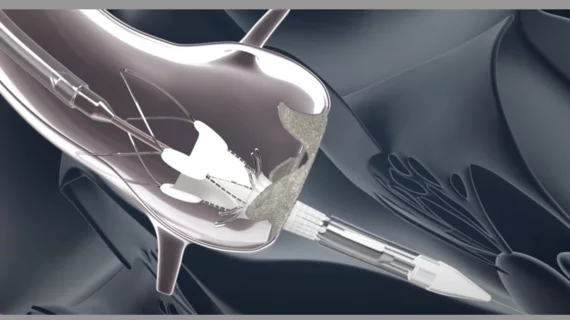
Back in May, Boston Scientific officially stopped selling its Acurate neo2 and Acurate prime transcatheter aortic valve replacement (TAVR) systems. The company spent years trying to gain FDA approval for the devices, hoping it could catch up with Medtronic and Edwards Lifesciences in the competitive U.S. TAVR market, but that moment never came.
“While data continue to support the performance of the Acurate valve system when the product’s optimized instructions for use are followed, this decision was made based on recent discussions with regulators, which resulted in increased clinical and regulatory requirements to maintain approvals in global markets and to obtain approval in new markets,” a company representative told Cardiovascular Business at the time. “Therefore, related commercial, clinical, research and development, and manufacturing activities will cease.”
In a new commentary published in EuroIntervention, however, two veteran cardiologists wrote that they wish Boston Scientific had held out just a little longer before pulling the plug. The editorial was written by Won-Keun Kim, MD, a cardiologist with the University of Giessen in Germany, and Helge Möllmann, MD, a cardiologist with St. Johannes Hospital in Dortmund, Germany.
“This decision is considered a consequential response to disappointing results in the randomized IDE trial with Acurate neo2, which was preceded several years ago by negative outcomes in the SCOPE I and SCOPE II trials with the first-generation Acurate neo valve,” the authors wrote. “Hence, critical voices may perceive this withdrawal as scientific reckoning, but this warrants a nuanced interpretation.”
The two clinicians noted that Acurate TAVR valves have been used in many parts of the world for more than a decade. In addition, they added, inexperienced operators were included in some of the studies used to evaluate the safety and effectiveness of these devices. This inexperience appears to be a significant reason the Boston Scientific valves fell short time and time again.
For example, as Cardiovascular Business reported at the time, underexpansion issues were a major issue for operators implanting the Acurate neo2 valves. If clinicians were better prepared to use the Boston Scientific valves, it is possible the valve would have been associated with much better patient outcomes. In addition, the two co-authors explained, the “main issue in the IDE trial” may have been the small balloon sizes used for pre- and post-dilatation.
Kim and Möllmann also noted that large-scale European registries seemed to suggest the Acurate valves were both safe and effective when implanted by more experienced operators. According to the experiences of these European clinicians, they explained, the Boston Scientific valves were linked to a variety of benefits.
“The platform offered several particularly advantageous features: intuitive deployment, hemodynamic stability during the deployment, reliable commissural alignment, preserved coronary access, minimal coronary obstruction risk and low pacemaker rates,” the two co-authors wrote. “Furthermore, outcomes in the treatment of patients with pure aortic regurgitation, failed surgical valves, and redo-TAVR were promising.”
Overall, Kim and Möllmann wrote that they “understand the decision” to discontinue these valves. However, in many ways, pulling the plug on the Acurate line still feels like a disappointment.
“For some interventionalists, the discontinuation of Acurate represents a meaningful loss, potentially limiting the ability to tailor valve selection in certain anatomical scenarios within contemporary TAVR practice,” they concluded.
Both co-authors have a history of working with multiple medtech companies, including Boston Scientific. Click here to read the full commentary.

Michael has more than 19 years of experience as a professional writer and editor. He has written at length about cardiology, radiology, artificial intelligence and other key healthcare topics.