
Meril TAVR valves linked to 1-year outcomes similar to industry-leading devices from Medtronic, Edwards

The Myval transcatheter aortic valve replacement (TAVR) valves from Meril Life Sciences are associated with one-year outcomes comparable to popular TAVR platforms from Medtronic and Edwards Lifesciences, according to new data presented at the EuroPCR conference in Paris.
Indian medtech company Meril Life Sciences has been manufacturing its Myval transcatheter heart valves (THVs) for years. The devices are already approved and available in both India and Europe, though they have not yet gained U.S. Food and Drug Administration approval. The self-expanding Evolut TAVR platform from Medtronic and balloon-expandable Sapien 3 TAVR platform from Edwards Lifesciences, meanwhile, are the two most popular treatment options among U.S. cardiologists.
The LANDMARK clinical trial is a multicenter head-to-head comparison of patients treated with Myval TAVR valves and those treated with Evolut or Sapien 3 TAVR valves. It is scheduled to follow each patient for up to 10 years, and researchers published 30-day outcomes back in January, but this specific analysis focused on outcomes after one year.
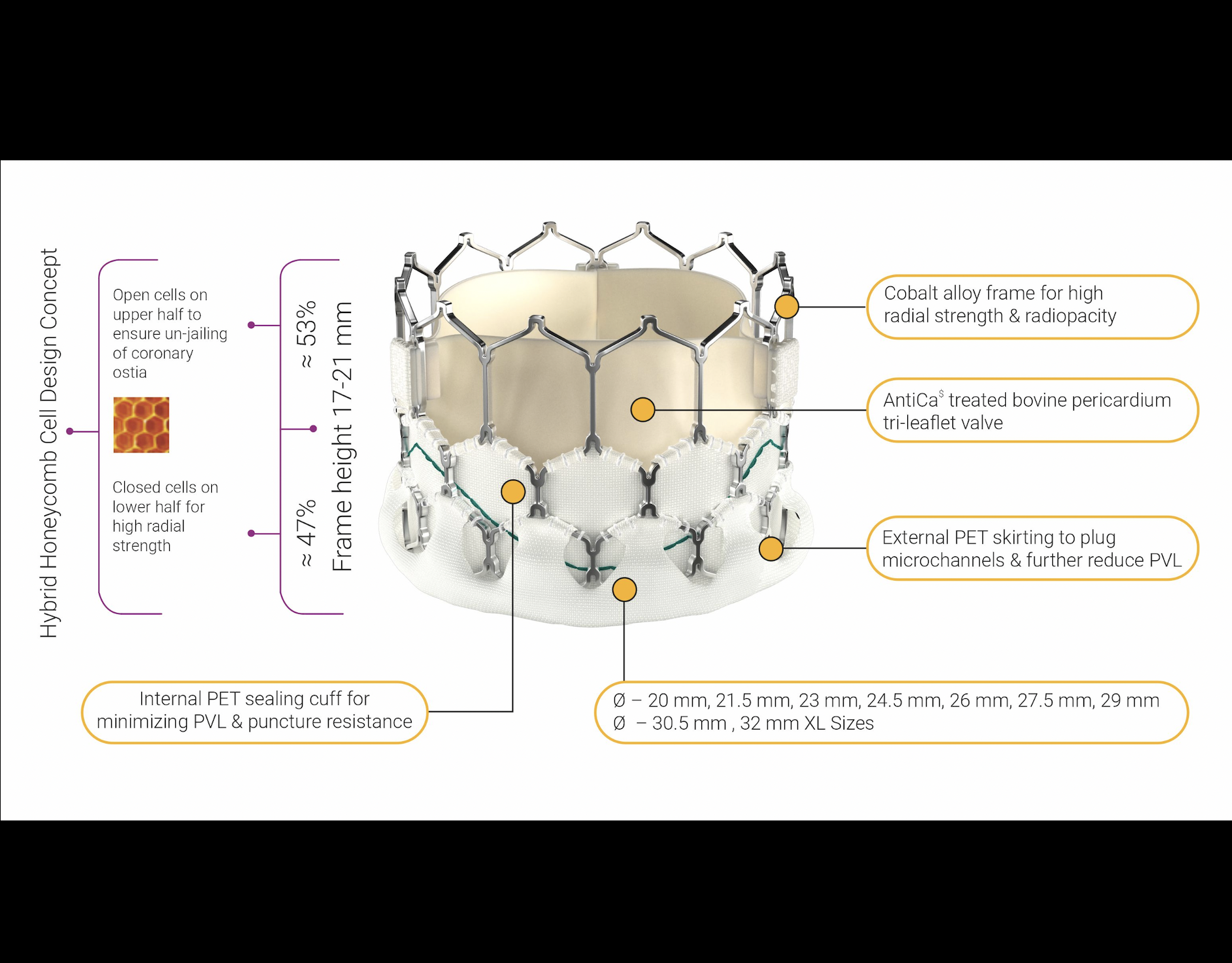
The Myval TAVR valve. Image courtesy of Merit Life Sciences.
Overall, researchers found, survival after one year was nearly identical for the two patient groups; Myval TAVR valves had a one-year survival rate of 92.8% and the Medtronic/Edwards Lifesciences TAVR valves had a one-year survival rate of 92.9%. Quality of life (QoL) and hemodynamic parameters were also comparable.
“This trial reflects a new era in comparative valve research,” Patrick Serruys, MD, PhD, chairman and study director of LANDMARK and a veteran interventional cardiologist with the National University of Ireland, said in a statement. “The meticulous design and adherence to VARC-3 standards, including QoL endpoints, mark it as a pivotal study. The results of the LANDMARK trial represent a meaningful advancement for the global structural heart community—and most importantly, for patients receiving TAVR. The data not only validate the safety and efficacy of the Myval THV series, but also spotlight its adaptability to complex anatomies. This versatility is exactly what clinicians need to deliver precision care across a broad spectrum of patients.”
“The LANDMARK trial represents a significant milestone not just for Meril, but for the global TAVR community,” added Sanjeev Bhatt, Meril’s senior vice president of corporate strategy. “The strong one-year results affirm the Myval THV series as a next-generation solution that delivers consistent safety, clinical efficacy and improved quality of life across geographies. As the only head-to-head trial of its kind to include both balloon-expandable and self-expanding valves, it reinforces Myval THV series’s versatility and real-world relevance for diverse patient anatomies and healthcare systems. At Meril, we are proud to contribute innovative, evidence-based technologies that are reshaping patient care and expanding access to advanced structural heart therapies worldwide.”

Michael has more than 19 years of experience as a professional writer and editor. He has written at length about cardiology, radiology, artificial intelligence and other key healthcare topics.