
New stroke prevention device for TAVR falls short, raising questions about the value of embolic protection
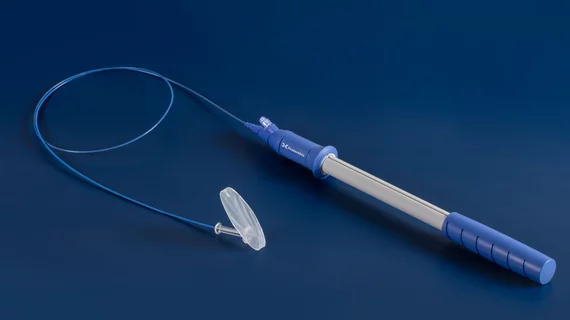
A device intended to reduce the risk of stroke during transcatheter aortic valve replacement (TAVR) procedures was ultimately unable to achieve that goal, according to new late-breaking data presented at TCT 2026 in San Diego.
The PROTEMBO IDE Trial focused on evaluating the potential safety and effectiveness of the investigational ProtEmbo Cerebral Protection System (CPS) from German medtech company Protembis. Susheel Kodali, MD, a veteran interventional cardiologist with NYU Langone Health, shared results from the trial with the TCT audience on Tuesday, Nov. 3.
The ProtEmbo CPS sits in the roof of the patient’s aortic arch and shields all three arteries to the brain. When German medtech company Protembis designed the device, its goal was to succeed where other cerebral embolic protection (CEP) devices have fallen short and prove that it can significantly reduce the stroke rate during TAVR. However, as Kodali explained, the PROTEMBO IDE Trial was stopped early because it failed to show any signs of accomplishing that feat.
A total of 284 patients underwent TAVR as part of this analysis. Patients were randomized to either undergo treatment with the ProtEmbo CPS, the Sentinel CEP device from Boston Scientific, or no CEP device at all. This trial did meet its primary safety endpoint and the device was successfully deployed in 97.8% of cases. In addition, the filters captured debris in 94.2% of cases, though Kodali did note that debris was not proof of clinical neuroprotection.
The study’s primary efficacy endpoint was tied to its ability to reduce total new lesion volume (TNLV) compared to the Sentinel device or no CEP device at all. That, Kodali explained, is where the device failed.The ProtEmbo CPS had a median TNLV significantly higher than both control groups.
These early results were so negative that the trial stopped early due to the probability of benefit being less than 5%.
“There is no evidence to support the adoption of ProtEmbo based on these data,” Kodali said. “It adds uncertainty to the routine use of CEP.”
Kodali added that TNLV should be avoided as a primary endpoint for CEP trials going forward. He also said that clinicians still need to gain a better understanding of why debris capture does not translate into improved stroke rates.
At the end of the day, Kodali said he still believes there is a benefit to using CEP devices during TAVR procedures. Knowing how to properly identify and quantify that benefit, however, remains a challenge for researchers and device manufacturers alike.
Questions remain about the use of embolic protection during TAVR
Kodali emphasized that this appears to be the end of the road for this specific CEP device. What is more important going forward, he added, is where the field goes from here. The U.S. Food and Drug Administration has already approved both the Sentinel device and the Emboliner Embolic Protection System to be used during TAVR to reduce the risk of stroke, but it is still unclear just how much value clinicians can gain from using these devices on a regular basis.
“I don’t know what the path forward is,” Kodali said.
Interventional cardiologists have a lot of questions about this topic right now. Should the specialty fully embrace the use of CEP devices or wait for stronger data? What if the stronger data never comes?
Ajay J. Kirtane, MD, director of Columbia Interventional Cardiovascular Care and a professor with Columbia University Irving Medical Center, discussed this challenge during a TCT press conference.
“Stroke is a devastating complication,” he said. “Nobody here would want to have a stroke, even if it was non-disabling, yet it is very hard to justify the expense of these types of devices when margins are still really, really tight. But there is this population of patients that could be at a high risk of stroke that we all struggle with and are all nervous about. It’s a big conundrum for the entire field.”
Sammy Elmariah, MD, chief of interventional cardiology and medical director of the cath lab at the University of California, San Francisco, agreed that this remains a “concerning” situation for the interventional community. Even as researchers struggle to prove CEP devices make a significant impact on outcomes, he said, he and many of his colleagues still feel confident that the technology is beneficial.
“Many of us still opt to use these devices in certain situations at which we perceive the risk to be high, whether it be bicuspid patients, patients with any degree of thrombus on a surgical valve, or patients with prior stroke,” he said. “So there are these subgroups where we think the risk is high enough to warrant an embolic protection device despite the fact that trial after trial has come up negative. Conceptually, it is just such a clear causal effect when you are capturing debris of the size we are seeing in these filters. I agree that we don’t have the right endpoint.”

Michael has more than 19 years of experience as a professional writer and editor. He has written at length about cardiology, radiology, artificial intelligence and other key healthcare topics.