
SCAI details best practices for PDA closure in premature infants
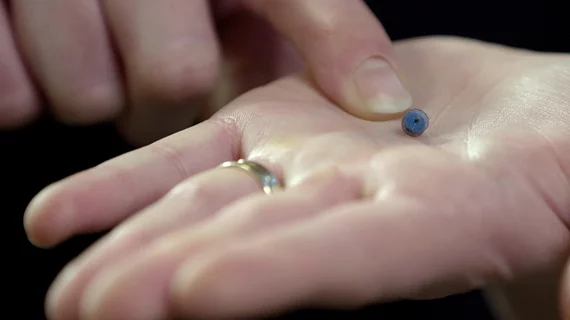
Transcatheter patent ductus arteriosus (PDA) closure has been a mainstay in congenital interventional cardiology for decades, but changes in the standard of care in recent years have led to catheter-based treatments overtaking surgical procedures. This prompted the Society for Cardiovascular Angiography and Interventions (SCAI) to publish a new position statement that provides best-practice guidance for PDA treatment using transcatheter occlusion (tcPDA) in premature infants.
“This position statement represents a collective effort between neonatology, anesthesia, and interventional cardiology to provide comprehensive guidance on tcPDA device occlusion that can be adapted to the unique needs of each center and patient,” Brent M. Gordon, MD, chair of the writing committee and professor of pediatrics at Rady Children’s Hospital in San Diego, California, said in an SCAI statement. “While medications can close the PDA in about two-thirds of premature infants, the remaining third, as well as those requiring urgent closure, will still need a procedural intervention. Our aim is to help teams perform these interventions as safely and effectively as possible. By creating a team-based approach to these patients, we can standardize care, reduce complications, and give these infants the strongest possible start.”
SCAI said very low birth weight infants were once excluded due to access challenges and the lack of appropriately sized devices. In 2019, the U.S. Food and Drug Administration approved the first PDA occlusion device for infants as small as 700 grams. This led to rapid adoption of tcPDA in premature infants. SCAI said catheter-based closure has rapidly overtaken surgical ligation in many centers, resulting in "encouraging early results."
The new position statement emphasizes that long-term success now hinges on the consistent, high-quality implementation of procedure-specific best practices.
Published in the JSCAI,[1] the guidance offers a practical framework in four key areas:
• Patient selection criteria based on respiratory status, echocardiographic findings, and systemic perfusion indicators, with emphasis on collaborative decision-making among neonatologists, cardiologists, and families.
• Technical and procedural best practices for fragile premature neonates, including device selection, imaging, anesthesia and complication prevention.
• Operator training benchmarks, suggesting specific case volumes for both trainees and practicing interventional cardiologists.
• Institutional infrastructure needs, such as neonatal-specific ventilation and thermoregulation equipment, advanced imaging and pediatric cardiac surgical backup.
The statement reviews patient selection criteria and pre-procedural planning to help optimize patients for tcPDA. Potential complications are also discussed, including tricuspid valve injury, cardiac perforation and late-onset vessel obstruction. The authors stressed prevention through careful planning, early recognition during and after the procedure, and prompt intervention when needed. They also recommend echocardiographic follow-up at 24 hours, one week, one month, three months, and six months post-procedure to detect and manage complications before they impact outcomes.
The document also suggests operator training benchmarks to ensure physicians practicing tcPDA have adequate experience to prepare for and perform the procedure safely and effectively. SCAI recognizes not all centers have experience with premature PDA closures, so there is a need for specialized care with regional referral networks with structured transport protocols to ensure infants are treated at centers with the necessary expertise and resources.
“Technological innovation has transformed how we treat premature infants with PDA, but technology alone is not enough,” Sarosh “Shawn” P. Batlivala, MD, MSci, FSCAI, co-chair of the writing committee and professor, UC Department of Pediatrics, Cincinnati Children’s Hospital Medical Center, said in the same statement. “These procedures require meticulous planning, a deep understanding of neonatal physiology and seamless coordination between every member of the care team. Our recommendations highlight not just how to perform the intervention, but how to prepare the patient, anticipate challenges and provide the appropriate follow-up so these early successes translate into healthy long-term outcomes.”
The writing group called for ongoing quality improvement and expanded research to refine patient selection, optimize procedural techniques and inform future device design

Dave Fornell has covered healthcare for more than 17 years, with a focus in cardiology and radiology. Fornell is a 5-time winner of a Jesse H. Neal Award, the most prestigious editorial honors in the field of specialized journalism. The wins included best technical content, best use of social media and best COVID-19 coverage. Fornell was also a three-time Neal finalist for best range of work by a single author. He produces more than 100 editorial videos each year, most of them interviews with key opinion leaders in medicine. He also writes technical articles, covers key trends, conducts video hospital site visits, and is very involved with social media. E-mail: [email protected]