
FDA clears wearable heart device that captures multiple signals at once
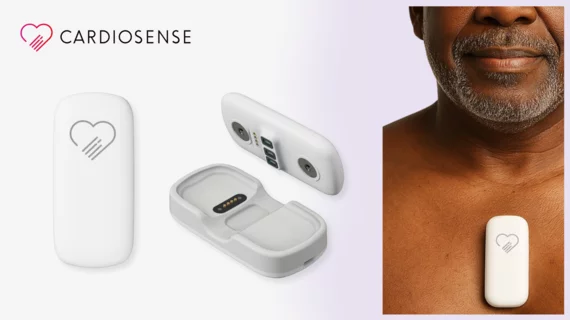
Cardiosense has gained U.S. Food and Drug Administration (FDA) clearance for its new CardioTag device, a wearable sensor that simultaneously captures electrocardiogram (ECG), photoplethysmogram (PPG) and seismocardiogram (SCG) signals to evaluate a patient’s heart function.
CardioTag also tracks more traditional measurements such as heart rate and pulse rate. In addition, it can be paired with advanced artificial intelligence (AI) algorithms to evaluate users for additional conditions.
“Our team is thrilled to achieve this critical milestone as part of our mission to advance cardiac care,” Amit Gupta, co-founder and CEO of Cardiosense, said in a prepared statement. “Traditionally, noninvasive cardiac monitoring has primarily focused on ECG and rhythm analysis. With the CardioTag device, we are adding an entirely new dimension by also capturing physiological data on cardiac mechanics and blood flow, providing unprecedented visibility into a patient’s cardiac function, hemodynamics, and volume status.”
“This is a deeply meaningful milestone,” added Omer Inan, PhD, co-founder and chief scientific officer of Cardiosense. “For over a decade, we’ve worked to turn a bold idea into a clinically reliable, noninvasive technology that truly meets patients where they are. With FDA clearance, we’re taking a major step toward bringing precision hemodynamic insights into everyday patient care—no matter the setting.”
A recent analysis in JACC: Heart Failure examined the effectiveness of using CardioTag and a Cardiosense AI model for estimating pulmonary capillary wedge pressure (PCWP) in certain heart failure patients.[1] Overall, the study’s authors found that the combination of CardioTag and the company’s AI delivered an accuracy “approaching implantable hemodynamic sensors.” Once Cardiosense gains FDA approval for its PCWP Analysis software, the company plans on providing it as a treatment option for CardioTag users with advanced heart failure.

Michael has more than 19 years of experience as a professional writer and editor. He has written at length about cardiology, radiology, artificial intelligence and other key healthcare topics.