
Cardiology’s biggest trend: New scientific statements take on AI-powered coronary plaque evaluations
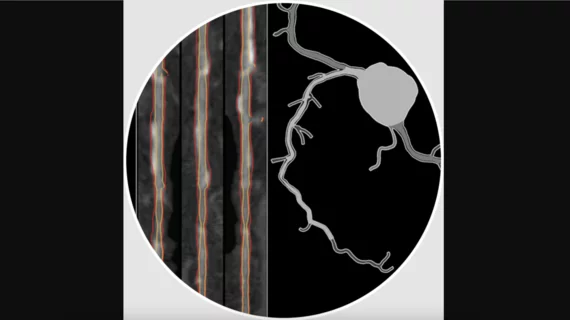
The American College of Cardiology (ACC) and American Heart Association (AHA) have both issued new scientific statements exploring the use of artificial intelligence (AI) software to evaluate the coronary CT angiography (CCTA) results of patients with suspected coronary artery disease (CAD).[1,2] These statements put a spotlight on one of cardiology’s biggest ongoing trends, sending a signal to heart teams that these technologies represent the future of care for CAD patients in the United States.
The U.S. Food and Drug Administration (FDA) has approved noninvasive CCTA analysis tools from Heartflow, Cleerly, Elucid, Circle Cardiovascular Imaging, Caristo Diagnostics and Artrya that help cardiologists provide preventive care and develop treatment strategies. The ACC and AHA developed these statements was to provide care teams with additional details and recommendations when it comes to the implementation and use of AI-enabled CCTA evaluations.
“The ACC and AHA scientific statements address an important need by providing evidence-based consensus recommendations for clinicians and imagers, solidifying CCTA-based quantitative plaque analysis as a powerful tool for enhanced risk stratification in patients with suspected CAD,” Ron Blankstein, MD, a writing committee member for both scientific statements, director of cardiac CT at Brigham and Women's Hospital and a professor at Harvard Medical School, said in a statement. “These statements highlight the limitations of current methods to assess risk based on risk factors or stenosis severity alone. Integrating AI-powered technology into clinical practice using ACC and AHA’s guidance can help clinicians move beyond diagnosing blockages, toward predicting and preventing major cardiovascular events.”
“The ACC and AHA scientific statements signal growing consensus that plaque assessment is essential for risk stratification, prevention and long-term CAD management,” added Campbell Rogers, MD, Heartflow’s chief medical officer. “Heartflow Plaque Analysis enables more precise risk stratification for personalized, preventive treatment plans. The expert guidance articulates the need for rigorous validation and standardization, which Heartflow is uniquely positioned to address, given our technology and quality systems already align with these stringent recommendations.”
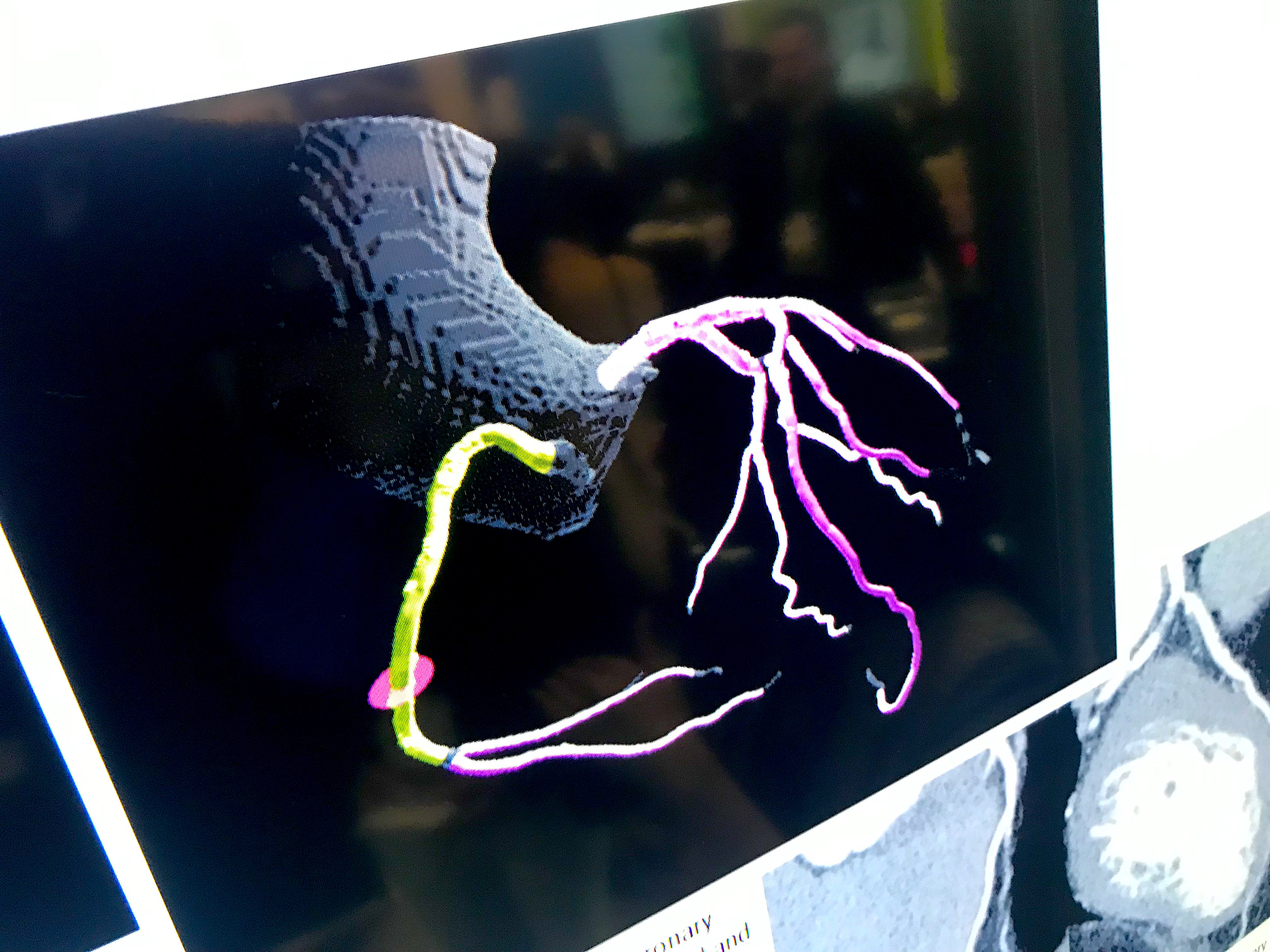
A coronary plaque evaluation using Cleerly's advanced AI platform. Image captured during ACC.23.
AI-powered CCTA technologies continue to transform patient care
A series of recent decisions have made it clear just how much of an impact these technologies are making on patient care. This included improved Medicare coverage, new Category 1 CPT codes and an updated payment policy that more than doubled the reimbursements hospitals receive for performing CCTA.
Where is this all headed? It seems that the sky is the limit. In fact, imaging expert Carlos Collet, MD, PhD, recently explained in an interview with Cardiovascular Business that noninvasive CCTA is expected to be centerpiece of all cardiac cath labs in the near future.
Read the full statements for more insights into the use of AI-enabled CCTA technologies
Click here to read the full ACC scientific statement in JACC: Cardiovascular Imaging.
Click here to read the full AHA scientific statement in Circulation.

Michael has more than 19 years of experience as a professional writer and editor. He has written at length about cardiology, radiology, artificial intelligence and other key healthcare topics.