
CCTA outperforms TEE after LAAO, new meta-analysis confirms
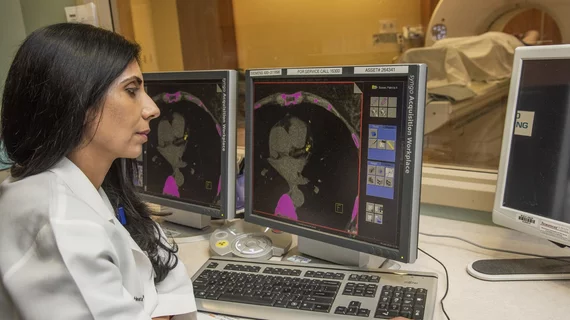
Coronary computed tomography angiography (CCTA) is more effective than transesophageal echocardiography (TEE) when it comes to detecting residual leaks following left atrial appendage occlusion (LAAO), according to a new meta-analysis published in Circulation: Cardiovascular Imaging.[1]
“TEE is operator-dependent, causes patient discomfort, and carries the risks associated with sedation and esophageal intubation,” wrote first author Bryan E-Xin Tan, MD, a researcher with Baylor College of Medicine, and colleagues. “Over the past decade, CCTA has emerged as an attractive alternative to TEE for post-LAAO device surveillance due to its superior spatial resolution and ease of performance.”
To learn more about how these two modalities compare to one another, Tan et al. explored data from more than 1,300 patients who underwent both CCTA and TEE after LAAO. The data came from one of 17 different studies.
Overall, CCTA was linked to higher odds of detecting residual peridevice leak (58.8% vs. 34.6%) and any peridevice leak (51.6% vs. 35.5%) than TEE. When it came to detecting larger peridevice leaks, however, there was no significant difference between the two modalities.
In addition, there were no significant differences when it came to detecting device-related thrombi after LAAO.
“The higher detection rates of CCTA for residual leak indicating LAA patency highlight the distinct advantages of CCTA’s excellent spatial resolution, contrast resolution, and three-dimensional imaging capabilities,” the authors wrote. “CCTA can provide detailed visualization of the LAAC device and surrounding structures, identifying residual leak (LAA patency) with or without visible peridevice leak, the latter of which cannot be detected by TEE.”
The group also reviewed “several advantages” associated with using CCTA to evaluate these patients. They are less invasive, for example, as well as faster and less dependent on the operator. Avoiding the risks of sedation and esophageal intubation are also key benefits for heart teams to consider.
Tan and colleagues also noted that these findings lined up with 2023 recommendations previously shared by the Society for Cardiovascular Angiography and Interventions and Heart Rhythm Society. Those groups also just shared additional LAAO recommendations designed to bring more consistency to the way LAAO is planned and performed.
Click here to read the full meta-analysis in Circulation: Cardiovascular Imaging, an American Heart Association journal.

Michael has more than 19 years of experience as a professional writer and editor. He has written at length about cardiology, radiology, artificial intelligence and other key healthcare topics.