
FDA clears CCTA AI coronary plaque assessment from Artrya
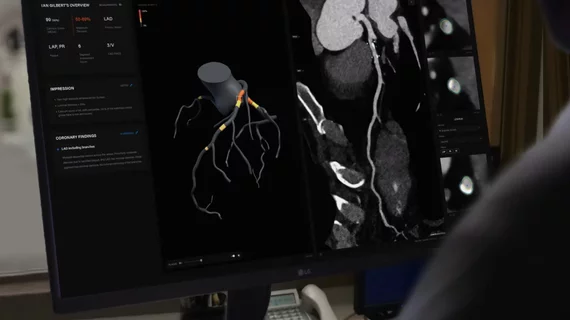
A new company has gained U.S. Food and Drug Administration 510(k) clearance for its artificial intelligence (AI) automated analysis of coronary computed tomography angiography (CCTA) that offers more personalized cardiac risk assessments for patients.
Australia-based Artrya Limited says its Salix Coronary Plaque module offers near real-time, point-of-care CCTA assessment and management of coronary artery disease. The AI can identify key biomarkers of heart disease, supporting clinicians in diagnosing patients more accurately and efficiently. The company began its U.S. market launch in July.
There is a movement in cardiac prevention and cardiac imaging to use CCTA with AI plaque assessment software to identify soft, high-risk coronary plaques as a key predictor of heart attacks. These low-attenuation plaques (LAP) are not seen or accounted for in current coronary artery calcium (CAC) scoring CT screenings. Artrya will join other soft plaque AI CCTA vendors already in the U.S. market, Heartflow, Cleerly, Elucid and Caristo.
Salix offers assessments available in less than 10 minutes and without changing or using multiple systems, which the company says is required with some competing technology.
The additional player in the market comes after AI plaque assessment recently gained a U.S. Category 1 CPT reimbursement rate of $950. The payment coverage and continuing positive studies supporting the use of AI plaque assessments is helping drive rapid growth in CCTA adoption and usage.
"We are thrilled to have received FDA clearance of our Salix Coronary Plaque module, which opens up a much greater revenue opportunity for us in the U.S., our largest market. We intend to build on this as we approach our next submission for the Salix Coronary Flow module," explained John Konstantopoulos, co-founder and CEO of Artrya, in a statement.
The company's first AI FDA approval in March 2025 was for its Salix Coronary Anatomy web-based platform for fast assessment of CCTA exams. It enables physicians to quickly identify, analyze and edit the extent and type of arterial plaque, the main cause of heart disease, along with stenosis and calcification. The new coronary plaque module expands this platform with automated low-attenuation plaque analysis.
Salix Coronary Anatomy is being commercially installed at Tanner Health, Northeast Georgia Health System and Cone Health.

Dave Fornell has covered healthcare for more than 17 years, with a focus in cardiology and radiology. Fornell is a 5-time winner of a Jesse H. Neal Award, the most prestigious editorial honors in the field of specialized journalism. The wins included best technical content, best use of social media and best COVID-19 coverage. Fornell was also a three-time Neal finalist for best range of work by a single author. He produces more than 100 editorial videos each year, most of them interviews with key opinion leaders in medicine. He also writes technical articles, covers key trends, conducts video hospital site visits, and is very involved with social media. E-mail: [email protected]